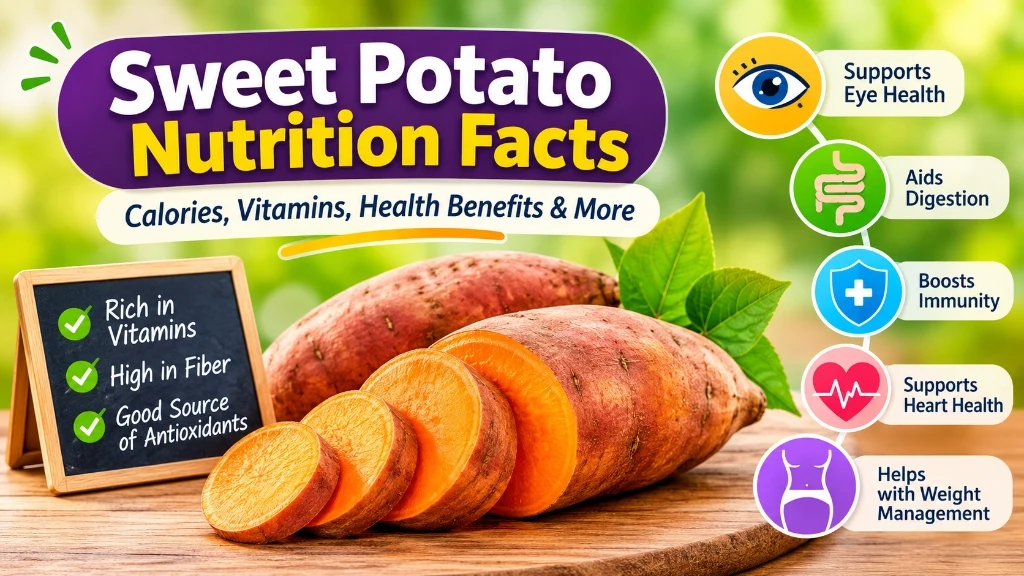
According to USDA FoodData Central, 100 grams of raw sweet potato provides 86 calories, 20.1 grams of carbohydrates, 3.0 grams of dietary fiber, 1.6 grams of protein, 0.05 grams of fat, 337 milligrams of potassium, and 709 micrograms RAE of vitamin A (79% of the Daily Value). When boiled without skin, 100 grams supplies 76 calories and 17.7 grams of carbs due to water absorption; when baked in its skin, 100 grams provides 90 calories and 20.7 grams of carbs as moisture evaporates.
Sweet potato (Ipomoea batatas) is a starchy storage root belonging to the Convolvulaceae (morning glory) family, making it botanically distinct from the regular white potato (Solanum tuberosum), a nightshade tuber. Cultivated across tropical and warm temperate regions for thousands of years, it serves as a staple food from East Asia and the American South to street corners across India, where roasted winter shakarkandi seasoned with lemon and spiced black salt is a familiar seasonal snack.
Looking closely at sweet potato nutrition facts explains why dietitians and public health researchers study this root so extensively. Unlike refined carbohydrate sources that offer calories with minimal micronutrients, sweet potatoes combine complex starch and soluble fiber with potassium, vitamin C, vitamin B6, manganese, and concentrated plant pigments. Orange-fleshed cultivars rank among the richest whole-food sources of provitamin A beta-carotene, while purple-fleshed varieties supply stable anthocyanin polyphenols.
At the same time, nutrition changes substantially in the kitchen. Boiling, steaming, baking, or roasting alters moisture content, starch digestibility, glycemic response, and calorie density per 100 grams. This guide breaks down verified nutrient data from USDA FoodData Central and the Indian Food Composition Tables (ICMR-NIN), compares serving sizes and varieties, evaluates human clinical evidence versus laboratory research, and shows how to fit sweet potatoes into everyday meals.
Key Nutritional Takeaways
- Energy & Macros (100g): 86 kcal raw, 76 kcal boiled (without skin), and 90 kcal baked (in skin). Primarily complex carbohydrates (17.7–20.7 g) with 2.5–3.3 g fiber, low protein (1.4–2.0 g), and virtually zero fat (<0.2 g).
- Standout Micronutrients: A 100g baked serving of orange sweet potato delivers 961 µg RAE of vitamin A (107% DV), 19.6 mg of vitamin C (22% DV), 475 mg of potassium (10% DV), and 0.50 mg of manganese (22% DV).
- Cooking Impact: Boiling retains higher moisture and yields a lower glycemic index (GI 44–61) than high-heat baking (GI 70–94), which concentrates sugars and converts starch into maltose.
- Variety Differences: Orange varieties excel in beta-carotene; purple cultivars provide anthocyanins; white cultivars offer milder flavor with lower beta-carotene.
Sweet Potato Nutrition Facts at a Glance
Because sweet potatoes are rarely eaten raw, checking the preparation state before logging your food is critical. When sweet potatoes are boiled in water, the starchy tissue absorbs moisture, which lowers the calorie and carbohydrate concentration per 100 grams of cooked weight. When baked in dry oven heat, moisture evaporates from the root, concentrating calories, sugars, fiber, and minerals in every 100-gram portion.
The table below presents three distinct, unmixed laboratory entries from USDA FoodData Central for orange-fleshed sweet potato: Raw, unprepared (FDC ID: 168482), Boiled without skin, drained (FDC ID: 168484), and Baked in skin, flesh only, without salt (FDC ID: 168483). Nutrient values in market produce can vary based on cultivar, soil mineral levels, curing duration after harvest, root size, and cooking duration.
Sweet Potato Nutrition per 100g (Raw vs. Boiled vs. Baked)
| Nutrient | Raw (100 g) FDC ID: 168482 |
Boiled, No Skin (100 g) FDC ID: 168484 |
Baked in Skin (100 g) FDC ID: 168483 |
% Daily Value (Baked)* |
|---|---|---|---|---|
| Energy (Calories) | 86 kcal (359 kJ) | 76 kcal (318 kJ) | 90 kcal (377 kJ) | 4.5% |
| Water | 77.28 g | 80.13 g | 75.78 g | - |
| Total Carbohydrates | 20.12 g | 17.72 g | 20.71 g | 7.5% |
| Dietary Fiber | 3.0 g | 2.5 g | 3.3 g | 11.8% |
| Total Sugars | 4.18 g | 5.74 g | 6.48 g | - |
| Starch | 12.65 g | 9.16 g | 7.05 g | - |
| Protein | 1.57 g | 1.37 g | 2.01 g | 4.0% |
| Total Fat | 0.05 g | 0.14 g | 0.15 g | 0.2% |
| Vitamin A (RAE) | 709 µg RAE | 787 µg RAE | 961 µg RAE | 106.8% |
| Beta-Carotene | 8,509 µg | 9,444 µg | 11,509 µg | - |
| Vitamin C | 2.4 mg | 12.8 mg | 19.6 mg | 21.8% |
| Vitamin B6 (Pyridoxine) | 0.209 mg | 0.165 mg | 0.286 mg | 16.8% |
| Pantothenic Acid (Vitamin B5) | 0.800 mg | 0.531 mg | 0.884 mg | 17.7% |
| Thiamin (Vitamin B1) | 0.078 mg | 0.056 mg | 0.086 mg | 7.2% |
| Niacin (Vitamin B3) | 0.557 mg | 0.538 mg | 1.487 mg | 9.3% |
| Folate (Vitamin B9, DFE) | 11 µg | 6 µg | 6 µg | 1.5% |
| Vitamin E (Alpha-Tocopherol) | 0.26 mg | 0.94 mg | 0.71 mg | 4.7% |
| Potassium | 337 mg | 230 mg | 475 mg | 10.1% |
| Manganese | 0.258 mg | 0.260 mg | 0.497 mg | 21.6% |
| Copper | 0.151 mg | 0.126 mg | 0.161 mg | 17.9% |
| Magnesium | 25 mg | 18 mg | 27 mg | 6.4% |
| Phosphorus | 47 mg | 32 mg | 54 mg | 4.3% |
| Calcium | 30 mg | 27 mg | 38 mg | 2.9% |
| Iron | 0.61 mg | 0.72 mg | 0.69 mg | 3.8% |
| Sodium | 55 mg | 27 mg | 36 mg | 1.6% |
*Source: USDA FoodData Central SR Legacy Reference (FDC IDs: 168482, 168484, 168483). Percent Daily Values (%DV) are calculated against current U.S. FDA adult reference intakes based on a 2,000-calorie diet (Vitamin A: 900 µg RAE, Vitamin C: 90 mg, Potassium: 4,700 mg, Fiber: 28 g, Manganese: 2.3 mg, Vitamin B6: 1.7 mg). In the ICMR-NIN Indian Food Composition Tables (IFCT 2017), local brown-skin (Code C018) and pink-skin (Code C019) shakarkandi cultivars often contain slightly higher starch and lower moisture (around 105–109 kcal per 100 g raw) due to regional white- and cream-fleshed landraces.
💡 Why Does Raw vs. Cooked Vitamin C Differ in the USDA Database? In the USDA SR Legacy dataset, the raw sweet potato entry (2.4 mg/100g) and the cooked entries (12.8–19.6 mg/100g) were derived from separate analytical composite batches collected after different storage intervals. Newly harvested sweet potatoes typically contain 20–30 mg of vitamin C per 100 grams, which gradually declines over months of curing and cold storage.

How Many Calories Are in a Sweet Potato?
One hundred grams of raw sweet potato provides 86 calories, 100 grams of boiled sweet potato (without skin) provides 76 calories, and 100 grams of baked sweet potato (cooked in skin) provides 90 calories. A standard medium baked sweet potato weighing 130 grams (about 5 inches long and 2 inches in diameter) supplies roughly 117 calories, while a medium boiled sweet potato of the same cooked weight supplies 99 calories.
Because whole roots vary widely in size at the grocery store or vegetable market, weighing your portion on a kitchen scale is the most reliable way to track energy intake. You can scale any nutrient value from the 100-gram reference table using this straightforward formula:
Nutrient in Serving = (Nutrient per 100g) × (Serving Weight in Grams ÷ 100)
Sweet Potato Calories & Macros by Common Serving Size
| Serving Portion | Preparation State | Calories (kcal) | Total Carbs (g) | Dietary Fiber (g) | Protein (g) |
|---|---|---|---|---|---|
| 100 g (Standard Reference) | Boiled, without skin | 76 kcal | 17.7 g | 2.5 g | 1.4 g |
| 100 g (Standard Reference) | Baked in skin | 90 kcal | 20.7 g | 3.3 g | 2.0 g |
| 1 Medium Root (130 g) | Boiled, without skin | 99 kcal | 23.0 g | 3.3 g | 1.8 g |
| 1 Medium Root (130 g) | Baked in skin | 117 kcal | 26.9 g | 4.3 g | 2.6 g |
| 1 Cup Cubed (150 g) | Boiled, without skin | 114 kcal | 26.6 g | 3.8 g | 2.1 g |
| 1 Cup Cubed (150 g) | Baked in skin | 135 kcal | 31.1 g | 5.0 g | 3.0 g |
| 1 Large Root (200 g) | Boiled, without skin | 152 kcal | 35.4 g | 5.0 g | 2.7 g |
| 1 Large Root (200 g) | Baked in skin | 180 kcal | 41.4 g | 6.6 g | 4.0 g |
Practical Meal Calculation Example: Suppose you roast 150 grams of sweet potato wedges tossed in 1 teaspoon (4.5 grams) of olive or mustard oil. The baked sweet potato flesh contributes 135 kcal, and 4.5 grams of cooking oil adds roughly 40 kcal (at 8.84 kcal per gram of fat), bringing the total side dish to 175 calories. If you want to see how a 130-gram or 150-gram portion fits into your personal energy target, you can calculate your daily calorie needs or read our guide to understand your daily calorie intake across sedentary and active schedules.
Sweet Potato Carbs, Fiber, Protein and Fat
On a dry-matter basis, roughly 85% to 90% of a sweet potato's calories come from carbohydrates, 7% to 9% come from protein, and less than 2% come from fat. However, treating all carbohydrate-rich foods as metabolically identical overlooks how starch structure, cell-wall fiber, and water content shape digestion.
Carbohydrates: Complex Starch vs. Natural Sugars
A 100-gram serving of raw sweet potato holds 20.12 grams of total carbohydrates, consisting of 12.65 grams of complex starch, 4.18 grams of natural sugars (sucrose, glucose, and fructose), and 3.0 grams of dietary fiber. During heating: especially slow oven baking between 57°C and 77°C (135°F to 170°F): endogenous beta-amylase enzymes cleave long starch chains into maltose, a disaccharide sugar. That enzymatic reaction explains why a baked sweet potato tastes noticeably sweeter and contains 6.48 grams of total sugars (and only 7.05 grams of remaining starch) per 100 grams, even though zero table sugar was added.
When you learn how to read nutrition labels on packaged sweet potato snacks or frozen fries, pay close attention to the "Added Sugars" line underneath Total Carbohydrates. Whole sweet potatoes contain 0 grams of added sugar.
Dietary Fiber: Viscous Pectin and Insoluble Cellulose
Every 100 grams of baked sweet potato provides 3.3 grams of dietary fiber (about 12% of the 28-gram FDA Daily Value), while a medium 130-gram baked root delivers 4.3 grams. Roughly 70% to 75% of this fiber is insoluble (cellulose, hemicellulose, and lignin concentrated in the skin and structural walls), which increases stool bulk and speeds intestinal transit. The remaining 25% to 30% is soluble fiber (primarily pectin), which absorbs water in the stomach to form a gentle gel that slows gastric emptying and feeds short-chain-fatty-acid-producing bacteria in the colon. For readers comparing plant fiber sources, you can also check our chia seeds nutrition facts guide.
Protein: Modest Quantity with Unique Storage Globulins
Sweet potatoes are not a high-protein food, supplying 1.37 grams of protein per 100 grams boiled and 2.01 grams per 100 grams baked. About 60% to 80% of the total soluble protein in the root consists of sporamin (also called ipomoein), a specialized storage glycoprotein that helps the plant heal after insect or mechanical damage. Because sweet potatoes are low in total protein and limiting in sulfur-containing amino acids, pairing them with lentils (dal), curd (yogurt), paneer, eggs, tofu, or lean poultry creates a balanced amino acid profile.
Fat: Virtually Lipid-Free
Raw, boiled, and baked sweet potatoes contain 0.05 to 0.15 grams of total fat per 100 grams, with zero cholesterol and negligible saturated fat. While this keeps calorie density low, the near-absence of native fat means that eating plain boiled sweet potato on an empty stomach reduces the intestinal absorption of its fat-soluble carotenoids: a point we examine in detail below.
| Macronutrient Component | Raw (100 g) | Boiled, No Skin (100 g) | Baked in Skin (100 g) | Primary Physiological Role |
|---|---|---|---|---|
| Total Carbohydrates | 20.12 g | 17.72 g | 20.71 g | Primary cellular & muscular energy substrate |
| : Starch | 12.65 g | 9.16 g | 7.05 g | Gradual glucose release; forms resistant starch when cooled |
| : Dietary Fiber | 3.0 g | 2.5 g | 3.3 g | Stool regularity, satiety, and colonic fermentation |
| : Natural Sugars | 4.18 g | 5.74 g | 6.48 g | Sucrose, glucose, fructose, and heat-generated maltose |
| Net Carbs (Total − Fiber) | 17.12 g | 15.22 g | 17.41 g | Digestible carbohydrate fraction impacting blood glucose |
| Protein | 1.57 g | 1.37 g | 2.01 g | Sporamin storage protein; minor contribution to daily needs |
| Total Fat | 0.05 g | 0.14 g | 0.15 g | Trace cell-membrane lipids; zero trans fat or cholesterol |
Vitamins and Minerals in Sweet Potatoes
Beyond complex carbohydrates, sweet potatoes deliver an impressive array of micronutrients that support vision, epithelial barrier integrity, electrolyte balance, and cellular energy metabolism.
Beta-Carotene and Vitamin A
Orange-fleshed sweet potatoes are one of nature's most concentrated sources of all-trans-beta-carotene. A 100-gram baked serving provides 11,509 micrograms of beta-carotene, which the body converts into 961 micrograms of Retinol Activity Equivalents (RAE) : equal to 106.8% of the adult Daily Value for vitamin A (900 µg RAE for men; 700 µg RAE for women). Unlike preformed retinol found in liver or high-dose supplements, plant beta-carotene is cleaved by the intestinal enzyme beta-carotene 15,15'-monooxygenase (BCO1) at a regulated rate that decreases when the body's vitamin A stores are full, preventing vitamin A toxicity (hypervitaminosis A).
Bioavailability Tip: Because beta-carotene is hydrophobic (fat-soluble), it must be incorporated into mixed micelles with bile salts and dietary lipids in the small intestine before enterocytes can absorb it. Human absorption studies show that adding just 3 to 5 grams of dietary fat : such as 1 teaspoon of ghee, olive oil, butter, or a handful of crushed peanuts or pumpkin seeds: together with gentle heat cooking increases beta-carotene bioavailability several-fold compared with eating raw or fat-free boiled sweet potato.
Vitamin C (Ascorbic Acid)
A 100-gram serving of baked sweet potato supplies 19.6 milligrams of vitamin C (nearly 22% of the adult Daily Value), while 100 grams of boiled sweet potato provides 12.8 milligrams. Vitamin C acts as a water-soluble electron donor that supports collagen synthesis in skin, blood vessels, and tendons, regenerates oxidized vitamin E, and enhances the intestinal absorption of non-heme plant iron. If you are looking to compare high-vitamin-C produce, see our kiwi nutrition facts article.
Potassium
Sweet potatoes supply 337 mg of potassium per 100 grams raw, 230 mg per 100 grams boiled (since potassium ions leach into boiling water when peeled), and 475 mg per 100 grams baked in the skin (10.1% DV). Potassium is the primary intracellular cation in human tissue; it counterbalances dietary sodium by promoting renal sodium excretion (natriuresis) and relaxing vascular smooth muscle cells. By comparison, a 100-gram baked sweet potato contains even more potassium per gram than raw bananas (358 mg/100g), which we cover in our banana nutrition facts guide.
Vitamin B6 (Pyridoxine) and Pantothenic Acid (B5)
One hundred grams of baked sweet potato delivers 0.286 mg of vitamin B6 (16.8% DV) and 0.884 mg of pantothenic acid (17.7% DV). In its active coenzyme form, pyridoxal 5'-phosphate (PLP), vitamin B6 catalyzes over 100 enzymatic reactions involved in amino acid transamination, glycogen breakdown (glycogen phosphorylase), neurotransmitter synthesis (serotonin, dopamine, GABA), and homocysteine metabolism.
Manganese, Copper, and Magnesium
A 100-gram baked serving provides 0.497 mg of manganese (21.6% DV), 0.161 mg of copper (17.9% DV), and 27 mg of magnesium (6.4% DV). Manganese is an essential cofactor for manganese superoxide dismutase (MnSOD), the primary antioxidant enzyme shielding mitochondria from free radicals generated during cellular respiration, while copper supports iron transport (ceruloplasmin) and connective tissue cross-linking.
10 Potential Health Benefits of Sweet Potatoes
Scientific studies on sweet potatoes span two very different levels of evidence: well-established physiological functions of essential vitamins, minerals, and fibers in humans, and preliminary laboratory or animal trials investigating concentrated extracts from specific cultivars (such as purple sweet potato anthocyanins or white sweet potato Caiapo peel extract). To keep these claims transparent and medically responsible, each benefit below carries an explicit Evidence Classification Badge:
- Category A (Established Nutrient Function): Verified human physiological roles recognized by the NIH Office of Dietary Supplements, National Academy of Medicine, or EFSA.
- Category B (Human Observational Studies): Epidemiological cohort associations linking dietary patterns rich in root fibers, potassium, or carotenoids with long-term health outcomes.
- Category C (Human Clinical Trials): Randomized controlled trials in human participants testing whole sweet potatoes or specific extracts.
- Category D (Animal Studies): Preclinical rodent or animal models that suggest mechanisms but cannot be extrapolated directly to human clinical treatment.
- Category E (Cell & Laboratory Research): In vitro cell culture assays measuring enzyme inhibition or free-radical scavenging in test tubes.
1. Supports Vision and Eye Health
Direct Answer: Orange-fleshed sweet potatoes prevent vitamin A deficiency and supply the provitamin A beta-carotene required to synthesize rhodopsin, the light-sensitive pigment in retinal rod cells responsible for low-light and night vision.
2. Supports Digestive and Gut Health
Direct Answer: A medium baked sweet potato provides 4.3 grams of mixed soluble and insoluble fiber, plus retrograded resistant starch when cooled, which promotes regular bowel movements and nourishes colonic bacteria.
3. Provides Antioxidant and Anti-Inflammatory Compounds
Direct Answer: Sweet potatoes supply carotenoids, chlorogenic acid, caffeic acid, and: in purple varieties: acylated anthocyanins that neutralize reactive oxygen species (ROS) and help limit lipid peroxidation.
4. Supports Immune Function
Direct Answer: By delivering over 100% of the Daily Value for vitamin A and 22% of the Daily Value for vitamin C per 100 grams baked, orange sweet potatoes supply two micronutrients essential for mucosal barrier defense and white blood cell activity.
5. Supports Heart and Blood Pressure Health
Direct Answer: Sweet potatoes are naturally low in sodium (27–55 mg/100g), free of cholesterol, and rich in potassium (475 mg/100g baked) and soluble fiber, fitting seamlessly into DASH (Dietary Approaches to Stop Hypertension) meal patterns.
6. Provides Steady Energy and Blood Sugar Context
Direct Answer: When boiled or steamed and eaten in moderate portions alongside protein and vegetables, sweet potatoes provide a medium glycemic response (GI 44–61) that releases glucose more gradually than refined white bread or instant mashed potatoes.
7. Supports Satiety and Weight Management
Direct Answer: Boiled sweet potatoes have a low energy density (0.76 kcal per gram) and 80% water content, allowing you to eat a physically satisfying 130-gram to 150-gram portion for roughly 100 to 114 calories.
8. Supports Skin and Tissue Integrity
Direct Answer: The combination of provitamin A beta-carotene, vitamin C, and copper in sweet potatoes provides the nutritional building blocks for epidermal cell turnover, collagen cross-linking, and modest endogenous photoprotection.
9. Supports Brain and Nervous System Function
Direct Answer: Sweet potatoes supply vitamin B6, pantothenic acid, potassium, and steady glucose required for neurotransmitter synthesis and nerve impulse transmission, while purple cultivars are being studied in preclinical models for neuroprotection.
10. Emerging Research: Liver Biomarkers and Cellular Protection
Direct Answer: Laboratory and small human biomarker studies suggest that anthocyanins in purple sweet potatoes and sporamin proteins in raw peels exhibit hepatoprotective and antiproliferative properties in experimental settings, though whole sweet potatoes are not a treatment for liver disease or cancer.
Orange vs Purple vs White Sweet Potatoes
While supermarkets in North America and Europe predominantly stock deep-orange cultivars (such as Beauregard, Jewel, and Covington), markets across India, Japan, Southeast Asia, and the Pacific Islands feature white-, cream-, yellow-, and purple-fleshed varieties. Even though all of these belong to the same botanical species (Ipomoea batatas), their flesh color signals a dramatic shift in phytochemical composition.
Important Botanical Note: In the United States, moist orange-fleshed sweet potatoes are frequently labeled as "yams" in grocery stores and canned goods. True botanical yams (Dioscorea species) are rough-skinned, starchy monocot tubers native to West Africa and Asia that are drier, higher in starch, and contain almost no beta-carotene.
| Feature | Orange-Fleshed Sweet Potato (e.g., Beauregard, Jewel, Kamalasundari) |
Purple-Fleshed Sweet Potato (e.g., Okinawan, Stokes Purple, Bhu Krishna) |
White / Cream-Fleshed Sweet Potato (e.g., Hannah, Japanese Satsumaimo, Local Shakarkandi) |
|---|---|---|---|
| Primary Plant Pigment | Carotenoids (All-trans-beta-carotene) | Anthocyanins (Acylated peonidins & cyanidins) | Flavones & phenolic acids (Minimal pigment) |
| Vitamin A / Beta-Carotene | Very High (709–961 µg RAE / 100g; 79–107% DV) | Low (Typically <10–30 µg RAE / 100g) | Very Low (Typically 1–15 µg RAE / 100g) |
| Anthocyanin Content | Negligible | Very High (30–110+ mg / 100g fresh weight) | Negligible |
| Starch & Moisture Profile | Higher moisture (76–80%); softer, maltose-rich when baked | Denser, drier flesh (68–73% water); higher amylose starch | Medium-low moisture (70–74% water); flakier, chestnut-like starch |
| Taste & Texture | Sweet, moist, velvety, and creamy | Mildly sweet, earthy, dense, and velvety-firm | Subtly sweet, nutty, crumbly, and drier than orange cultivars |
| Best Culinary Uses | Baking, mashing, soups, roasting wedges, baby food | Steaming, cubing into salads, roasting, vibrant bowls | Charcoal roasting, street-style shakarkandi chaat, curries, air-frying |
In India, the Central Tuber Crops Research Institute (ICAR-CTCRI) has developed biofortified cultivars such as Bhu Sona (rich in beta-carotene, ~14 mg/100g) and Bhu Krishna (rich in anthocyanins, ~90 mg/100g) alongside traditional pink-skinned, cream-fleshed local shakarkandi. Rotating orange and purple varieties across the week gives you both provitamin A carotenoids and polyphenol anthocyanins.
Does Cooking Method Change Sweet Potato Nutrition?
How you cook a sweet potato changes four nutritional variables at once: moisture content (which shifts calories and carbs per 100 grams), starch-to-sugar conversion, glycemic index, and water-soluble vitamin retention.
1. Boiled Sweet Potato
Boiling peeled sweet potato cubes or whole roots in water increases moisture from 77.3% (raw) to 80.1%, dropping calorie density to 76 kcal per 100 grams and carbohydrates to 17.72 grams per 100 grams. Boiling rapidly gelatinizes starch without prolonged enzymatic maltose production, yielding the lowest glycemic index (GI 44–61) among cooking methods. To minimize the leaching of potassium and vitamin C into cooking water, boil sweet potatoes whole with their skins intact and peel them only after draining, or keep the skin on.
2. Steamed Sweet Potato
Steaming over boiling water (without submerging the flesh) softens cell walls and unlocks beta-carotene bioavailability while preserving 85% to 90% of water-soluble vitamin C, vitamin B6, and potassium. Like boiling, steaming keeps the glycemic response moderate and requires zero added cooking oil.
3. Baked Sweet Potato
Baking a whole sweet potato in its skin at 200°C (400°F) for 45 to 60 minutes evaporates water, raising calorie density to 90 kcal per 100 grams and concentrating potassium (475 mg/100g) and vitamin A (961 µg RAE/100g). Because the interior warms slowly through the 57°C–77°C window where beta-amylase is maximally active, nearly half of the root's starch converts into maltose, producing a caramel-like sweetness and raising the glycemic index to 70–94.
4. Oven-Roasted Cubes or Wedges
Tossing sweet potato cubes in 1 to 2 teaspoons of extra-virgin olive oil, mustard oil, or avocado oil and roasting at 200°C–220°C browns the exterior via the Maillard reaction. The added lipid significantly boosts intestinal beta-carotene absorption, though each teaspoon (4.5 g) of oil adds about 40 calories. Avoid charring or blackening wedges at extreme temperatures above 220°C, which can form trace acrylamide from natural sugars and the amino acid asparagine.
5. Air-Fried Sweet Potato
Air-frying cut wedges with a light mist or half-teaspoon of oil circulates rapid convection heat, producing a crisp outer crust with 70% to 80% less added fat than deep-frying (which can push sweet potato fries past 220–260 kcal per 100 grams).
| Cooking Method | Calories per 100g | Glycemic Impact (Typical GI) | Micronutrient Retention | Best Dietary Goal |
|---|---|---|---|---|
| Boiled (In Skin / Drained) | ~76 kcal | Low-to-Medium (GI 44–61) | High beta-carotene; ~15–30% potassium/Vit C loss if peeled before boiling | Blood sugar management & calorie-controlled weight loss |
| Steamed | ~78–82 kcal | Low-to-Medium (GI 48–63) | Excellent retention of potassium, B6, vitamin C & beta-carotene | Everyday balanced meals & maximum nutrient preservation |
| Baked Whole (No Oil) | 90 kcal | High (GI 70–94) | Concentrated per 100g due to water loss; high maltose sugar | Post-workout glycogen recovery & high-energy meals |
| Oven-Roasted (1 tsp Oil / 150g) | ~115–120 kcal | Medium-to-High (GI 65–82) | Highest beta-carotene absorption due to added healthy lipid | Maximizing fat-soluble Vitamin A absorption |
| Air-Fried (Light Oil Spray) | ~100–110 kcal | Medium-to-High (GI 65–78) | Good mineral retention; much lower fat than deep-fried fries | Healthy swap for deep-fried French fries |
Sweet Potato and Blood Sugar: Is It Suitable for People With Diabetes?
Yes, people with prediabetes or type 2 diabetes can include sweet potatoes in their diet, provided they control portion size (typically 75 to 100 grams cooked), choose boiled or steamed preparation over high-heat baking, and pair the root with protein, fiber-rich non-starchy vegetables, and healthy fat.
To understand how sweet potatoes behave in the bloodstream, it helps to distinguish between Glycemic Index (GI) and Glycemic Load (GL):
- Glycemic Index (GI) ranks how rapidly 50 grams of digestible carbohydrate from a test food raises blood glucose over 2 hours compared with pure glucose (GI = 100). According to university glycemic testing databases (such as the University of Sydney GI Database), boiled sweet potato has a low-to-medium GI of 44 to 61, whereas baked or roasted sweet potato has a high GI of 70 to 94 because dry heat breaks starch into rapidly absorbed maltose and reduces water content.
- Glycemic Load (GL) accounts for the actual amount of digestible carbohydrate in a real world serving:
GL = (GI × Net Carbohydrates in Serving [g]) ÷ 100For example, 100 grams of boiled sweet potato contains 15.2 grams of net carbs (17.7g total carbs minus 2.5g fiber). At a GI of 46, its Glycemic Load is
(46 × 15.2) ÷ 100 = 7.0(a low GL, defined as ≤10). By contrast, a large 200-gram baked sweet potato (34.8g net carbs) at a GI of 82 yields a Glycemic Load of(82 × 34.8) ÷ 100 = 28.5(a high GL, defined as ≥20).
4 Practical Blood Sugar Rules for Eating Sweet Potatoes
- Boil or Steam Instead of Baking: Boiling for 20–30 minutes keeps the GI in the 44–61 range and preserves a higher water-to-carb ratio.
- Cook, Cool, and Reheat Gently (Resistant Starch): Refrigerating boiled sweet potatoes at 4°C for 12 to 24 hours triggers starch retrogradation, recrystallizing a portion of digestible amylose into Type 3 resistant starch (RS3). Resistant starch bypasses small-intestinal digestion and blunts the post-meal glucose peak, even if gently reheated.
- Keep the Skin On: The outer peel contains concentrated insoluble fiber and chlorogenic acid, slowing enzymatic starch breakdown.
- Never Eat Sweet Potato Naked (Combine Macros): Pair a 75g–100g portion of boiled sweet potato with sprouted moong dal, paneer bhurji, grilled fish, eggs, or Greek yogurt/curd plus leafy greens. Protein and fat slow gastric emptying and stimulate incretin hormones (GLP-1), flattening the postprandial glucose curve.
⚕️ Clinical Note for Diabetes Management: Individual glycemic responses vary based on gut microbiome composition, baseline insulin sensitivity, and concurrent medications. If you use insulin or sulfonylureas, count the 15–18 grams of net carbohydrates per 100 grams of sweet potato toward your mealtime carbohydrate allowance and consult your physician or Registered Dietitian.
Are Sweet Potatoes Good for Weight Loss?
Sweet potatoes can be a practical, filling ally for fat loss when boiled, steamed, or air-fried in measured portions: not because they possess any "fat-burning" properties, but because their high water content (76%–80%) and 2.5–3.3 grams of dietary fiber per 100 grams promote satiety at a modest calorie cost.
Human weight loss is governed by sustained negative energy balance: consuming fewer calories than your Total Daily Energy Expenditure (TDEE). Starchy tubers often get unfairly blamed for weight gain because people associate them with deep-fried chips, butter-laden casseroles, or oversized portions eaten alongside refined grains like white rice and parathas. When you swap 150 grams of cooked white rice (195 kcal, 0.6g fiber) or two oil-brushed parathas (~320 kcal) for 130 grams of boiled sweet potato (99 kcal, 3.3g fiber), you save 95 to 220 calories while increasing dietary fiber and micronutrient intake.
Sample Balanced Fat-Loss Plate (~410 kcal):
- Complex Carbohydrate: 120 g boiled sweet potato cubes seasoned with roasted cumin and lemon juice (91 kcal, 3.0 g fiber, 1.7 g protein)
- Lean Protein: 100 g grilled low-fat paneer or 150 g cooked yellow moong dal tadka / grilled chicken breast (~180–210 kcal, 18–26 g protein)
- Non-Starchy Volume: 150 g cucumber, tomato, spinach, and bell pepper salad (35 kcal, 2.5 g fiber)
- Healthy Fat for Carotenoid Absorption: 1 teaspoon (4.5 g) extra-virgin olive oil or Desi ghee drizzled over the meal (40 kcal)
To set an evidence based daily calorie target for sustainable weight management, you can calculate your calorie deficit and TDEE using our interactive guide.
Sweet Potato vs Regular Potato: Which Is Healthier?
In fitness circles, sweet potatoes are frequently praised while regular white potatoes (Solanum tuberosum) are demonized. A fair, laboratory-matched comparison of 100 grams of baked sweet potato (in skin, FDC ID: 168483) against 100 grams of baked white potato (flesh and skin, without salt, FDC ID: 170030) reveals that both tubers have nearly identical calorie and total carbohydrate counts, with each offering distinct micronutrient strengths.
| Nutrient (Per 100 g Baked in Skin) | Sweet Potato, Baked (FDC ID: 168483) |
Regular White Potato, Baked (FDC ID: 170030) |
Nutritional Winner & Context |
|---|---|---|---|
| Calories (Energy) | 90 kcal | 93 kcal | Tie (Practically identical energy density) |
| Total Carbohydrates | 20.71 g | 21.15 g | Tie (<0.5 g difference per 100g) |
| Dietary Fiber | 3.3 g | 2.2 g | Sweet Potato (+50% more fiber per 100g) |
| Total Sugars | 6.48 g | 1.18 g | White Potato (Lower natural sugars; higher starch) |
| Protein | 2.01 g | 2.50 g | White Potato (Slightly higher complete plant protein) |
| Total Fat | 0.15 g | 0.13 g | Tie (Both are virtually fat-free) |
| Vitamin A (RAE) | 961 µg RAE (107% DV) | 1 µg RAE (0.1% DV) | Sweet Potato (Massive provitamin A advantage) |
| Vitamin C | 19.6 mg (22% DV) | 9.6 mg (11% DV) | Sweet Potato (Roughly double the vitamin C when baked) |
| Potassium | 475 mg (10.1% DV) | 535 mg (11.4% DV) | White Potato (Slightly higher potassium per 100g) |
| Vitamin B6 | 0.286 mg (16.8% DV) | 0.311 mg (18.3% DV) | Tie / White Potato (Both are strong B6 sources) |
| Iron | 0.69 mg (3.8% DV) | 1.08 mg (6.0% DV) | White Potato (Higher iron when skin is consumed) |
| Typical Boiled Glycemic Index | 44–61 (Low-to-Medium) | 58–82 (Medium-to-High) | Sweet Potato (Gentler glycemic curve when boiled) |
Bottom Line on the Comparison: Orange sweet potato wins decisively for vitamin A (961 µg vs 1 µg RAE), dietary fiber (3.3g vs 2.2g), and a lower glycemic index when boiled. Regular white potato baked in its skin holds a slight edge in potassium (535 mg vs 475 mg), protein (2.5g vs 2.0g), and iron (1.08 mg vs 0.69 mg), and scores exceptionally high on the Holt Satiety Index when boiled plain. Both tubers are healthy whole foods when boiled, steamed, or baked; neither is healthy when deep-fried in refined vegetable oil.
How to Include Sweet Potatoes in a Balanced Diet
Whether you buy orange-fleshed cultivars or traditional winter shakarkandi at an Indian sabzi mandi, small preparation adjustments can turn sweet potatoes into a balanced meal component rather than a sugar-heavy side dish:
- Boiled Shakarkandi Slices with Cumin & Rock Salt: Boil whole unpeeled sweet potatoes until fork-tender, cool for 15 minutes, slice into rounds, and sprinkle with roasted jeera (cumin) powder, black salt (kala namak), and crushed black pepper for a 100-calorie mid-morning or pre-workout snack.
- Street-Style Roasted Shakarkandi Chaat: Toss warm steamed or charcoal-roasted cubes with fresh lemon juice, chaat masala, finely chopped green chilies, fresh coriander leaves, and 1 tablespoon of pomegranate arils. The vitamin C in fresh lemon juice complements the root's antioxidants without adding oil.
- Balanced Protein Bowl with Curd, Paneer, or Dal: Pair 100 grams of roasted sweet potato cubes with 100 grams of spiced grilled paneer or a bowl of thick tadka dal and cucumber raita. The dairy or legume protein supplies lysine and sulfur amino acids while the fat in curd/paneer unlocks beta-carotene absorption.
- Oven-Roasted Herb & Mustard Oil Wedges: Cut scrubbed unpeeled roots into wedges, toss with 1 teaspoon of cold-pressed mustard or olive oil, turmeric, smoked paprika, and rosemary, and roast at 200°C for 25–30 minutes.
- South Indian & Coastal Vegetable Curries (Sambar, Avial & Stew): Add cubed sweet potato alongside drumsticks (see moringa nutrition facts), carrots, and ash gourd in coconut-milk vegetable stew or lentil-based sambar.
- Velvety Sweet Potato, Ginger & Red Lentil (Masoor Dal) Soup: Simmer cubed orange sweet potato with split red lentils, fresh ginger, garlic, turmeric, and vegetable broth, then blend smooth and top with toasted pumpkin seeds for a high-protein, high-vitamin-A winter dinner.
- Cold Resistant-Starch Grain & Greens Salad: Chill boiled purple or orange sweet potato cubes overnight in the fridge, then toss with baby spinach, chickpeas, diced bell peppers, feta or tofu, and a tahini-lemon dressing.
- Air-Fried Crispy Wedges with Greek Yogurt Dip: Air-fry skin-on wedges at 195°C for 16–18 minutes with a light spray of avocado oil and serve with a high-protein hung-curd mint dip instead of sugar-sweetened ketchup.
🥗 Dietitian-Style Recipe: Spiced Shakarkandi & Sprouted Moong Chaat (High-Fiber, Low-GI)
Prep Time: 10 mins · Cook Time: 15 mins · Servings: 2 · Per Serving: ~195 kcal | 31g Carbs | 7.2g Fiber | 8.5g Protein | 3.8g Fat
Ingredients:- 200 g sweet potato (shakarkandi), scrubbed, boiled in skin, cooled, and cut into bite sized cubes
- 100 g steamed sprouted green moong beans (adds plant protein and lowers meal glycemic index)
- 1 small cucumber and 1 medium tomato, finely diced
- 1 tbsp roasted crushed peanuts or toasted pumpkin seeds (provides ~3.5g healthy fat for beta-carotene micelle absorption)
- 1 tbsp freshly squeezed lemon juice, ½ tsp roasted cumin powder, ½ tsp chaat masala, and a pinch of black salt
- 2 tbsp finely chopped fresh coriander and mint leaves
- Boil or steam the whole unpeeled sweet potato for 15–20 minutes until just fork-tender (avoid over-boiling into mush). Allow it to cool to room temperature: or chill in the refrigerator for 2 hours to increase resistant starch: then cube with skin intact.
- In a mixing bowl, combine the sweet potato cubes, steamed moong sprouts, diced cucumber, tomato, and fresh herbs.
- Sprinkle with roasted cumin, chaat masala, black salt, and fresh lemon juice. Toss gently and garnish with crushed roasted peanuts right before serving.
Sweet Potato Side Effects and Precautions
For the vast majority of healthy children and adults, whole cooked sweet potatoes are safe and well tolerated. However, specific medical conditions and excessive portion sizes warrant practical precautions:
1. Digestive Bloating and Gas from Large Portions (Mannitol Content)
Sweet potatoes contain mannitol, a naturally occurring sugar alcohol (polyol) classified under the FODMAP (Fermentable Oligosaccharides, Disaccharides, Monosaccharides, and Polyols) framework. According to Monash University FODMAP laboratory testing, a 75-gram (½ cup) cooked serving is low-FODMAP and generally well tolerated by people with Irritable Bowel Syndrome (IBS). However, portions of 100 to 150 grams or more contain moderate-to-high amounts of mannitol, which draws water into the small intestine and ferments rapidly in the colon, potentially triggering gas, abdominal distension, or osmotic loose stools in polyol-sensitive individuals.
2. Carotenodermia (Harmless Orange Skin Tinting)
Eating very large quantities of orange-fleshed sweet potatoes, carrots, or pumpkin every day over several weeks (typically exceeding 20–30 mg of beta-carotene daily) can cause excess beta-carotene to deposit in the outer stratum corneum layer of the skin, particularly on the palms of the hands, soles of the feet, and nasolabial folds. This condition, called carotenodermia, is benign and reversible once intake is moderated. Unlike jaundice (liver dysfunction), carotenodermia never turns the whites of the eyes (sclera) yellow.
3. Post-Meal Blood Glucose Spikes with Overconsumption
Because 200 grams of baked sweet potato delivers over 41 grams of carbohydrates with a high glycemic index, eating oversized baked portions: or adding brown sugar, marshmallows, honey, or jaggery: can cause pronounced postprandial hyperglycemia in individuals with insulin resistance or type 2 diabetes.
4. Potassium Restriction in Advanced Chronic Kidney Disease (CKD)
A 100-gram baked sweet potato supplies 475 mg of potassium (and a 200-gram root supplies 950 mg). Individuals with Stage 4 or Stage 5 Chronic Kidney Disease, end-stage renal disease on dialysis, or those taking potassium-sparing diuretics (such as spironolactone, eplerenone, or ACE inhibitors/ARBs) who have been prescribed a potassium-restricted diet by their nephrologist must monitor tuber intake carefully. Peeling, dicing into small cubes, soaking in warm water for 2 hours, and boiling in a large pot of discarded water (double-boiling / leaching) can reduce potassium content by 30% to 50%.
5. Dietary Oxalates and Kidney Stone History
Sweet potatoes contain approximately 24 to 30 milligrams of total oxalates per 100 grams (substantially lower than spinach at ~600–970 mg/100g or beetroot at ~60–120 mg/100g, but still considered a moderate oxalate source in large portions). People with a clinical history of recurrent calcium oxalate kidney stones should stick to moderate portions (75–100g), prefer boiling over baking (since soluble oxalates leach into cooking water), pair the meal with a calcium source like curd or paneer (so calcium binds oxalate in the gut before renal excretion), and maintain adequate daily hydration (for comparison with high-hydration fruits, see our watermelon nutrition facts guide).
Frequently Asked Questions About Sweet Potatoes
1. How many calories are in 100g of sweet potato?
According to USDA FoodData Central, 100 grams of raw sweet potato contains 86 calories. Once cooked, 100 grams of boiled sweet potato (without skin) contains 76 calories due to water absorption, while 100 grams of baked sweet potato (cooked in skin) contains 90 calories as water evaporates in dry oven heat.
2. Is sweet potato good for weight loss?
Yes. Boiled or steamed sweet potatoes are 76% to 80% water and provide 2.5 to 3.3 grams of dietary fiber per 100 grams for only 76 to 90 calories. Their physical bulk and viscous soluble fiber help keep you full between meals when used to replace higher-calorie refined grains or fried snacks within a daily calorie deficit.
3. Can people with diabetes eat sweet potato?
Yes, people with diabetes can eat sweet potatoes in measured portions (typically 75 to 100 grams cooked). Choose boiled or steamed sweet potatoes (which have a lower glycemic index of 44–61) over baked ones (GI 70–94), keep the fiber-rich skin on, and pair them with protein (such as dal, paneer, curd, eggs, or fish) and non-starchy vegetables.
4. Is boiled or baked sweet potato healthier?
Neither is universally "better": it depends on your goal. Boiled sweet potato has fewer calories per 100 grams (76 kcal) and a significantly lower glycemic index (44–61), making it the superior choice for blood sugar stability and weight loss. Baked sweet potato (cooked in its skin) retains more water-soluble potassium (475 mg vs 230 mg) and vitamin C per 100 grams of cooked weight, making it great for active individuals needing concentrated energy and electrolytes.
5. Can we eat sweet potato every day?
Most healthy adults can enjoy a moderate 100-gram to 130-gram serving of sweet potato daily as part of a varied diet. Eating multiple large orange sweet potatoes every day over weeks can lead to harmless carotenodermia (an orange tint on the palms and soles), so rotating sweet potatoes with other roots, legumes, and whole grains is good practice.
6. Is sweet potato healthier than regular potato?
Both are nutrient-dense whole foods with nearly identical calories (90 kcal vs 93 kcal per 100g baked). Orange sweet potato provides vastly more vitamin A (961 µg RAE vs 1 µg RAE) and 50% more fiber (3.3g vs 2.2g), while regular white potato baked in its skin provides slightly more potassium (535 mg vs 475 mg), protein (2.5g vs 2.0g), and iron.
7. Does sweet potato increase weight?
No single whole food automatically causes fat gain. Plain boiled or baked sweet potato is low in fat (<0.2g/100g) and moderate in calories (76–90 kcal/100g). Weight gain only occurs if your total daily calorie intake exceeds your daily calorie expenditure, or if sweet potatoes are deep-fried or topped with heavy butter, marshmallows, or sugar.
8. Is sweet potato high in carbs?
Yes, sweet potato is a starchy root vegetable containing 17.7 to 20.7 grams of total carbohydrates (about 15.2 to 17.4 grams of net carbs) per 100 grams. While these are complex carbohydrates accompanied by fiber and micronutrients, sweet potatoes are too high in carbs for strict ketogenic (<20–30g net carbs/day) diets.
9. Can you eat sweet potato skin?
Yes, sweet potato skin is safe to eat and holds a large share of the root's insoluble fiber, potassium, and chlorogenic acid antioxidants. Simply scrub the outer peel under running water with a vegetable brush before cooking to remove soil and debris, and trim away any bruised or dark spots.
10. Which sweet potato is healthier: orange or purple?
Each excels in a different antioxidant class. Orange sweet potatoes are unmatched for fat-soluble beta-carotene (delivering over 100% of your daily vitamin A per 100g baked). Purple sweet potatoes contain very little beta-carotene but are packed with water-soluble anthocyanin pigments that combat oxidative stress.
11. Is sweet potato good for digestion?
Yes. Sweet potatoes supply 2.5 to 3.3 grams of fiber per 100 grams (combining stool-bulking cellulose with prebiotic soluble pectin) plus resistant starch when cooked and cooled. However, portions larger than 100–150 grams contain fermentable mannitol, which may cause gas in people with polyol-sensitive IBS.
12. When is the best time to eat sweet potato?
You can enjoy sweet potatoes at any meal, though they are especially effective at lunch, 1.5 to 2 hours before a workout (to top up muscle glycogen), or post-workout alongside a protein source. If eating them at dinner, keep portions moderate (100g boiled) and pair with protein and leafy vegetables.
Final Verdict: Should You Include Sweet Potatoes in Your Diet?
Judged by verified food composition data rather than internet hype, sweet potatoes earn their place as one of the most nutrient-dense complex carbohydrate sources available. A single 100-gram to 130-gram serving of orange sweet potato delivers more than your entire daily requirement of provitamin A beta-carotene alongside meaningful amounts of vitamin C, potassium, manganese, vitamin B6, and both soluble and insoluble fiber: all for roughly 76 to 117 calories.
The secret to getting the most out of sweet potatoes lies in kitchen preparation and meal context:
- Choose boiling or steaming when you want lower calorie density (76 kcal/100g) and a gentler blood sugar curve (GI 44–61).
- Include 3 to 5 grams of healthy fat (such as 1 teaspoon of ghee, olive oil, or crushed nuts/seeds) in the same meal so your small intestine can absorb fat-soluble beta-carotene efficiently.
- Scrub and keep the skin on whenever possible to retain insoluble fiber and phenolic antioxidants, and combine your portion with a quality protein source like dal, curd, paneer, eggs, or fish.
Ready to build balanced meals around your personal energy and macronutrient goals? Use our Calorie Calculator to find your daily maintenance and fat-loss targets, explore how to calculate your calorie deficit safely, or check our guide to reading nutrition labels when shopping for packaged foods.
References and Scientific Sources
- U.S. Department of Agriculture (USDA), Agricultural Research Service. FoodData Central: Sweet potato, raw, unprepared (FDC ID: 168482; NDB No. 11507); Sweet potato, cooked, boiled, without skin (FDC ID: 168484; NDB No. 11510); Sweet potato, cooked, baked in skin, flesh, without salt (FDC ID: 168483; NDB No. 11508); and Potatoes, baked, flesh and skin, without salt (FDC ID: 170030; NDB No. 11674). Available from: https://fdc.nal.usda.gov/
- Longvah T, Ananthan R, Bhaskarachary K, Venkaiah K. Indian Food Composition Tables (IFCT 2017). National Institute of Nutrition, Indian Council of Medical Research (ICMR-NIN), Hyderabad, India (Sweet potato brown skin Code C018 & pink skin Code C019). Available from: https://www.nin.res.in/
- National Institutes of Health (NIH), Office of Dietary Supplements. Vitamin A and Carotenoids: Fact Sheet for Health Professionals. Updated 2023. Available from: https://ods.od.nih.gov/factsheets/VitaminA-HealthProfessional/
- National Institutes of Health (NIH), Office of Dietary Supplements. Potassium: Fact Sheet for Health Professionals. Available from: https://ods.od.nih.gov/factsheets/Potassium-HealthProfessional/
- Harvard T.H. Chan School of Public Health. The Nutrition Source: Carbohydrates and the Glycemic Index / Glycemic Load. Available from: https://nutritionsource.hsph.harvard.edu/carbohydrates/carbohydrates-and-blood-sugar/
- Ooi CP, Loke SC. Sweet potato for type 2 diabetes mellitus. Cochrane Database of Systematic Reviews. 2012;(2):CD009128. PubMed PMID: 22336861. Available from: https://pubmed.ncbi.nlm.nih.gov/22336861/
- Bahado-Singh PS, Riley CK, Wheatley AO, Lowe HI. Relationship between processing method and the glycemic indices of ten sweet potato (Ipomoea batatas) cultivars commonly consumed in Jamaica. Journal of Nutrition and Metabolism. 2011;2011:584832. PubMed PMID: 22175007. Available from: https://pmc.ncbi.nlm.nih.gov/articles/PMC3236475/
- van Jaarsveld PJ, Faber M, Tanumihardjo SA, Nestel P, Lombard CJ, Benadé AJ. Beta-carotene-rich orange-fleshed sweet potato improves the vitamin A status of primary school children assessed with the modified-relative-dose-response test. American Journal of Clinical Nutrition. 2005;81(5):1080–1087. PubMed PMID: 15883432. Available from: https://pubmed.ncbi.nlm.nih.gov/15883432/
- Burri BJ. Evaluating sweet potato as an intervention food to prevent vitamin A deficiency. Comprehensive Reviews in Food Science and Food Safety. 2011;10(2):118–130. Available from: https://ift.onlinelibrary.wiley.com/doi/10.1111/j.1541-4337.2010.00146.x
- Laveriano-Santos EP, López-Yerena A, Vallverdú-Queralt A, et al. Sweet Potato Is Not Simply an Abundant Food Crop: A Comprehensive Review of Its Phytochemical Constituents, Biological Activities, and the Effects of Processing. Antioxidants (Basel). 2022;11(9):1648. PubMed PMID: 36139723. Available from: https://pmc.ncbi.nlm.nih.gov/articles/PMC9495970/
- Suda I, Ishikawa F, Hatakeyama M, et al. Intake of purple sweet potato beverage affects threshold of serum hepatic biomarkers in healthy men with borderline hepatitis. European Journal of Clinical Nutrition. 2008;62(1):60–67. PubMed PMID: 17299462. Available from: https://pubmed.ncbi.nlm.nih.gov/17299462/
- Atkinson FS, Brand-Miller JC, Foster-Powell K, Buyken AE, Goletzke J. International tables of glycemic index and glycemic load values 2021: a systematic review. American Journal of Clinical Nutrition. 2021;114(5):1625–1632. PubMed PMID: 34258626. Available from: https://pubmed.ncbi.nlm.nih.gov/34258626/
SmartCalc Health & Nutrition Team
Our nutrition and physiology researchers synthesize peer-reviewed clinical studies, USDA FoodData Central entries, ICMR-NIN Indian Food Composition Tables, and NIH dietary guidelines into clear, transparent guides for everyday health. Learn more about our research methodology or contact our editorial team.