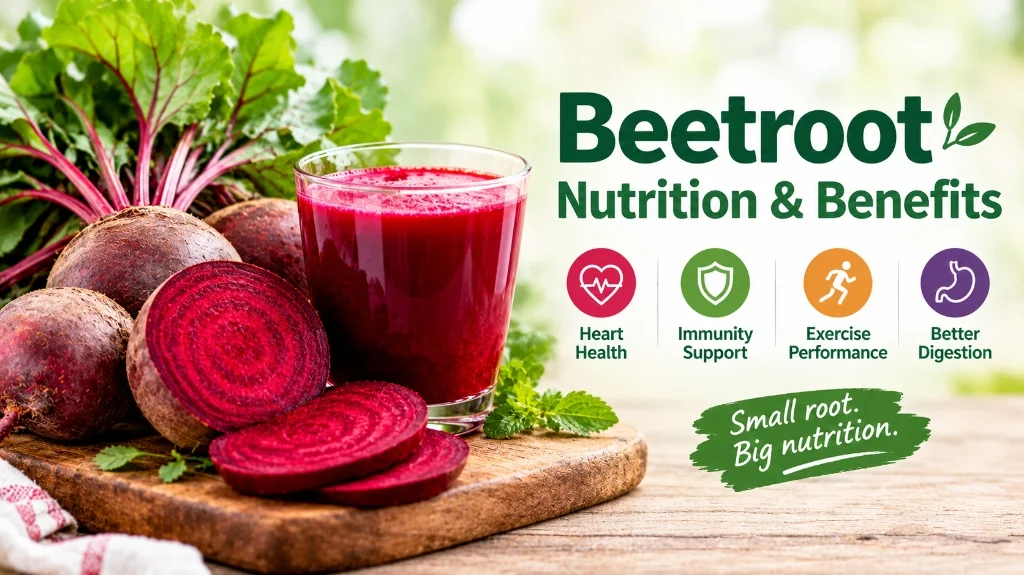
Beetroot provides dietary nitrates, dietary fiber, folate (vitamin B9), potassium, and potent betalain antioxidants while supplying only 43 calories per 100 grams. Clinical trials demonstrate that dietary nitrates convert to nitric oxide, promoting arterial vasodilation, lowering resting blood pressure by 3 to 10 mmHg, and improving oxygen efficiency during endurance exercise. Both whole beets and beetroot juice provide distinct nutritional advantages when integrated into a balanced dietary pattern.
Beetroot, often called beet, is a vibrant taproot vegetable grown worldwide for its earthy sweetness and rich ruby color. People enjoy it raw in salads, roasted with herbs, pickled, simmered in traditional soups, or pressed into concentrated ruby juices. Behind its distinct purple-red hue lies a rich nutritional profile that has attracted substantial attention from nutrition scientists and exercise physiologists alike.
The primary benefits of beetroot stem from its unique blend of dietary fiber, essential vitamins like folate, key minerals such as potassium and manganese, and distinct plant compounds including betalains. Most notably, beetroot is one of nature's densest sources of inorganic dietary nitrate. In the human body, nitrate converts into nitric oxide, a signaling gas that regulates blood vessel tone and blood flow. This guide examines verified laboratory nutrient data from USDA FoodData Central, peer-reviewed clinical trials on blood pressure and athletic stamina, practical kitchen preparation methods, and honest safety precautions.
What Are the Main Benefits of Beetroot?
Beetroot delivers dietary fiber, folate, potassium, and betalain antioxidants in a low-calorie root (43 kcal per 100 g). Its concentrated dietary nitrates convert to nitric oxide, which helps dilate blood vessels, supporting short-term blood pressure control and athletic endurance. Whole beets provide digestive fiber, whereas strained beet juice delivers rapid nitrate absorption with less bulk. Benefits vary based on individual biology, diet, and preparation methods.
What Is Beetroot?
Beetroot belongs to the Amaranthaceae family and is classified botanically as Beta vulgaris subsp. vulgaris Conditiva Group. While sugar beets are cultivated primarily for sucrose extraction and mangelwurzel beets are grown for livestock fodder, garden beetroot is prized specifically for culinary consumption. Both the bulbous root and the leafy green tops (beet greens) are edible and pack meaningful nutrition.
Although deep crimson-red beets are by far the most familiar variety in supermarkets, farmers also cultivate golden yellow varieties, white sugar beets, and Italian Chioggia heirlooms that reveal alternating candy-cane rings of red and white when sliced open. Beet greens resemble Swiss chard in appearance and flavor, providing vitamins A and K, while the taproot below stores carbohydrates, water, and mineral salts drawn upward from the soil.
Across international cuisines, beetroot holds a versatile culinary place. Eastern Europeans build hearty borscht soup around simmering beets, Indian cooks prepare dry spiced thoran and poriyal, Australians top burgers with sliced pickled beets, and Mediterranean kitchens roast whole unpeeled beets with olive oil, garlic, and sea salt. In recent decades, cold-pressed raw beetroot juice has emerged as a functional beverage favored by endurance runners, cyclists, and fitness enthusiasts.
Beetroot Nutrition Facts at a Glance
Nutritional values shift slightly depending on whether you consume beetroot raw, boiled in water, roasted in the oven, or pressed into strained juice. Cooking softens the plant's rigid cellular walls, which improves chewing comfort and starch digestibility, but water boiling can leach water-soluble vitamins into the discarded liquid.
The tables below display verified compositional data from USDA FoodData Central (FDC ID 169145 for raw beetroot and FDC ID 169146 for boiled, drained beetroot).
Beetroot Nutrition per 100 g (Raw vs. Boiled)
| Nutrient | Raw Beetroot (per 100 g) | Boiled Beetroot (per 100 g) | Daily Value (% DV)* |
|---|---|---|---|
| Energy (Calories) | 43 kcal (180 kJ) | 44 kcal (184 kJ) | 2.2% |
| Water Content | 87.58 g | 87.06 g | — |
| Protein | 1.61 g | 1.68 g | 3.3% |
| Total Fat | 0.17 g | 0.18 g | 0.2% |
| Total Carbohydrates | 9.56 g | 9.96 g | 3.5% |
| Dietary Fiber | 2.8 g | 2.0 g | 10.0% |
| Total Sugars | 6.76 g | 7.96 g | — |
| Folate (Vitamin B9) | 109 µg DFE | 80 µg DFE | 27.3% (Raw) |
| Vitamin C | 4.9 mg | 3.6 mg | 5.4% |
| Potassium | 325 mg | 305 mg | 6.9% |
| Magnesium | 23 mg | 23 mg | 5.5% |
| Iron | 0.80 mg | 0.79 mg | 4.4% |
| Manganese | 0.329 mg | 0.326 mg | 14.3% |
| Phosphorus | 40 mg | 38 mg | 3.2% |
| Sodium | 78 mg | 77 mg | 3.4% |
*Daily Values (DV) are based on a 2,000-calorie reference intake for healthy adults. Raw beetroot values derive from USDA FoodData Central FDC ID: 169145.
Beetroot Nutrition per Typical Household Serving
Root vegetables vary naturally in size, so purchasing "two medium beets" can yield between 140 grams and 260 grams of edible flesh. To help you estimate your meal intake realistically, the table below compares two standard kitchen servings: one cup of raw sliced beets (136 g) and one cup of boiled sliced beets (170 g).
| Nutrient Metric | 1 Cup Raw Sliced Beets (136 g) | 1 Cup Boiled Sliced Beets (170 g) |
|---|---|---|
| Calories | 58 kcal | 75 kcal |
| Carbohydrates | 13.0 g | 16.9 g |
| Dietary Fiber | 3.8 g | 3.4 g |
| Net Carbs | 9.2 g | 13.5 g |
| Total Sugars | 9.2 g | 13.5 g |
| Folate | 148 µg (37% DV) | 136 µg (34% DV) |
| Potassium | 442 mg (9.4% DV) | 519 mg (11.0% DV) |
| Manganese | 0.45 mg (20% DV) | 0.55 mg (24% DV) |
Key Nutrients and Their Biological Roles
Several specific micronutrients and structural compounds in beetroot deserve closer inspection:
- Folate (Vitamin B9): 100 grams of raw beetroot provides 109 µg of folate, exceeding a quarter of an adult's daily requirement (400 µg). Folate is essential for one-carbon transfers, cellular division, DNA synthesis, and normal red blood cell maturation. Adequate folate intake before and during early pregnancy is vital to prevent fetal neural tube defects.
- Dietary Fiber: Providing 2.8 grams per 100 grams raw, beetroot contains both soluble fiber (such as pectin) and insoluble fiber (cellulose and hemicellulose). Soluble fibers ferment in the colon to feed beneficial gut flora, while insoluble fiber increases stool bulk and promotes regular transit times.
- Potassium: With 325 mg per 100 grams, beetroot assists intracellular fluid balance and blunts the vasoconstrictive effects of dietary sodium on arterial walls. You can check your baseline energy and hydration balance with our free daily water intake calculator.
- Manganese: Beetroot supplies over 14% of the daily value for manganese per 100 grams. This trace mineral acts as a cofactor for antioxidant superoxide dismutase (MnSOD) and enzymes involved in bone formation and carbohydrate metabolism.
- Inorganic Nitrate (NO3-): Unlike synthetic nitrate food preservatives found in processed cured meats, the inorganic nitrates in beetroot occur naturally within a plant matrix packed with vitamin C and polyphenols that prevent harmful nitrosamine formation.
7 Potential Health Benefits of Beetroot
While the broad nutritional value of beetroot as a fiber- and vitamin-rich root vegetable is established beyond dispute, evidence regarding targeted therapeutic outcomes differs across clinical trials. Some claims—such as acute blood pressure reductions and exercise stamina—are supported by randomized human trials, whereas others rely primarily on preliminary mechanistic investigations. Here is what current research confirms.

1. May Support Healthy Blood Pressure
The cardiovascular mechanism of beetroot centers on the nitrate-nitrite-nitric oxide pathway. When you chew beetroot or drink beet juice, oral commensal bacteria on the surface of your tongue convert dietary nitrate (NO3-) into nitrite (NO2-) using bacterial nitrate reductase enzymes. Once swallowed into the acidic stomach and absorbed into systemic circulation, nitrite converts into nitric oxide (NO).
Nitric oxide enters the vascular smooth muscle lining, activating the enzyme soluble guanylyl cyclase (sGC). This elevates cyclic guanosine monophosphate (cGMP), which signals blood vessel walls to relax and widen. This vasodilation reduces systemic vascular resistance, easing arterial pressure.
A comprehensive 2024 systematic review and meta-analysis published in Frontiers in Nutrition (PMID: 39069465) evaluated 11 randomized controlled trials involving 349 adults with hypertension. The researchers observed a statistically significant reduction in clinic-measured systolic blood pressure following beetroot juice consumption. However, the certainty of evidence was graded as low, and changes across 24-hour ambulatory blood pressure monitoring (ABPM) were more modest and variable.
2. May Help Support Exercise Performance
Athletes across running, cycling, rowing, and team sports routinely use beetroot juice shots. Dietary nitrate reduces the oxygen cost of submaximal exercise, meaning muscles produce the same mechanical workload while consuming slightly less oxygen. Scientists attribute this to improved mitochondrial phosphorylation efficiency (a higher ATP-to-oxygen ratio).
Nitric oxide also improves localized microvascular perfusion, matching blood flow to hard-working fast-twitch and slow-twitch muscle fibers. The NIH Office of Dietary Supplements notes that nitrate supplementation can enhance performance in endurance exercises lasting roughly 4 to 30 minutes, extending time-to-exhaustion by 1% to 3%.
Research Protocol Timing: In clinical performance studies, participants typically drink 70 ml to 140 ml of concentrated beetroot juice (supplying 300 mg to 500 mg of inorganic nitrate) roughly 2 to 3 hours before exercise. This coincides with peak circulating plasma nitrite levels. Elite athletes with exceptionally high baseline VO2 max scores often experience smaller benefits than recreational athletes because their oxygen uptake efficiency is already optimized.
3. Provides Fiber for Digestive Health
Whole beetroot contains 2.8 grams of dietary fiber per 100 grams. This fiber remains undigested through the stomach and small intestine, arriving in the colon where it performs two vital functions:
- Stool Bulking: Insoluble cellulose and lignin add structural weight to stool, stimulating peristaltic bowel contractions and reducing transit time through the gastrointestinal tract.
- Microbiome Fuel: Soluble pectin fibers are fermented by beneficial colonic microbes into short-chain fatty acids (SCFAs) like acetate, propionate, and butyrate, which nourish colon epithelial cells and help maintain barrier integrity.
Keep in mind that commercial strained beet juices strip away almost all of this dietary fiber. If digestive regularity is your objective, eating steamed, roasted, or grated raw beetroot is far more effective than drinking clarified juice. You can also compare beetroot fiber with other nutrient-dense seeds in our review of chia seeds nutrition facts.
4. Supplies Folate and Other Essential Nutrients
Many modern diets fall short on natural food folates, relying instead on synthetic folic acid added to refined grain flours. Eating 150 grams of cooked or raw beetroot delivers nearly half of your baseline daily folate in its natural, bioavailable form.
Folate works in close biochemical partnership with vitamin B12 in the methylation cycle, converting homocysteine into methionine. Elevated blood homocysteine is an established independent marker associated with arterial endothelial dysfunction. While adding beets to your weekly dinner rotation supports healthy folate levels, eating them in isolation will not cure or reverse clinical nutrient deficiencies.
5. Contains Betalains and Other Plant Compounds
Beetroot owes its deep red-purple pigmentation to betalains, a group of water-soluble nitrogenous pigments distinct from common anthocyanins. Betalains are divided into two main chemical classes:
- Betacyanins: Red-violet pigments, primarily betanin, which makes up 75% to 95% of total beet pigments.
- Betaxanthins: Yellow-orange pigments, primarily vulgaxanthin.
In test-tube laboratory assays (such as ORAC and FRAP), betalains demonstrate strong free-radical scavenging capacity. In cell cultures, betanin protects cell membrane lipids against oxidative degradation. However, human digestive bioavailability is relatively modest; much of the betalain content is metabolized or excreted in urine without entering systemic tissues. While laboratory findings are promising, they should not be confused with proven clinical cures for chronic disease.
6. May Contribute to Cardiovascular Health
Cardiovascular health extends beyond immediate blood pressure numbers. Endothelial dysfunction—a condition where the inner arterial lining fails to dilate properly in response to blood flow—is a primary precursor to atherosclerosis.
By augmenting endogenous nitric oxide reserves, dietary nitrate from beetroot helps restore flow-mediated dilation (FMD) in peripheral arteries. Several small human trials have also noted slight reductions in arterial pulse wave velocity, an index of arterial stiffness. These vascular improvements support cardiovascular function as part of an active lifestyle, though no clinical evidence indicates that eating beets can single-handedly prevent heart attacks or strokes.
7. Can Be Part of a Balanced Weight-Management Diet
Beetroot fits naturally into weight-conscious meal planning due to its low energy density. With only 43 calories per 100 grams, roughly 88% of a fresh beet is water. Pairing high water content with 2.8 grams of fiber creates substantial meal volume that fills the stomach without overloading calorie budgets.
Clinical research shows that whole vegetables requiring thorough chewing promote earlier satiety signaling via gut peptides such as peptide YY (PYY) and glucagon-like peptide-1 (GLP-1). To determine how beetroot fits into your overall body composition strategy, check your baseline Body Mass Index using our free BMI calculator.
Beetroot Juice Benefits: Is It Different from Whole Beetroot?
A common consumer question is whether drinking beetroot juice provides the exact same nutritional benefits as eating whole cooked or raw beets. While juice and whole beets come from the same plant, their nutritional behavior in the human digestive system is notably different.
When raw beets are juiced through a mechanical press and strained, the liquid extracted carries water, soluble sugars (sucrose, glucose, fructose), inorganic nitrates, and water-soluble minerals like potassium. However, the pulp containing insoluble cellulose and pectin is left behind in the strainer. As a result, 250 ml (one cup) of pure beetroot juice requires approximately 3 to 4 whole beets to produce, concentrating both nitrates and natural sugars while eliminating almost all dietary fiber.
Comparison: Beetroot Juice vs. Whole Beetroot
| Nutritional Attribute | Whole Raw Beetroot (150 g / ~1 cup sliced) | Fresh Beetroot Juice (250 ml / ~1 cup) |
|---|---|---|
| Calories | ~65 kcal | ~100–110 kcal |
| Dietary Fiber | 4.2 g (Intact soluble + insoluble) | 0.4–1.0 g (Minimal if strained) |
| Natural Sugars | 10.1 g | 20.0–24.0 g |
| Nitrate Delivery | Moderate (~150–250 mg, dependent on soil) | High (~300–500 mg, concentrated) |
| Nitrate Absorption Speed | Slower (buffered by fiber digestion) | Fast (liquid gastric emptying in ~20–30 min) |
| Satiety & Fullness | High (requires chewing, fills stomach) | Low (rapid liquid transit, less satiating) |
| Best Practical Purpose | Daily meal nutrition, salads, gut health | Pre-workout athletic stamina, targeted nitrate intake |
For general wellness, metabolic balance, and digestive regularity, whole beetroot is the superior everyday choice. For athletes seeking rapid nitrate delivery without stomach fullness before intense competition, concentrated beetroot juice provides an efficient vehicle.
Raw vs. Cooked Beetroot: Which Is Better?
Neither raw nor cooked beetroot is universally superior; each preparation method offers distinct nutritional tradeoffs and culinary textures.
- Raw Beetroot: Grating fresh peeled raw beet over leafy salads or grain bowls delivers 100% of its native vitamin C and folate, both of which are heat-sensitive. However, raw beet flesh contains firm cellulose structures that can be tough to chew and harder for sensitive digestive systems to break down.
- Steamed Beetroot: Steaming unpeeled beets over simmering water for 30 to 45 minutes tenderizes the flesh while keeping water contact minimal. This softens the fiber, preserves over 80% of dietary nitrates and betalains, and allows the skins to slip off effortlessly.
- Roasted Beetroot: Wrapping whole beets in foil and roasting them at 200°C (400°F) caramelizes their natural sugars, concentrating their deep earthy flavor. While prolonged dry heat degrades a portion of vitamin C and folate, minerals and fiber remain intact.
- Boiled Beetroot: Submerging cut beets in boiling water causes significant leaching. Water-soluble betacyanins, inorganic nitrates, and soluble oxalates escape into the cooking liquid. If you discard the water, you lose roughly 30% to 50% of the nitrate content. However, for individuals prone to calcium oxalate kidney stones, this leaching is a beneficial advantage.
| Preparation Method | Nutrient Retention | Digestibility | Best Culinary Use |
|---|---|---|---|
| Raw (Shredded / Sliced) | Maximum vitamin C and folate | Requires thorough chewing; firm | Slaws, salads, wraps, fresh smoothies |
| Steamed (Whole) | High retention of nitrates & betalains | Tender, easily digested | Side dishes, warm grain bowls, purees |
| Roasted (Oven) | Moderate; sugars caramelize | Very soft, rich flavor | Roasted root medley, goat cheese salads |
| Boiled (Water) | Lowest (nitrates and pigments leach) | Softest texture | Soups (borscht), pickling, lower-oxalate diets |
How to Eat Beetroot: Practical Culinary Ideas
If you find the earthy flavor of boiled beets unappealing, varied kitchen preparations can transform the vegetable entirely:
- Fresh Citrus Slaw: Peel and grate raw beetroot alongside crisp carrots and green apples. Toss with lemon juice, a splash of extra-virgin olive oil, and toasted sunflower seeds to balance the root's earthiness with bright acidity.
- Roasted Wedges: Cut peeled beets into wedges, toss with olive oil, sea salt, cracked black pepper, and fresh rosemary or thyme. Roast at 200°C (400°F) until fork-tender and caramelized around the edges.
- Nutrient-Dense Smoothies: Blend half a small raw or steamed beet with frozen strawberries, half a banana, Greek yogurt, and water. The sweetness of the fruit easily masks the root's earthy notes. You can explore how bananas complement your nutrient profile in our banana nutrition facts guide.
- Pickled Slices: Simmer sliced beets with apple cider vinegar, water, whole cloves, and a touch of honey for a tangy sandwich topper.
Simple Beetroot Juice Recipe
Fresh Beet, Apple & Ginger Tonic
Yield: Approximately 1 serving (280–320 ml) | Prep Time: 10 minutes
- 1 medium fresh beetroot (approx. 130–150 g), washed thoroughly and trimmed
- 1 crisp green apple (Granny Smith works best for tartness)
- 1 medium carrot, scrubbed clean
- 1/2 inch (1.5 cm) fresh ginger root, peeled
- 1/2 fresh lemon, juiced (added at the end)
- 100 ml cold filtered water (if using a blender instead of an electric juicer)
- Produce Hygiene: Root vegetables grow in direct contact with soil. Scrub the beetroot and carrot thoroughly with a vegetable brush under cold running water to remove all surface grit and soil bacteria.
- Preparation: Chop the beet, apple, and carrot into 1-inch chunks to protect your appliance blades.
- Juicing Method: Feed the chunks through a masticating or centrifugal juicer. If using a high-speed blender, add the 100 ml of cold water and blend on high for 60 seconds until completely liquefied, then pour through a fine-mesh nut milk bag or strainer if you prefer smooth juice.
- Finish & Serve: Stir in the fresh lemon juice. Drink immediately to minimize nutrient oxidation from air exposure.
Safety Note: Fresh unpasteurized vegetable juices should be consumed within 24 hours and kept refrigerated in a sealed glass jar.
How Much Beetroot Should You Eat?
There is no single official dietary intake recommendation for beetroot. For general nutritional wellness, dietary guidelines emphasize eating a wide rainbow of vegetables throughout the week rather than consuming excessive quantities of any single root.
A practical, balanced serving for healthy adults is:
- Whole Beets: 1 small to medium beetroot (roughly 80 g to 130 g) or 1/2 to 1 cup sliced, consumed 2 to 4 times per week.
- Beet Juice: 150 ml to 250 ml of fresh juice, or a single concentrated 70 ml commercial athletic shot before physical activity.
Keep in mind that the nitrate content of store-bought beets varies dramatically depending on soil nitrogen levels, farming practices, sunlight exposure, and harvest season. One beet grown in nitrate-rich soil may contain five times the nitrate of a beet grown in nutrient-depleted soil. For this reason, clinical athletic studies use standardized, quality-tested juice concentrates rather than random market beets.
Beetroot Side Effects and Precautions
For the vast majority of healthy individuals, beetroot is an exceptionally safe whole food. Nonetheless, its distinct chemical composition can cause noticeable bodily reactions that warrant clear explanation.
Pink or Red Urine and Stool (Beeturia)
Within 24 to 48 hours after eating beets or drinking beet juice, you might notice your urine turning pink, red, or dark purple, accompanied by red-tinged bowel movements. This phenomenon is known clinically as beeturia.
Beeturia occurs in approximately 10% to 14% of the general population. It happens when stomach acid fails to break down the red pigment betanin, allowing it to pass intact through the intestinal wall, circulate in the bloodstream, and filter out through the kidneys into the bladder. Beeturia is entirely harmless and subsides once the pigments clear your body.
When to Seek Medical Evaluation: While red urine following a beet salad is benign, persistent pink or red urine that continues several days after eating beets—or urine containing visible blood clots—is a sign of hematuria. Hematuria can stem from urinary tract infections, kidney stones, or bladder pathology and requires prompt medical attention.
Kidney Stones and Oxalates
Beetroot contains dietary oxalates (oxalic acid), naturally occurring organic compounds found in many plant foods. In the human body, oxalates can bind with calcium in the kidneys to form calcium oxalate crystals, which represent the most common type of kidney stone.
Beetroot roots contain moderate oxalate concentrations (roughly 60 mg to 75 mg per 100 grams), while beet greens pack significantly higher levels (600 mg to 900 mg per 100 grams). If you have a personal or family history of calcium oxalate nephrolithiasis, your nephrologist or dietitian may advise limiting high-oxalate vegetables. Boiling beets and discarding the water reduces soluble oxalate content significantly.
Blood Pressure and Concentrated Beetroot Juice
Because concentrated beetroot juice delivers potent vasodilatory nitrates, consuming large quantities alongside prescription antihypertensive medications (such as ACE inhibitors, ARBs, calcium channel blockers, or beta-blockers) could theoretically trigger an additive blood pressure reduction, leading to lightheadedness or postural dizziness.
Critical Drug Precaution: Never consume concentrated beetroot juice shots or nitrate supplements concurrently with prescription organic nitrates (such as nitroglycerin for angina) or phosphodiesterase-5 (PDE-5) inhibitors (such as sildenafil, tadalafil, or vardenafil). Combining these compounds causes profound, uncontrolled systemic vasodilation and dangerous drops in blood pressure.
Digestive Discomfort and FODMAPs
Beetroot contains short-chain carbohydrates known as fructans and galacto-oligosaccharides (GOS), which fall under the FODMAP classification (Fermentable Oligosaccharides, Disaccharides, Monosaccharides, and Polyols). People with Irritable Bowel Syndrome (IBS) or visceral hypersensitivity may experience gas, abdominal bloating, or cramping when consuming servings larger than two to three slices. Sticking to small portions (30 g to 40 g) or choosing pickled beets (where some fructans leach out) can improve tolerance.
Frequently Asked Questions About Beetroot
1. What are the main benefits of beetroot?
Beetroot provides dietary fiber, folate, potassium, and plant compounds known as betalains. Its naturally occurring inorganic nitrates support the body's nitric oxide production, which helps relax blood vessels and can support healthy circulation and aerobic endurance.
2. What are the nutrition facts for beetroot per 100 g?
According to USDA FoodData Central, 100 grams of raw beetroot provides roughly 43 calories, 1.6 grams of protein, 0.2 grams of fat, 9.6 grams of total carbohydrates, 2.8 grams of dietary fiber, 6.8 grams of natural sugars, 109 micrograms of folate (27% DV), and 325 milligrams of potassium.
3. Is beetroot good for blood pressure?
Clinical trials show that dietary nitrates in beetroot can produce modest, short-term reductions in clinic systolic blood pressure, typically peaking 2 to 6 hours after consumption. However, effects vary among individuals and beetroot cannot replace prescribed blood pressure medications.
4. What are the benefits of beetroot juice?
Beetroot juice delivers a concentrated dose of inorganic nitrates, potassium, and antioxidants in an easily consumed liquid format. Athletes often drink it 2 to 3 hours before endurance workouts to support oxygen economy and stamina.
5. Is eating beetroot better than drinking beetroot juice?
Eating whole beetroot retains its 2.8 grams of dietary fiber per 100 grams, promoting satiety and regular digestion. Strained juice provides faster nitrate absorption but removes most fiber and concentrates natural sugars, making whole beets preferable for daily meal balance.
6. Can beetroot help improve exercise performance?
Yes, research reviewed by the NIH Office of Dietary Supplements indicates that nitrate-rich beetroot juice can improve time to exhaustion and submaximal exercise efficiency in recreational athletes. Highly trained elite endurance athletes generally observe smaller benefits.
7. Can I eat beetroot every day?
Enjoying a moderate serving (such as one small beet or half a cup sliced) daily is safe for most healthy adults as part of a varied vegetable intake. People prone to calcium oxalate kidney stones should monitor their overall oxalate intake.
8. Is raw beetroot healthier than cooked beetroot?
Raw beetroot preserves heat-sensitive vitamin C and folate intact. Light steaming or gentle roasting softens the root for easier digestion while preserving most nitrates. Boiling causes water-soluble nitrates, betalains, and oxalates to leach into the cooking water.
9. Does beetroot contain iron?
Beetroot contains modest amounts of non-heme iron (about 0.8 mg per 100 grams, or 4% to 10% of daily needs). While helpful in a balanced plant-based diet, it is not an exceptionally high iron source on its own.
10. Does beetroot help with weight loss?
Beetroot does not burn fat directly. However, its low calorie density (43 calories per 100 g), 88% water content, and dietary fiber make it a filling, nutrient-dense choice that supports structured calorie-controlled meal plans.
11. Can beetroot turn urine or stool red?
Yes. This harmless condition is called beeturia. It occurs in roughly 10% to 14% of people when the red betanin pigment survives stomach acid and is excreted in urine or bowel movements. Persistent discoloration without beet consumption should be checked by a doctor.
12. Who should be careful about consuming beetroot?
Individuals with a history of calcium oxalate kidney stones should moderate portion sizes. Anyone taking blood pressure medications, nitrates, or PDE-5 inhibitors should consult their doctor before taking concentrated beetroot shots or large daily amounts of juice.
Final Thoughts
Beetroot is a nutrient-dense root vegetable that offers far more than earthy culinary depth. With only 43 calories per 100 grams, it supplies meaningful amounts of folate, dietary fiber, potassium, manganese, and unique betalain antioxidants. Its inorganic nitrates provide verified physiological support for vascular tone, blood flow, and aerobic stamina in active individuals.
At the same time, maintaining realistic expectations is essential. Beetroot is a wholesome whole food, not a medical cure for cardiovascular disease or hypertension. By roasting whole beets, grating fresh roots into crisp slaws, or sipping an occasional pre-workout juice, you can enjoy the genuine benefits of beetroot within a varied, well-balanced diet.
References and Scientific Sources
- U.S. Department of Agriculture (USDA), Agricultural Research Service. FoodData Central: Beets, raw (FDC ID 169145, NDB 11080) and Beets, cooked, boiled, drained (FDC ID 169146, NDB 11081). Available from: https://fdc.nal.usda.gov/
- National Institutes of Health (NIH) Office of Dietary Supplements. Dietary Supplements for Exercise and Athletic Performance: Nitrate. Health Professional Fact Sheet. Updated 2024. Available from: https://ods.od.nih.gov/factsheets/ExerciseAndAthleticPerformance-HealthProfessional/
- Li J, et al. The effects of beetroot juice supplementation on blood pressure in patients with hypertension: A systematic review and meta-analysis of randomized controlled trials. Frontiers in Nutrition. 2024;11:1418858. PubMed PMID: 39069465.
- Stanaway L, et al. Performance and Health Benefits of Dietary Nitrate Supplementation in Older Adults: A Systematic Review. Nutrients. 2017;9(11):1171. PubMed PMID: 29077054.
- Clifford T, et al. The Potential Benefits of Red Beetroot Supplementation in Health and Disease. Nutrients. 2015;7(4):2801-2822. PubMed PMID: 25875148.
- Bonilla Ocampo DA, et al. Dietary Nitrate from Beetroot Juice for Hypertension: A Systematic Review. Biomolecules. 2018;8(4):134. PubMed PMID: 30388796.
- Siervo M, et al. Inorganic nitrate and beetroot juice supplementation reduces blood pressure in adults: a systematic review and meta-analysis. The Journal of Nutrition. 2013;143(6):818-826. PubMed PMID: 23596162.
- Harvard T.H. Chan School of Public Health. The Nutrition Source: Vegetables and Fruits & Fiber. Available from: https://www.hsph.harvard.edu/nutritionsource/
SmartCalc Health & Nutrition Team
Our nutrition and physiology researchers synthesize peer-reviewed clinical studies, USDA food composition databases, and NIH dietary guidance into clear, transparent, and evidence-based guides for everyday wellness.