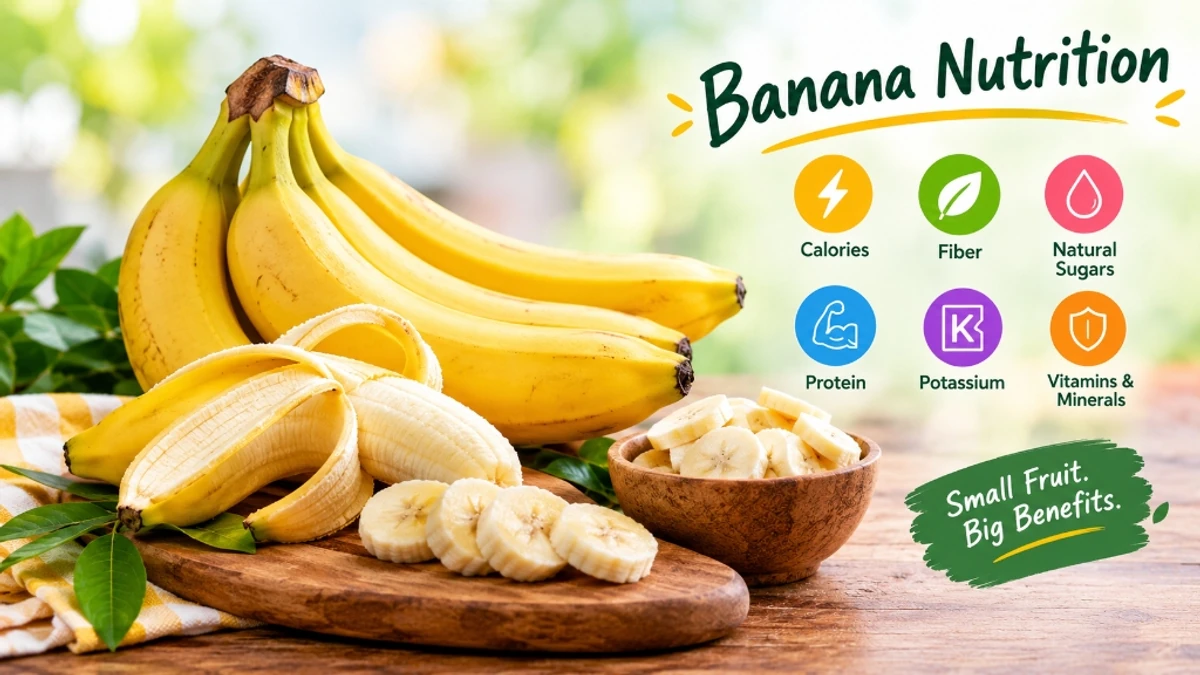
How many calories are in a banana, and does its natural sweetness deliver too much sugar for everyday health targets? People often hesitate before picking up a banana, wondering whether its carbohydrate density works for weight management or blood sugar control. Bananas (Musa acuminata) rank among the most widely consumed fruits across the globe. Behind their bright peel lies a steady balance of natural electrolytes, soluble plant fibers, and key vitamins that fuel daily activity.
This guide analyzes verified banana nutrition facts per 100 grams and across standard fruit sizes using primary laboratory records from USDA FoodData Central. You will find clear figures for calories, starch, and sugars, seven evidence-backed health areas, differences between green and ripe fruit, and practical ideas for everyday meals.
Yes. Bananas are a wholesome, nutrient-dense fruit that supplies steady energy from carbohydrates alongside dietary fiber, potassium, and vitamin B6. While they contain more carbohydrates than watery fruits like watermelon, their natural sugars come packaged with fiber, water, and micronutrients rather than empty calories:
- Calories: 89 calories per 100 grams; about 105 calories in an average medium fruit (118 g peeled).
- Carbohydrates: 22.8 grams per 100 grams, providing sustained fuel for brain and muscle tissues.
- Potassium: 358 mg per 100 grams (422 mg per medium fruit), supporting normal fluid balance and nerve transmission.
- Fiber: 2.6 grams per 100 grams (3.1 g per medium fruit), including prebiotic fructooligosaccharides and pectin.
- Dietary context: One medium banana fits smoothly into calorie-conscious and heart-healthy eating routines.
Banana Nutrition Facts at a Glance
To evaluate what a banana contributes to your daily targets, look at raw banana flesh without the peel. The figures below come from the USDA FoodData Central reference entry FDC ID 173944 (Bananas, raw). We present amounts per 100 grams of edible portion alongside a standard medium banana weighing 118 grams, which represents the edible pulp of a typical seven-to-eight-inch fruit:

| Nutrient | Per 100 g Raw Banana | Per Medium Banana (118 g Edible) | % Daily Value (per Medium Fruit) |
|---|---|---|---|
| Calories | 89 kcal | 105 kcal | 5% |
| Water Content | 74.9 g | 88.4 g | — |
| Total Carbohydrates | 22.8 g | 27.0 g | 10% |
| Dietary Fiber | 2.6 g | 3.1 g | 11% |
| Total Sugars | 12.2 g | 14.4 g | — |
| Protein | 1.1 g | 1.3 g | 3% |
| Total Fat | 0.33 g | 0.39 g | <1% |
| Saturated Fat | 0.11 g | 0.13 g | 1% |
| Potassium | 358 mg | 422 mg | 9% |
| Vitamin B6 (Pyridoxine) | 0.37 mg | 0.43 mg | 25% |
| Vitamin C | 8.7 mg | 10.3 mg | 11% |
| Magnesium | 27 mg | 32 mg | 8% |
| Folate (Vitamin B9) | 20 µg | 24 µg | 6% |
Note: Daily Values (DV) are based on the standard 2,000-calorie reference diet established by the US FDA. Values apply to the edible flesh only. Actual nutrient totals vary modestly based on agricultural soil conditions, variety, and ripeness stage.
How Many Calories Are in a Banana?
The energy provided by a banana relates directly to its scale. While people speak of "a banana" as a fixed unit, real fruits in a grocery bunch vary from short six-inch fingers to thick nine-inch specimens. The inedible skin makes up roughly 30% to 35% of the total harvest weight. When counting calories, you only measure the peeled flesh that you actually eat.
USDA laboratory records divide commercial bananas into specific size brackets based on length and edible weight. Knowing these weights helps you record your food intake accurately in our free calorie calculator without guessing:
| Banana Size / Serving Portion | Edible Weight (Peeled) | Calories (kcal) | Carbs (g) | Fiber (g) | Potassium (mg) |
|---|---|---|---|---|---|
| Small Banana (6" to 6-7/8" long) | 101 g | 90 kcal | 23.1 g | 2.6 g | 362 mg |
| Medium Banana (7" to 7-7/8" long) | 118 g | 105 kcal | 27.0 g | 3.1 g | 422 mg |
| Large Banana (8" to 8-7/8" long) | 136 g | 121 kcal | 31.1 g | 3.5 g | 487 mg |
| 100 Gram Reference Serving | 100 g | 89 kcal | 22.8 g | 2.6 g | 358 mg |
| Sliced Banana (1 cup) | 150 g | 134 kcal | 34.3 g | 3.9 g | 537 mg |
| Two Medium Bananas | 236 g | 210 kcal | 53.9 g | 6.1 g | 845 mg |
If you track daily energy targets for athletic goals or fat loss, using a digital kitchen scale for a few days provides clarity. Peeling a medium banana and placing the flesh on a scale shows whether your usual pick sits closer to 100 grams or 140 grams. For general wellness, estimating an average piece at 105 calories works reliably.
Banana Carbohydrates, Sugar, Fiber and Protein
Unlike berries or melons that consist of over 90% water, banana pulp contains roughly 75% water and 23% carbohydrates. Understanding how those carbohydrates break down into starch, fiber, and sugars explains how bananas behave in your digestive system.
How Many Carbs Are in a Banana?
A medium banana delivers 27.0 grams of total carbohydrates. When subtracting its 3.1 grams of dietary fiber, you get approximately 23.9 grams of net carbohydrates. The type of carbohydrate changes dramatically as the fruit matures. In an unripe green banana, starch forms the bulk of the carbohydrates. As ethylene gas naturally ripens the fruit, plant enzymes convert those complex starches into simpler sugars, softening the flesh and increasing its sweetness.
How Much Sugar Does a Banana Contain?
A medium yellow banana contains roughly 14.4 grams of total sugar. This sugar consists of three naturally occurring types: sucrose (about 2.8 grams), glucose (around 5.9 grams), and fructose (around 5.7 grams). These intrinsic fruit sugars sit inside plant cell walls alongside water, pectin, and micronutrients. They enter your bloodstream more gradually than isolated, refined sugars found in sweetened beverages or baked desserts.
Is Banana a Good Source of Fiber?
With 3.1 grams of dietary fiber in a medium piece (2.6 grams per 100 grams), bananas supply about 11% of your daily fiber goal. The fiber profile features two notable components: soluble pectin and insoluble cellulose. Pectin forms a gentle gel in the presence of water, which helps moderate the rate of gastric emptying and softens stool texture. Bananas also contain fructooligosaccharides (FOS), short-chain carbohydrate molecules that serve as prebiotics by nourishing beneficial bacterial strains in your large intestine.
How Much Protein Is in a Banana?
Bananas supply 1.3 grams of protein in a medium piece (1.09 grams per 100 grams). Fresh fruits generally do not serve as meaningful protein sources. If your goal involves muscle recovery or satiety across a long afternoon, enjoy your banana alongside Greek curd, boiled eggs, or a handful of roasted almonds to build a balanced snack.
Does a Banana Contain Fat?
A medium banana contains practically no fat, registering just 0.39 grams per fruit (less than half a gram). Saturated fatty acids account for only 0.13 grams. The fruit provides no dietary cholesterol. This near-zero fat content makes bananas an easy option for individuals following lower-fat dietary protocols for gallbladder or cardiovascular concerns.
Vitamins and Minerals in Bananas
Beyond basic macronutrients, bananas deliver several micronutrients that participate in cellular energy cycles and neuromuscular communication:
Vitamin B6 (Pyridoxine)
Vitamin B6 represents one of the standout micronutrients in bananas. A single medium fruit supplies 0.43 mg of pyridoxine, which covers about 25% of the recommended Daily Value for adults. Vitamin B6 acts as a coenzyme in more than 100 enzymatic reactions, primarily involving protein metabolism, red blood cell hemoglobin formation, and the synthesis of neurotransmitters such as dopamine and serotonin.
Potassium
A medium banana delivers 422 mg of potassium, fulfilling roughly 9% of the revised 4,700 mg Daily Value for adults. Potassium serves as the primary intracellular cation in human physiology. It works alongside extracellular sodium to maintain resting membrane potential across muscle fibers and cardiac tissue. Adequate dietary potassium intake helps balance sodium levels, easing tension in blood vessel walls.
Vitamin C
While people typically look to citrus or kiwi for ascorbic acid, bananas provide a helpful secondary source. One medium banana provides 10.3 mg of vitamin C, or roughly 11% of the Daily Value. Vitamin C supports tissue collagen synthesis, assists non-heme iron absorption from plant meals, and works as an antioxidant that protects cellular membranes against oxidative stress.
Magnesium
Supplying 32 mg per medium fruit (8% of the Daily Value), bananas add to your daily intake of magnesium. This mineral participates in over 300 biochemical reactions in the human body, including energy production through ATP synthesis, structural bone development, and normal muscle relaxation after contraction.
Folate and Other Micronutrients
Bananas supply 24 micrograms of dietary folate (6% DV), a B vitamin necessary for DNA synthesis and normal cell division. You also obtain small amounts of manganese (about 13% DV), which acts as a cofactor for antioxidant enzymes, alongside trace levels of copper, riboflavin, and pantothenic acid.
7 Potential Health Benefits of Bananas
Evaluating the health impact of whole foods requires looking at verified nutrient roles rather than exaggerated health marketing. Below are seven distinct ways bananas contribute to a healthy dietary pattern:
1. Provides Readily Available Carbohydrate Energy
The combination of glucose, fructose, and sucrose in ripe bananas delivers practical muscular energy. Glucose absorbs directly across the intestinal wall into circulation, while fructose undergoes hepatic processing for sustained release. This balance offers quick fuel for physical work or mental focus without requiring lengthy digestion, which explains why endurance athletes frequently consume bananas during long training sessions.
2. Contributes to Daily Dietary Fiber Intake
Most adults consume far less than the recommended 25 to 30 grams of fiber each day. Adding a medium banana contributes 3.1 grams of fiber toward that target. Regular fiber consumption promotes comfortable stool transit, adds natural bulk to meals, and supports long-term digestive wellness without irritating the gastrointestinal tract.
3. Delivers Potassium for Normal Muscle and Nerve Function
Every heartbeat and skeletal muscle contraction depends on balanced electrolyte exchange across cellular membranes. The 422 mg of potassium in a medium banana supports these electrochemical gradients. While eating bananas alone cannot resolve medical hypertension, regular intake of potassium-rich produce within an overall low-sodium dietary pattern supports normal vascular tone.
4. Supplies Vitamin B6 for Metabolic and Neurological Health
Supplying a quarter of your daily vitamin B6 needs in one piece of fruit makes bananas a reliable whole-food source of this nutrient. Vitamin B6 helps break down dietary proteins into usable amino acids and assists in converting stored glycogen into glucose when blood sugar dips between meals.
5. Contributes to Normal Digestive Function
Bananas have long formed part of gentle clinical recovery diets because their low fat, low residue, and soft texture place minimal mechanical stress on the stomach. Slightly green bananas provide resistant starch, which reaches the large intestine intact. Once there, friendly gut bacteria ferment this starch into short-chain fatty acids (like butyrate), which nourish the cells lining the colon.
6. Serves as a Convenient Pre- or Post-Exercise Snack
A ripe banana comes in its own biodegradable protective wrapper, stays stable at room temperature, and requires no preparation. Consuming a medium banana 30 to 45 minutes before exercise raises circulating glycogen precursors without causing heavy gastrointestinal fullness. Following hard workouts, combining a banana with a protein source replenishes depleted muscle glycogen stores efficiently.
7. Fits Smoothly Into a Calorie-Aware Diet
At 105 calories per medium fruit, bananas offer a satisfying sweet flavor that helps replace processed confectionery or bakery items that often carry two to three times as many calories per serving. Whole fruit provides chew time, natural moisture, and bulk, helping individuals adhere to balanced eating patterns over weeks and months.
Is Banana Good for Weight Loss?
A common dietary myth claims that bananas cause weight gain because of their carbohydrate and sugar content. In reality, weight gain or loss is determined by overall energy balance over time—whether your total caloric intake exceeds or stays below your total daily energy expenditure (TDEE). No single fruit causes fat accumulation on its own.
In fact, bananas can support a weight loss plan through several practical mechanisms:
- Satiety per calorie: A 105-calorie banana provides 118 grams of edible mass and over 3 grams of fiber. This bulk creates physical stretch in the stomach, triggering satiety signals that processed snack foods rarely produce at similar calorie levels.
- Craving control: The natural sweetness of a banana often satisfies a desire for dessert while delivering vitamins and potassium instead of added fats and refined flours.
- Easy portion budgeting: Unlike loose snacks that are easy to overeat from a bag, a banana comes as an individual, pre-portioned unit. You know exactly what you are eating.
If you are planning a calorie deficit, use our calorie deficit and TDEE guide to calculate your daily energy targets, and log a medium banana as approximately 105 calories within your meal plan.
Can People With Diabetes Eat Bananas?
People managing type 2 diabetes or prediabetes often wonder if bananas are off-limits. Authoritative bodies like the American Diabetes Association confirm that whole fruits, including bananas, can fit into a diabetes meal plan when portions and pairings are managed thoughtfully.
The glycemic index (GI) of a ripe yellow banana ranges between 51 and 58, which falls into the low-to-medium category. More importantly, its glycemic load (GL) sits around 11 to 13 for a medium fruit, which is considered moderate. Here are sensible steps to keep blood glucose steady:
- Choose smaller sizes: Pick a small banana (around 100 grams, 23 g carbs) rather than an extra-large fruit (over 30 g carbs) to control the total carbohydrate load.
- Select slightly yellow-green fruit: Bananas with a hint of green at the stem contain more resistant starch and less free sugar, resulting in a slower rise in post-meal glucose.
- Pair with protein or fat: Eating banana slices with a tablespoon of peanut butter, a handful of walnuts, or unsweetened curd slows gastric emptying and blunts blood sugar spikes.
- Count the carbohydrates: Factor the 27 grams of total carbs in a medium banana into your meal's overall carbohydrate budget.
Green Bananas vs Ripe Bananas: What's the Difference?
As a banana ripens on your kitchen counter, its internal chemistry changes noticeably. Chlorophyll in the skin breaks down, unmasking yellow carotenoid pigments, while internal amylase enzymes dismantle long starch chains into simple mono- and disaccharides.
Neither stage is superior; each offers distinct nutritional and culinary properties:
| Attribute | Unripe / Green Banana | Ripe / Yellow Banana | Overripe / Brown-Speckled Banana |
|---|---|---|---|
| Physical Texture | Firm, dense, slightly chalky | Soft, creamy, smooth | Very soft, mushy, highly aromatic |
| Starch Composition | High in resistant starch (up to 70% of dry starch) | Mostly converted to simple sugars; low resistant starch (<1%) | Starch almost completely converted to simple sugars |
| Sugar Content | Very low natural sugars (<2 g per 100 g) | Moderate natural sugars (~12 g per 100 g) | Highest free sugar concentration (~14–15 g per 100 g) |
| Glycemic Index (GI) | Low (~30) | Low to Medium (~51–58) | Medium (~60–65) |
| Digestive Impact | Acts as a prebiotic; feeds colon bacteria; takes longer to digest | Rapidly digested; gentle on the stomach; easy on sensitive bowels | Fastest digestion; sweet taste; minimal chewing effort required |
| Ideal Everyday Uses | Savory cooking, boiling, curries, prebiotic green smoothies | Fresh eating, oatmeal toppings, pre-workout snack | Natural baking, banana bread, pancakes, homemade frozen fruit whips |
Banana vs Other Fruits: Which Has More Calories?
When planning your daily produce intake, comparing fruits on a standardized 100-gram edible basis provides perspective. Bananas carry higher carbohydrate and calorie density than high-water fruits like watermelon or berries, but provide more satiety and potassium per gram.
Here is how 100 grams of raw banana compares with common fruits from our nutrition series, including our detailed guides on kiwi nutrition facts and watermelon nutrition facts:
| Fruit (100 g Raw Edible) | Calories | Carbs (g) | Sugars (g) | Fiber (g) | Potassium (mg) | Vitamin C (mg) |
|---|---|---|---|---|---|---|
| Banana | 89 kcal | 22.8 g | 12.2 g | 2.6 g | 358 mg | 8.7 mg |
| Green Kiwi | 61 kcal | 14.7 g | 9.0 g | 3.0 g | 312 mg | 92.7 mg |
| Watermelon | 30 kcal | 7.6 g | 6.2 g | 0.4 g | 112 mg | 8.1 mg |
| Apple (with skin) | 52 kcal | 13.8 g | 10.4 g | 2.4 g | 107 mg | 4.6 mg |
| Orange (navel) | 47 kcal | 11.8 g | 9.4 g | 2.4 g | 181 mg | 53.2 mg |
This comparison shows that no single fruit wins across every category. Bananas lead in potassium and energy density, kiwi provides superior vitamin C and fiber, while watermelon offers high hydration with minimal calories. Rotating through different fruits ensures you enjoy varied nutritional benefits.
Best Ways to Include Bananas in Your Diet
Bananas require zero culinary preparation, but pairing them with protein- or fiber-rich whole foods creates balanced, satisfying snacks. Here are practical ways to enjoy them:
🥣 Sliced Over Warm Oatmeal or Porridge
Slice half a medium banana over steel-cut or rolled oats cooked in water or milk. The residual heat softens the fruit, naturally sweetening the bowl without any need for brown sugar or honey, while adding soluble beta-glucan and pectin fibers.
🥛 Paired With Plain Greek Curd or Yogurt
Fold diced banana into unsweetened Greek yogurt. The tartness of the cultured dairy complements the natural sweetness of the fruit, while the 15 to 20 grams of dairy protein keeps you satisfied for hours.
🥜 Banana With Peanut or Almond Butter
Spread one tablespoon of natural peanut butter or crushed almonds over banana rounds. The healthy monounsaturated fats and plant protein slow carbohydrate absorption and provide steady energy during busy afternoons.
🥤 Post-Workout Recovery Smoothie
Blend one frozen ripe banana with one cup of water or milk, a scoop of your preferred protein powder, and a handful of fresh spinach. The banana lends a thick, milkshake-like texture without added ice cream or syrups.
Are Bananas Healthy for Everyone?
For the vast majority of children and adults, bananas are a wholesome, safe food. However, specific medical situations call for individualized guidance:
Advanced Kidney Disease: Individuals with stage 4 or 5 chronic kidney disease (CKD) or those on hemodialysis often have difficulty clearing excess potassium from their blood. Elevated serum potassium (hyperkalemia) can trigger cardiac arrhythmias. If your nephrologist or renal dietitian has placed you on a strict daily potassium cap, you must measure or limit high-potassium foods like bananas.
Other practical considerations include:
- Potassium-sparing medications: Certain medications used for high blood pressure or heart failure—such as ACE inhibitors (e.g., lisinopril), ARBs (e.g., losartan), and potassium-sparing diuretics (e.g., spironolactone)—can raise serum potassium levels. Consult your healthcare provider about your dietary potassium targets.
- Latex-fruit allergy: People with a known natural rubber latex allergy may experience cross-reactivity with bananas due to structural similarities in class I chitinase proteins. Symptoms can range from mild oral tingling to severe allergic reactions.
- Digestive sensitivity (FODMAPs): While firm or slightly green bananas are low in fermentable oligosaccharides, fully ripe bananas contain higher levels of fructans. People with irritable bowel syndrome (IBS) who are sensitive to fructans may tolerate slightly greener fruit better than heavily speckled bananas.
Frequently Asked Questions About Bananas
How many calories are in one banana?
A single banana contains between 72 and 135 calories depending on its physical size. An average small fruit supplies roughly 90 calories, a medium fruit has 105 calories, and a large banana provides around 121 calories. Standardizing by weight, raw banana flesh provides 89 calories per 100 grams.
How many calories are in a medium banana?
A medium raw banana measuring seven to eight inches long (providing 118 grams of edible peeled fruit) contains exactly 105 calories according to USDA FoodData Central data. It also provides 27 grams of carbohydrates, 3.1 grams of fiber, and 422 mg of potassium.
How many carbs are in a banana?
A medium banana contains 27.0 grams of total carbohydrates. After accounting for its 3.1 grams of dietary fiber, the fruit delivers approximately 23.9 grams of net carbohydrates. Per 100 grams of edible flesh, bananas supply 22.8 grams of total carbs.
How much sugar is in a banana?
One medium banana contains approximately 14.4 grams of natural fruit sugars. This sugar consists of a combination of fructose, glucose, and sucrose held within the plant's natural cellular structure, which digests more slowly than refined added sugars.
How much protein does a banana contain?
Bananas provide 1.3 grams of protein per medium fruit (1.09 grams per 100 grams). While bananas supply helpful vitamins and minerals, they provide little protein. Pair them with yogurt, nuts, or seeds if you need a protein-rich snack.
Is it healthy to eat a banana every day?
Yes. Eating one or two bananas daily fits well into a healthy eating routine for most people. Daily consumption delivers consistent potassium for heart and muscle function, vitamin B6 for metabolism, and prebiotic fiber for gut regularity.
Is banana good for weight loss?
Bananas can support weight loss because their dietary fiber and water content provide satiety for modest calories (105 kcal per medium fruit). Weight loss depends on maintaining a consistent calorie deficit, so tracking banana portions within your daily calorie budget is what matters most.
Can people with diabetes eat bananas?
Yes. People with diabetes can include bananas in their meal plans by paying attention to portion size and pairing. Choosing a smaller or slightly green-tipped banana and eating it alongside protein or healthy fats like nuts or unsweetened curd helps maintain stable blood sugar levels.
Is a ripe banana healthier than a green banana?
Neither is universally healthier because both offer unique nutritional strengths. Green bananas provide more prebiotic resistant starch, which has a lower glycemic impact and supports colon bacteria. Yellow, ripe bananas have converted that starch to simple sugars, making them easier to digest and quicker to provide workout energy.
Is banana good before a workout?
A ripe banana is one of the easiest and most practical pre-workout snacks. Its easily digested carbohydrates replenish circulating glucose 30 to 60 minutes before training, while potassium supports normal neuromuscular signaling during prolonged exercise.
Which nutrients are bananas particularly rich in?
Bananas are especially rich in vitamin B6 (delivering about 25% of the Daily Value per medium fruit) and potassium (providing 422 mg, or 9% of the Daily Value). They also supply meaningful amounts of dietary fiber, vitamin C, magnesium, and manganese.
The Bottom Line: Should You Eat Bananas Regularly?
Bananas have earned their place as a kitchen staple for good reason. They are affordable, naturally portable, and supply a steady balance of carbohydrates, dietary fiber, vitamin B6, and potassium. At roughly 105 calories per medium fruit, they fit comfortably into athletic diets, weight management plans, and heart-conscious eating styles.
No single fruit provides every nutrient your body requires. Pairing bananas with berries, citrus, melons, and wholesome proteins creates a diverse, nutrient-rich eating pattern that supports long-term health and vitality.
Authoritative Sources and Research References
The nutritional figures and physiological facts cited throughout this guide draw from the following primary laboratory datasets and clinical references:
- USDA FoodData Central: Bananas, raw. Food Data Reference FDC ID: 173944. Agricultural Research Service, U.S. Department of Agriculture. fdc.nal.usda.gov.
- NIH Office of Dietary Supplements: Potassium Fact Sheet for Health Professionals. National Institutes of Health. ods.od.nih.gov.
- NIH Office of Dietary Supplements: Vitamin B6 Fact Sheet for Health Professionals. National Institutes of Health. ods.od.nih.gov.
- Harvard T.H. Chan School of Public Health: Bananas — The Nutrition Source. Department of Nutrition, Harvard University. hsph.harvard.edu.
- American Diabetes Association: Fruit and Diabetes Management. Standards of Medical Care in Diabetes. diabetes.org.
- Food and Drug Administration (FDA): Food Labeling: Daily Values for Nutrients on the Nutrition Facts Label. U.S. FDA Reference Guides.
Ready to Plan Your Daily Nutrition?
Calculate your exact daily calorie and macronutrient targets based on your age, weight, and activity level.