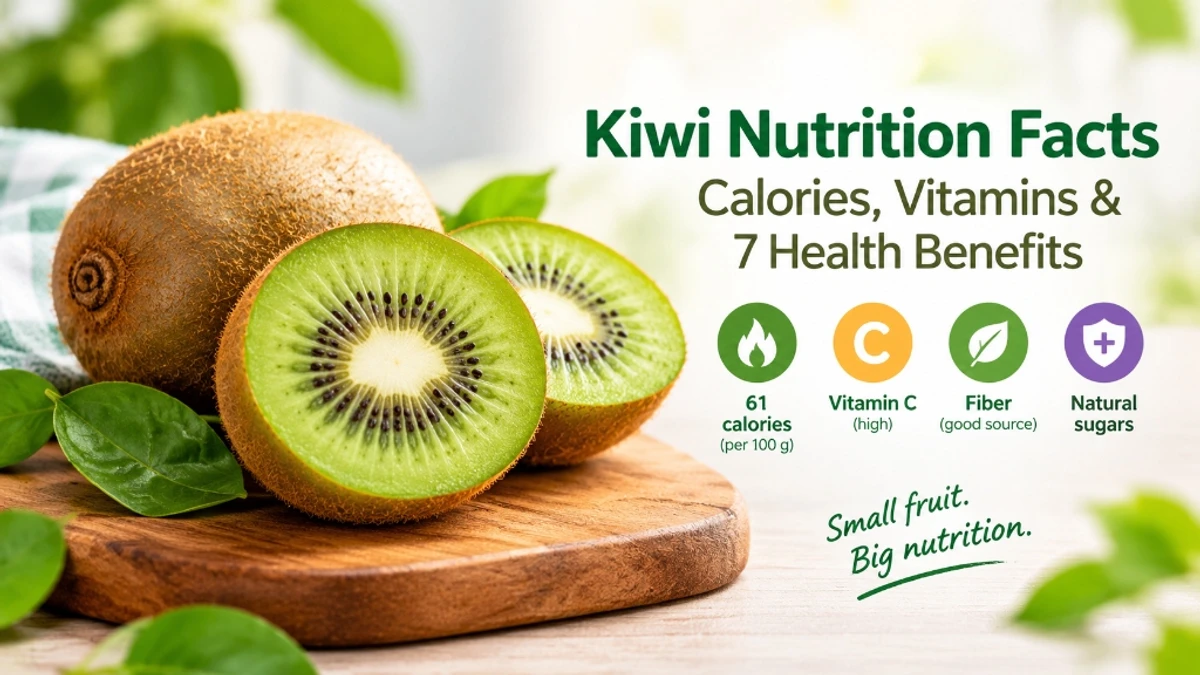
How many calories are in a single kiwi, and does its sweet, tangy flesh pack too much sugar for everyday health goals? People often pick up kiwifruit wondering if this small, fuzzy fruit delivers more than just pleasant flavor. Originally known as Chinese gooseberry (Actinidia deliciosa), kiwi has grown into one of the world's most recognizable fresh fruits. Behind its bright emerald flesh and tiny black seeds lies an unusual concentration of essential vitamins, dietary fiber, and plant enzymes.
This guide breaks down verified kiwi nutrition facts per 100 grams and per typical kitchen portion using primary laboratory records from USDA FoodData Central. We review exact calorie counts, carbohydrate and natural sugar figures, seven evidence-supported health benefits, variety differences between green and gold kiwi, sensible portion limits, and common allergy cautions.
Yes. Kiwi is a nutrient-dense whole fruit that offers high amounts of vitamin C and dietary fiber for relatively few calories. It supplies natural electrolytes, protective antioxidants, and a unique digestive enzyme without added fats or sodium:
- Calories: 61 calories per 100 grams; about 46 calories in an average medium fruit (75 g peeled).
- Fiber: 3.0 grams of dietary fiber per 100 grams, assisting normal stool regularity.
- Vitamin C: 92.7 mg per 100 grams, supplying 103% of the standard 90 mg Daily Value.
- Natural Sugar: 8.99 grams of whole-fruit sugars per 100 grams, balanced by water and fiber.
- Serving context: One to two kiwis daily fit smoothly into calorie-conscious and heart-healthy eating patterns.
Kiwi Nutrition Facts at a Glance
To assess what kiwi contributes to your day, look at raw green kiwi flesh. The figures below reflect USDA FoodData Central reference entry FDC ID 169918 (raw green kiwifruit). We list amounts per 100 grams alongside an illustrative kitchen serving of 75 grams, which corresponds to the edible flesh of an average medium fruit after removing the stem and skin:

| Nutrient | Per 100 g Raw Green Kiwi | Per Typical Fruit (75 g Edible) | % Daily Value (per 100 g) |
|---|---|---|---|
| Calories | 61 kcal | 46 kcal | 3% |
| Water Content | 83.1 g | 62.3 g | — |
| Total Carbohydrates | 14.7 g | 11.0 g | 5% |
| Dietary Fiber | 3.0 g | 2.3 g | 11% |
| Total Sugars | 9.0 g | 6.7 g | — |
| Protein | 1.1 g | 0.9 g | 2% |
| Total Fat | 0.5 g | 0.4 g | 1% |
| Saturated Fat | 0.03 g | 0.02 g | 0% |
| Vitamin C (Ascorbic Acid) | 92.7 mg | 69.5 mg | 103% |
| Vitamin K (Phylloquinone) | 40.3 µg | 30.2 µg | 34% |
| Vitamin E (Alpha-Tocopherol) | 1.46 mg | 1.10 mg | 10% |
| Folate (DFE) | 25.0 µg | 18.8 µg | 6% |
| Potassium | 312 mg | 234 mg | 7% |
| Calcium | 34 mg | 25.5 mg | 3% |
| Magnesium | 17 mg | 12.8 mg | 4% |
| Phosphorus | 34 mg | 25.5 mg | 3% |
Source: USDA FoodData Central (SR Legacy, FDC ID: 169918, Kiwifruit, green, raw). Daily Values based on a standard 2,000-calorie reference diet. Actual nutrient levels fluctuate with cultivar, soil conditions, and ripeness.
How Many Calories Are in One Kiwi?
A single raw green kiwi generally contains between 35 and 55 calories, depending directly on its size and whether you weigh whole fruit or peeled flesh. A standard medium fruit weighs around 85 to 90 grams whole, yielding about 70 to 75 grams of edible pulp once the skin is pared away. That gives you roughly 46 calories per fruit.
To help you track energy intake accurately on a food scale, the table below provides calculated calorie values across realistic kitchen weights:
| Portion Weight (Edible Flesh) | Practical Description | Calories (kcal) | Total Carbs | Dietary Fiber |
|---|---|---|---|---|
| 50 grams | Small fruit or half a large sliced kiwi | 31 kcal | 7.3 g | 1.5 g |
| 75 grams | Standard medium peeled kiwi | 46 kcal | 11.0 g | 2.3 g |
| 100 grams | One large kiwi or about 2/3 cup sliced | 61 kcal | 14.7 g | 3.0 g |
| 150 grams | Two medium kiwis or 1 generous cup diced | 92 kcal | 22.0 g | 4.5 g |
Because green kiwi consists of roughly 83% water by weight, its energy density is modest. You can eat two full fruits for under 100 calories while taking in over 4 grams of natural fiber and nearly 140 mg of vitamin C. If you are calculating total daily energy needs for weight goals, explore our interactive Calorie Calculator to see how fruit portions fit into your daily targets.
Kiwi Carbohydrates, Sugar, Fiber and Protein
Like most temperate and subtropical fruits, kiwi draws the majority of its energy from carbohydrates. It carries negligible fat and modest protein.
How Many Carbohydrates Are in Kiwi?
Raw green kiwi contains 14.66 grams of total carbohydrates per 100 grams. In a typical 75-gram medium fruit, that translates to approximately 11.0 grams. These carbohydrates consist of simple fruit sugars, complex dietary fibers, and small amounts of starch in less mature fruit.
When tracking net carbohydrates (total carbohydrates minus dietary fiber), 100 grams of kiwi yields approximately 11.7 grams of net carbs, while an average single fruit provides about 8.7 grams. This puts kiwi in a moderate carbohydrate bracket: lower than bananas (approx. 23 g total carbs/100 g, as detailed in our banana nutrition facts breakdown) but higher than high-water summer melons like watermelon (around 7.5 g carbs/100 g, as detailed in our watermelon nutrition breakdown).
How Much Sugar Is in a Kiwi?
A 100-gram serving of green kiwi contains 8.99 grams of total sugars. An average medium fruit provides roughly 6.7 grams of sugar. Laboratory chromatography shows these sugars split almost evenly between fructose (approx. 4.35 g) and glucose (approx. 4.11 g), with only trace amounts of sucrose (approx. 0.15 g).
Because these sugars are packaged inside intact plant cell walls alongside dietary fiber and water, whole kiwi does not cause rapid blood glucose spikes in healthy individuals. The glycemic index (GI) of raw green kiwi is approximately 52, placing it securely in the low-GI fruit category. Whole-fruit sugars behave differently in human digestion than free sugars in sodas or juices, making kiwi suitable for individuals watching blood glucose when eaten in sensible single-fruit servings.
Is Kiwi High in Fiber?
Yes. Kiwi supplies 3.0 grams of dietary fiber per 100 grams, or about 2.3 grams per medium fruit. That delivers about 11% of the daily fiber recommendation for adults in just 61 calories.
Kiwifruit fiber features an advantageous combination of roughly one-third soluble fiber (pectins and polysaccharides) and two-thirds insoluble fiber (cellulose and hemicellulose). Soluble fibers form a smooth gel in the stomach, while insoluble fibers hold water in the intestines. Researchers have observed that kiwi fiber possesses unusually high water-holding capacity, swelling up to three times its dry volume in the gut, which plays a major part in its digestive benefits.
Does Kiwi Contain Protein or Fat?
Kiwi contains 1.14 grams of protein and 0.52 grams of fat per 100 grams. These small amounts are typical for fleshy fruits. While kiwi contains the proteolytic enzyme actinidin, it should not be viewed as a dietary protein source. You will still rely on foods like lentils, eggs, poultry, beans, or dairy to meet your daily protein targets.
What Vitamins and Minerals Are in Kiwi?
Beyond its low calorie count, kiwi's real distinction is its micronutrient profile. A single fruit delivers notable amounts of vitamins C and K alongside useful levels of potassium and vitamin E.
Vitamin C
Raw green kiwi contains 92.7 mg of vitamin C per 100 grams. According to the National Institutes of Health (NIH) Office of Dietary Supplements, the recommended daily allowance (RDA) for adult men is 90 mg and for adult women is 75 mg. Eating a single 75-gram kiwi provides about 70 mg of ascorbic acid, covering nearly an entire day's requirement.
Vitamin C serves as a powerful water-soluble antioxidant that neutralizes free radicals, regenerates other antioxidants like vitamin E, and functions as an obligatory enzymatic cofactor for collagen synthesis. It also boosts non-heme iron absorption from plant-based foods when consumed alongside meals.
Vitamin K
One hundred grams of green kiwi supplies 40.3 micrograms of phylloquinone (vitamin K1), which is about 34% of the daily adequate intake (120 µg for men, 90 µg for women). Vitamin K is critical for the synthesis of prothrombin and other blood clotting factors in the liver, and it assists proteins involved in normal bone mineralization, such as osteocalcin.
Potassium
Kiwi provides 312 mg of potassium per 100 grams, with a single medium fruit giving you about 234 mg. Potassium acts as the main intracellular electrolyte, countering the physiological effects of sodium to support normal blood pressure, vascular tone, fluid balance, and muscular contraction.
Folate
Green kiwi contains 25 micrograms of dietary folate equivalents (DFE) per 100 grams, or about 6% of the daily requirement. Folate supports normal nucleic acid synthesis, red blood cell formation, and cellular repair throughout the body.
Other Nutrients and Plant Compounds
Kiwi also provides 1.46 mg of vitamin E (alpha-tocopherol) per 100 grams. Most fruits are poor in vitamin E because it is fat-soluble; in kiwi, it resides primarily in the tiny seed oils and cellular membranes. Furthermore, kiwi flesh contains carotenoids such as lutein and zeaxanthin (approx. 122 µg per 100 g), which accumulate in the human retina, as well as flavonoids and caffeic acid derivatives with antioxidant properties.
7 Potential Health Benefits of Kiwi
Health writers often exaggerate what individual fruits can achieve. When we look at published clinical trials and established nutrient physiology, seven clear benefits emerge from adding kiwi to a balanced diet:
1. Supplies Vitamin C for Normal Immune Support
Vitamin C accumulates in high concentrations within white blood cells, including neutrophils and lymphocytes, where it supports cellular movement, microbial defense, and tissue protection during everyday immune responses. With over 90 mg of vitamin C per 100 grams, green kiwi delivers more of this nutrient than an equivalent weight of oranges. Regular fruit intake helps prevent subclinical vitamin C shortfalls, though it does not make you immune to common viral illnesses.
2. Supports Normal Digestive Function
Green kiwi contains actinidin, a naturally occurring cysteine protease enzyme that helps break down food proteins in the stomach and upper small intestine. Laboratory and clinical assessments show that actinidin accelerates the digestion of beef, chicken, soy, and dairy proteins. Randomized clinical trials published in gastroenterology journals have demonstrated that consuming two green kiwifruits daily improves stool frequency, reduces transit time, and eases abdominal discomfort in individuals experiencing mild constipation and constipation-predominant irritable bowel syndrome (IBS-C).
3. Contributes to Daily Dietary Fiber Intake
Most adults consume less than half of their recommended 25 to 38 grams of daily dietary fiber. Adding two medium kiwis to your morning routine supplies nearly 5 grams of fiber. Because kiwi fiber holds significant amounts of water, it creates bulkier, softer stools that move through the colon with less resistance. This gentle bulking action occurs without the harsh gas or bloating sometimes associated with coarse cereal brans.
4. Supplies Protective Antioxidant Nutrients
Metabolic activity continuously generates reactive oxygen species. Vitamin C and vitamin E in kiwi work together in watery and fatty cellular compartments to scavenge free radicals before they can damage cell membranes or genetic material. Studies observing humans consuming kiwifruit note measurable reductions in markers of oxidative plasma damage, showing that kiwi's antioxidant compounds are readily absorbed and biologically active.
5. Supports Normal Collagen Formation and Skin Function
Collagen is the primary structural protein found in skin, tendons, blood vessels, and cartilage. The human enzymes prolyl hydroxylase and lysyl hydroxylase require vitamin C as a chemical cofactor to stabilize the triple-helix structure of collagen fibrils. Without sufficient daily vitamin C, skin loses structural firmness and wound healing slows. Eating vitamin C-rich foods like kiwi helps supply the continuous baseline needed for normal skin maintenance, alongside adequate hydration and sun protection.
6. Provides Potassium and Essential Electrolytes
With 312 mg of potassium and only 3 mg of sodium per 100 grams, kiwi features an exceptionally high potassium-to-sodium ratio. Diets rich in potassium and modest in sodium assist kidneys in excreting excess fluid, supporting normal blood vessel flexibility and healthy cardiovascular dynamics. While eating kiwi alone cannot manage high blood pressure, it serves as an excellent whole-food potassium source alongside vegetables, legumes, and seeds.
7. Fits Naturally into a Calorie-Conscious Diet
At 46 calories per medium fruit and over 80% water volume, kiwi provides substantial physical food volume for very little energy. Replacing a 250-calorie bakery pastry or processed candy bar with two chilled kiwis saves around 150 calories while adding fiber, vitamins, and minerals that prolong feelings of fullness. This makes kiwi an ideal everyday choice for maintaining or reducing body weight within a structured energy balance.
Green Kiwi vs. Gold Kiwi: What's the Difference?
In grocery stores, you will typically find two main cultivars: standard fuzzy green kiwi (Actinidia deliciosa, often the 'Hayward' variety) and smooth golden kiwi (Actinidia chinensis, commonly marketed as SunGold). Both are nutritious, but their nutrient concentrations and flavor profiles differ noticeably:
| Nutritional Factor | Green Kiwi (per 100 g) | Gold Kiwi (per 100 g) | Key Difference |
|---|---|---|---|
| Calories | 61 kcal | 60 kcal | Virtually identical energy density |
| Vitamin C | 92.7 mg | 161.3 mg | Gold kiwi has ~74% more vitamin C |
| Dietary Fiber | 3.0 g | 1.4 g | Green kiwi has more than double the fiber |
| Total Sugars | 9.0 g | 11.0 g | Gold kiwi is noticeably sweeter |
| Total Carbohydrates | 14.7 g | 14.2 g | Comparable overall carb content |
| Potassium | 312 mg | 315 mg | Equal electrolyte support |
| Actinidin Enzyme | High concentration | Low to negligible | Green kiwi offers stronger protein-digesting activity |
| Skin Characteristic | Fuzzy, brown, fibrous | Smooth, hairless, thinner | Gold skin is much easier to eat unpeeled |
| Flavor Profile | Tangy, bright, sweet-tart | Tropical, honey-sweet, low acidity | Gold appeals to those sensitive to fruit acids |
If your primary goal is bowel regularity or dietary fiber, green kiwi is the superior choice because of its 3.0 grams of fiber and active actinidin enzymes. If you want maximum vitamin C with a gentler, honey-sweet flavor that avoids mouth-puckering acidity, gold kiwi is unmatched, providing nearly 161 mg of vitamin C in a 100-gram portion.
Is Kiwi Good for Weight Loss?
No single food burns body fat on its own, but kiwi exhibits several nutritional attributes that make it exceptionally helpful when following a calorie-controlled eating plan:
- Low Energy Density: You can consume two full kiwis for fewer than 100 calories, giving you a satisfying, colorful snack that feels substantial.
- High Water and Fiber Volume: The 83% water content and 3 grams of swelling dietary fiber take up physical space in the stomach, stimulating stretch receptors that signal satiety to the brain.
- Craving Substitution: Because ripe kiwi tastes sweet and tangy, it serves as a natural dessert replacement for ultra-processed sweets that pack hundreds of empty calories and refined sugars.
- Sustained Energy Release: With a low glycemic index, kiwi's carbohydrates break down gradually, avoiding the sharp blood sugar crashes that often trigger rebound hunger an hour later.
To lose body fat sustainably, you must maintain a steady calorie deficit over time. If you want to calculate your baseline energy expenditure and plan daily calorie intake, use our free Calorie Calculator alongside our BMI Calculator to establish practical, healthy milestones.
Can You Eat Kiwi Skin?
Yes, you can eat kiwi skin. The fuzzy brown skin of green kiwi and the smooth skin of gold kiwi are completely non-toxic and edible. In fact, eating the skin delivers distinct nutritional advantages:
- Increases Dietary Fiber: Consuming the skin alongside the flesh increases total fiber intake by roughly 40% to 50%, providing additional insoluble roughage for digestive motility.
- Delivers More Vitamin E: The epidermal layers of the fruit concentrate higher levels of alpha-tocopherol and polyphenols than the inner pulp.
- Eliminates Prep Time: Eating kiwi like an apple means no spoons, peelers, or wasted fruit clinging to the discarded peel.
💡 How to Eat Kiwi Skin Comfortably: If the fuzzy texture of green kiwi puts you off, scrub the fruit under cold running water with a clean kitchen towel or produce brush. This rubs away most of the stiff brown hairs while leaving the thin, nutrient-packed skin intact. Alternatively, choose gold kiwi, which naturally has smooth, fuzz-free skin that bites easily like a plum.
Keep in mind: if you have a sensitive mouth, an allergy history, or oral irritation from fruit enzymes, stick to peeled kiwi flesh.
Is Kiwi Safe for Everyone?
For the vast majority of people, kiwi is a wholesome, safe food. However, there are specific situations where caution is warranted:
Kiwi Allergy
Kiwifruit is one of the more common triggers of fruit allergies in children and adults. The primary allergen is Act d 1 (actinidin), though researchers have identified more than a dozen distinct allergenic proteins in the fruit. Symptoms typically manifest as Oral Allergy Syndrome (pollen-food allergy): tingling, itching, or mild swelling of the lips, tongue, and throat.
People with known allergies to latex, birch pollen, or avocados frequently show cross-reactivity to kiwi proteins (known as latex-fruit syndrome). In rare cases, kiwi can provoke severe systemic reactions (anaphylaxis) requiring emergency medical treatment with epinephrine. If you experience throat tightness, wheezing, or facial swelling after eating kiwi, seek immediate medical care.
Digestive Sensitivity
While kiwi's active actinidin enzyme aids protein digestion for most individuals, some people with sensitive digestive tracts experience mild stomach cramping, heartburn, or loose stools if they consume several under-ripe kiwis on an empty stomach. If you have active gastritis, stomach ulcers, or severe acid reflux, moderate your intake and consume kiwi alongside meals rather than alone.
Medication Considerations (Vitamin K & Blood Thinners)
Because green kiwi contains approximately 40.3 µg of vitamin K per 100 grams, patients taking vitamin K antagonist anticoagulants such as warfarin (Coumadin) should be aware of its contribution. The key for warfarin patients is consistent daily vitamin K intake rather than total avoidance. Eating a kiwi occasionally is usually fine, but suddenly adding several kiwis daily can alter blood clotting times (INR levels). Always follow your prescribing clinician's guidance.
How Many Kiwis Can You Eat in a Day?
For most healthy adults, one to two medium kiwis per day represents an ideal serving size. This provides around 70 to 140 mg of vitamin C (comfortably exceeding your daily baseline), 2.3 to 4.6 grams of fiber, and about 92 calories.
There is no strict medical hazard to eating three or four kiwis if your digestive system tolerates fruit fiber well. However, eating very large amounts in a single sitting may cause loose stools due to high fiber and osmotic fruit sugars, and could irritate the delicate lining of your tongue due to the active actinidin enzymes and microscopic calcium oxalate crystals (raphides) naturally present in the fruit pulp.
Best Ways to Eat Kiwi
Adding kiwi to your weekly routine is simple. Here are five easy culinary ideas:
1. Sliced Whole as a Quick Snack
Cut the fruit in half horizontally and scoop out the bright emerald flesh with a teaspoon. It takes 10 seconds and creates zero kitchen mess.
2. Over Greek Yogurt or Skyr
Layer diced ripe kiwi over unsweetened high-protein Greek yogurt. The bright acidity of the kiwi balances the creamy yogurt while adding fiber to a protein-rich breakfast.
3. In Mixed Morning Oatmeal
Top warm rolled oats with sliced kiwi, chia seeds, and a handful of walnuts. Add the kiwi right before eating so the fruit retains its crisp texture and vitamin C.
4. Blended into Nutrient-Packed Smoothies
Blend one peeled kiwi with fresh spinach, cucumber, half a green apple, and cold water. It adds a refreshing tart sweetness without needing honey or syrups.
5. In Fresh Fruit Salads
Toss sliced kiwi with berries, diced watermelon, and fresh mint. Note: do not mix fresh raw kiwi into gelatin desserts, as active actinidin breaks down the gelatin proteins and prevents setting!
Kiwi Nutrition Compared with Other Fruits
To see how kiwi measures up against other common grocery fruits, examine this side-by-side comparison per 100 grams of raw edible fruit based on USDA data:
| Fruit (Raw, 100 g) | Calories | Carbs (g) | Sugars (g) | Fiber (g) | Vitamin C (mg) |
|---|---|---|---|---|---|
| Green Kiwi | 61 kcal | 14.7 g | 9.0 g | 3.0 g | 92.7 mg |
| Apple (with skin) | 52 kcal | 13.8 g | 10.4 g | 2.4 g | 4.6 mg |
| Banana | 89 kcal | 22.8 g | 12.2 g | 2.6 g | 8.7 mg |
| Orange | 47 kcal | 11.8 g | 9.4 g | 2.4 g | 53.2 mg |
| Strawberries | 32 kcal | 7.7 g | 4.9 g | 2.0 g | 58.8 mg |
As the data demonstrates, kiwi stands out by delivering significantly more vitamin C than oranges, apples, and bananas while offering more dietary fiber per 100 grams than any of the other four fruits. If you are also curious about dense green super-vegetables, check out our evidence-based guide to moringa nutrition facts and health benefits.
Frequently Asked Questions About Kiwi
What is kiwi and where did it originate?
Kiwi (primarily Actinidia deliciosa for green varieties and Actinidia chinensis for golden varieties) is a woody fruiting vine native to the river valleys and forests of eastern and central China, where it was historically known as Chinese gooseberry or míhóutáo. In 1904, school headmistress Isabel Fraser brought seeds from China to New Zealand, where horticulturists began breeding commercial cultivars, including the famous 'Hayward' green kiwi. In 1959, New Zealand agricultural exporters renamed the crop "kiwifruit" after New Zealand's iconic, small, brown, flightless kiwi bird. Today, kiwi is farmed globally, with China, New Zealand, Italy, Greece, and Chile serving as principal producers.
How many calories are in one medium kiwi?
One medium raw green kiwi providing approximately 75 grams of peeled edible fruit contains about 46 calories (kcal). A smaller 50-gram fruit supplies roughly 31 calories, while a larger 100-gram fruit provides 61 calories. If you enjoy a two-fruit portion (150 grams of fruit flesh), you consume roughly 92 calories. Because water accounts for 83% of its weight and dietary fiber makes up 3%, kiwi provides substantial stomach volume and physical fullness for very little energy intake.
How much sugar is in a kiwi, and is it safe for diabetes?
Raw green kiwi contains approximately 8.99 grams of naturally occurring sugars per 100 grams, which translates to about 6.7 grams in an average medium fruit. This sugar profile consists of roughly equal parts fructose and glucose, without any added or refined sugars. Despite its sweet and tangy flavor, whole kiwi has a low glycemic index (GI) of roughly 52 and a very low glycemic load (GL) of approximately 4. Kiwi's viscous dietary fiber slows stomach emptying and retards carbohydrate absorption in the small intestine, preventing sharp post-meal glucose spikes. People living with diabetes or insulin resistance can safely include a fresh kiwi in their meal rotation, especially when eaten as whole fruit rather than processed juice.
How much vitamin C does kiwi contain compared to an orange?
Raw green kiwi supplies approximately 92.7 milligrams of vitamin C per 100 grams, meeting 103% of the standard FDA Daily Value (90 mg). A single medium green kiwi (75 g edible fruit) provides roughly 69.5 mg of vitamin C, fulfilling 77% of your daily requirement. In comparison, an equivalent 100-gram portion of raw orange flesh delivers approximately 53.2 mg of vitamin C. This means green kiwi delivers about 74% more vitamin C gram-for-gram than an orange. If you choose SunGold (yellow) kiwi, the concentration is even higher: gold kiwifruit yields up to 161 mg of vitamin C per 100 grams, which is nearly triple that of fresh oranges.
Is kiwi high in fiber, and does it help with constipation?
Yes. Green kiwifruit delivers 3.0 grams of dietary fiber per 100 grams (about 2.3 grams per medium fruit). The fiber consists of roughly one-third soluble pectin and two-thirds insoluble cellulose and hemicellulose. Kiwi's pectin has an unusually high water-holding capacity, swelling significantly in the digestive tract to hydrate and soften stool bulk. Human clinical trials, including a multi-center study published in the American Journal of Gastroenterology, demonstrated that consuming two green kiwis daily produced clinically meaningful increases in weekly spontaneous bowel movements and improved stool consistency in adults with chronic constipation and irritable bowel syndrome (IBS-C), performing as effectively as pharmaceutical psyllium husk without producing uncomfortable gas or bloating.
Can you eat the skin of a kiwi, and is it beneficial?
Yes, kiwi skin is 100% edible and exceptionally nourishing. Consuming the fruit whole with the skin intact increases your total dietary fiber intake by nearly 50% and boosts your intake of vitamin E, folate, and antioxidant polyphenols. While some people find the fuzzy exterior of green kiwi unappealing, you can easily minimize the texture by rubbing the fruit with a clean kitchen towel under running water, scrubbing it lightly with a vegetable brush, or slicing it into thin cross-sections. SunGold kiwifruit has a smooth, hairless skin that can be bitten into directly just like a plum or apple.
Which is healthier: green kiwi or gold kiwi?
Neither variety is universally healthier; they excel in different nutritional areas. Green kiwi (Actinidia deliciosa) is superior for digestive regularity and fiber goals, providing 3.0 g of dietary fiber per 100 g (versus 1.4 to 2.0 g in gold) and far higher levels of the protein-digesting enzyme actinidin. SunGold kiwi (Actinidia chinensis) is the winner for immune-supporting vitamin C, providing approximately 161 mg per 100 g (nearly double that of green kiwi) alongside a sweeter, less tart flavor profile and hairless skin. Both varieties provide exceptional micronutrients, and alternating between them gives your body a wider spectrum of plant phytonutrients.
What is actinidin and how does it support digestion?
Actinidin (Act d 1) is a natural cysteine protease enzyme found in high concentrations in green kiwifruit. Proteolytic enzymes catalyze the breakdown of complex dietary proteins into smaller peptide fragments and absorbable amino acids. In the human stomach and upper small intestine, actinidin works in tandem with gastric pepsin to speed the digestion of muscle proteins (beef, chicken, fish), dairy casein, and plant proteins (gluten, soy). By accelerating protein breakdown and promoting faster gastric emptying, actinidin helps alleviate that uncomfortable feeling of heaviness and post-meal sluggishness after high-protein meals.
Does eating kiwi before bed improve sleep quality?
Emerging clinical evidence shows that eating kiwi in the evening can meaningfully enhance sleep. In a clinical intervention published in the Asia Pacific Journal of Clinical Nutrition, adults with chronic sleep onset and maintenance issues consumed two kiwis one hour before bed each night for four weeks. At the conclusion of the study, participants experienced a 35% reduction in the time required to fall asleep, a 29% drop in nighttime waking, and marked improvements in total sleep duration and self-reported sleep quality. Researchers attribute these outcomes to kiwi's naturally high levels of serotonin—an essential chemical precursor to melatonin—alongside potent antioxidant polyphenols that mitigate systemic oxidative stress during nighttime rest.
Is kiwi effective for weight management and fat loss?
Kiwi contains no compound that melts fat cells directly. However, it is an outstanding whole-food choice for calorie-controlled eating plans. At just 46 calories per medium fruit with an 83% water content and 2.3 grams of fiber, kiwi offers high dietary volume and chewing satisfaction for minimal caloric density. Swapping a processed snack or sugary dessert for one or two fresh kiwis satisfies cravings for sweetness while keeping you well within your daily caloric targets. To see how fruit calories fit into your personal maintenance or deficit baseline, calculate your exact targets using our free calorie calculator.
How many kiwis should you eat in a day?
For most healthy adults, enjoying one to two medium kiwis per day delivers ideal nutritional rewards. Two fruits provide around 140 mg of vitamin C (more than 150% of the Daily Value), almost 5 grams of fiber, and ample actinidin to encourage healthy gut motility. While eating three or four kiwis is generally safe, consuming large amounts in a short timeframe may trigger loose stools or mild cramping in individuals unaccustomed to high fiber or sensitive to actinidin's gentle laxative action.
What are the common side effects, allergies, and drug interactions with kiwi?
While kiwi is nourishing and well-tolerated by most, two specific health considerations require attention:
- Allergies and Cross-Reactivity: Actinidin is a recognized clinical allergen. Symptoms can range from localized oral allergy syndrome (itching, tingling lips, scratchy throat) to hives, swelling, and severe anaphylaxis. Individuals with confirmed latex allergies, avocado allergies, or birch pollen allergies frequently experience cross-reactive sensitivities to kiwi.
- Blood-Thinning Medications: Green kiwi supplies 40.3 micrograms of vitamin K per 100 grams (about 34% of the standard Daily Value). Vitamin K assists blood clotting and can counteract the anticoagulant mechanism of prescription blood thinners like warfarin (Coumadin). If you take warfarin, you do not need to avoid kiwi entirely, but your daily intake of vitamin K should remain consistent. Consult your prescribing physician before adding daily kiwis to your meal routine.
Why does kiwi make your tongue tingle or cause dairy and gelatin to spoil?
That familiar prickling or stinging sensation on your tongue after eating fresh kiwi is caused by actinidin breaking down the thin mucosal proteins on the surface of your tongue, combined with microscopic, needle-like calcium oxalate crystals (raphides) that mechanically stimulate nerve endings. In the kitchen, raw kiwi causes milk, cream, and yogurt to curdle because actinidin rapidly digests milk proteins into bitter hydrophobic peptides. Actinidin also breaks down the structural collagen proteins in gelatin, preventing fruit jellies and mousses from setting. If you want to use kiwi in gelatin desserts or warm dairy custards, poach or steam the fruit slices for 2 to 3 minutes first to denature the enzyme.
Final Verdict: Is Kiwi Worth Adding to Your Diet?
Examining kiwi nutrition facts and health benefits reveals why this vibrant fruit deserves a regular spot on your grocery list. Delivering 92.7 mg of immune-supporting vitamin C, 3.0 grams of dietary fiber, and protective actinidin enzymes for only 61 calories per 100 grams, green kiwi outperforms most popular fruits in nutrient density per bite. Whether you choose green kiwi for digestion and fiber or SunGold kiwi for maximum vitamin C and sweet tropical flavor, incorporating fresh kiwi into your meals is an easy, science-backed way to upgrade your daily nutrition.
Curious about how your fruit servings align with your overall energy and hydration targets? Try our free health calculators:
- Calorie & TDEE Calculator — Find your daily calorie maintenance and deficit targets.
- Daily Water Intake Calculator — Calculate how much fluid your body needs each day.
- BMI Calculator — Check your baseline Body Mass Index and healthy weight benchmarks.
🔬 External Authoritative Sources & Food Databases
- USDA FoodData Central — Nutritional Profile for Kiwifruit, green, raw (Actinidia deliciosa, FDC ID: 169918).
- NIH Office of Dietary Supplements — Vitamin C Fact Sheet for Health Professionals.
- European Journal of Nutrition / PMC — The nutritional and health attributes of kiwifruit: a review (Drummond, L.).
- American Journal of Gastroenterology — Exploratory Study on the Effects of Kiwifruit on Bowel Habits and Constipation.
- Advances in Food and Nutrition Research — Kiwifruit proteins and enzymes: Actinidin and digestive health.
- World Allergy Organization Journal — Kiwifruit allergy and actinidin cross-reactivity overview.
💡 What to Remember
A medium green kiwi (75 g edible portion) provides 46 calories, 70 mg of immune-supporting vitamin C, and 2.3 g of dietary fiber alongside active actinidin digestive enzymes. Per 100 grams, green kiwi supplies 61 calories and 92.7 mg of vitamin C—surpassing oranges in vitamin C and apples in fiber. Enjoy classic green kiwi for digestive regularity and higher fiber, or SunGold kiwi for maximum sweetness and extra vitamin C.