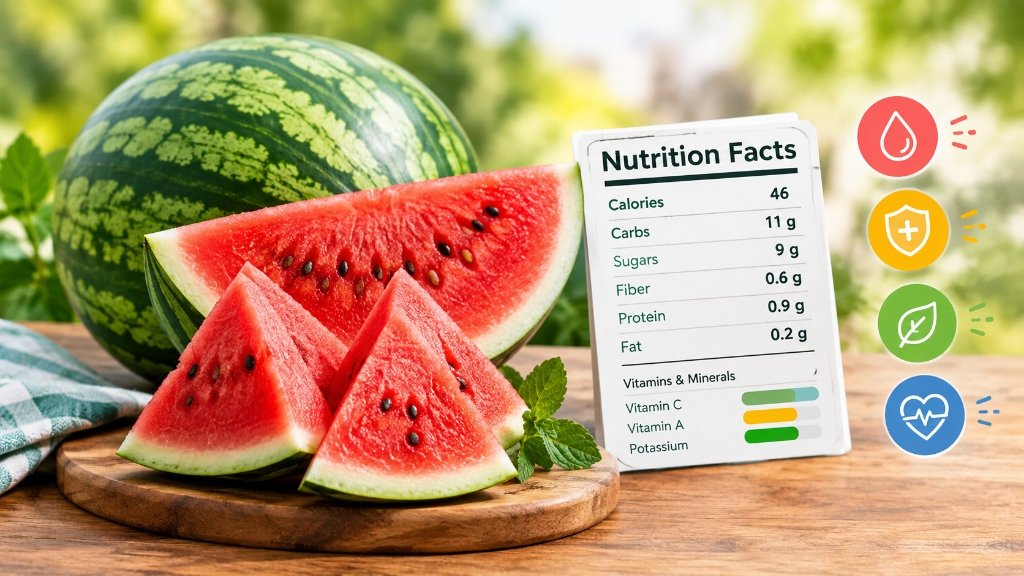
Yes. Watermelon is 92% water by weight, supplying only 30 calories per 100 grams (46 calories per cup). Despite its sweet taste, it delivers modest natural sugar (9.4g per cup), zero fat, and valuable plant compounds including vitamin C, beta-carotene, lycopene, and the amino acid L-citrulline.
On a hot summer afternoon, few snacks feel as satisfying as a crisp, chilled slice of watermelon. But because watermelon tastes so refreshingly sweet, health-conscious eaters often pause to ask: is watermelon actually healthy, or is it mostly sugar water?
The short answer: watermelon is a nutrient-dense whole fruit that offers low calorie density alongside valuable micronutrients. While its crisp sweetness suggests high sugar, the actual sugar concentration is surprisingly low compared to bananas or grapes. In this guide, we review complete watermelon nutrition facts and health benefits using official USDA data, breaking down calories, carbohydrates, vitamins, hydration properties, and sensible portion sizes.
Watermelon Nutrition Facts and Health Benefits at a Glance
To understand what watermelon contributes to your daily diet, look at standard reference portions from the USDA FoodData Central database. Below is the full nutritional profile for one cup of diced fresh watermelon (152 grams) and per 100 grams:
| Nutrient | Amount Per 100 g | Amount Per 1 Cup Diced (152 g) | % Daily Value (per cup) |
|---|---|---|---|
| Calories | 30 kcal | 46 kcal | 2% |
| Water Content | 91.4 g | 139 g | — |
| Total Carbohydrates | 7.6 g | 11.5 g | 4% |
| Dietary Sugars | 6.2 g | 9.4 g | — |
| Dietary Fiber | 0.4 g | 0.6 g | 2% |
| Protein | 0.6 g | 0.9 g | 2% |
| Total Fat | 0.15 g | 0.2 g | <1% |
| Vitamin C | 8.1 mg | 12.3 mg | 14% |
| Vitamin A (RAE) | 28 mcg | 43 mcg | 5% |
| Potassium | 112 mg | 170 mg | 4% |
| Magnesium | 10 mg | 15.2 mg | 4% |
| Lycopene | 4,532 mcg | 6,890 mcg | — |
These values can shift slightly depending on the ripeness, agricultural soil conditions, and fruit variety (such as seeded versus seedless cultivars), but they provide an accurate baseline for daily dietary tracking.
How Many Calories Are in Watermelon?
Watermelon is one of the lowest-calorie fruits available in the produce department. At just 30 calories per 100 grams, you can enjoy a generous serving without consuming substantial energy.
Consider how calorie counts scale across common kitchen portions:
- 100 grams (about half a cup of balls): 30 calories
- 1 cup diced (152 grams): 46 calories
- 2 cups diced (304 grams): 92 calories
- 1 medium wedge (approx. 280 g with rind, 180 g edible flesh): 54 calories
- A large dinner-plate bowl (500 grams): 150 calories
Because of this low calorie density, watermelon occupies significant physical volume in your stomach for very little energy cost. If you track your daily energy expenditure to manage your weight, you can plug your overall daily targets into our free calorie and TDEE calculator to see how fruit portions fit into your plan.
Tracking your total daily energy intake?
Estimate your exact calorie deficit or maintenance needs with our tool.How Much Sugar Is in Watermelon?
A common concern about watermelon stems from its sweetness. People often assume that sweet flavors guarantee high sugar content. Let's look at the numbers.
Is Watermelon High in Sugar?
One cup of diced watermelon contains 9.4 grams of total sugar. By comparison, a medium banana contains around 14 grams of sugar, a medium apple contains about 19 grams, and a cup of seedless grapes contains over 23 grams. Gram for gram, watermelon contains less sugar than many everyday fruits simply because its high water content dilutes the sugar concentration.
The sugar in watermelon consists naturally of fructose, glucose, and sucrose, accompanied by organic acids, potassium, and vitamins. It contains zero refined or added sugars.
Does Watermelon Spike Blood Sugar? (GI vs GL)
Nutrition charts often note that watermelon has a high Glycemic Index (GI) of approximately 72 to 80. The Glycemic Index measures how quickly the carbohydrates in a test portion raise blood glucose compared to pure glucose.
However, Glycemic Index tests require participants to eat 50 grams of pure carbohydrates from the test food. Because watermelon contains so few carbohydrates per bite, you would have to eat nearly five whole cups of diced watermelon in one sitting to reach 50 grams of carbs!
For a 120 g serving of watermelon:
GL = (76 × 7.2) ÷ 100 = 5.4 (Categorized as LOW)
A Glycemic Load of 10 or below is considered low. Because watermelon has a Glycemic Load of only 5, a standard one-cup portion produces a mild, manageable rise in blood glucose for most individuals. If you monitor your blood sugar, pairing watermelon with a source of protein (like Greek yogurt, cottage cheese, or a handful of walnuts) blunts the glycemic response further.
Watermelon Carbohydrates, Fiber, and Protein
Watermelon is essentially a pure carbohydrate food, but in very modest quantities:
- Total Carbohydrates: 11.5 grams per cup. Of these carbohydrates, about 82% come from simple fruit sugars, while the rest consists of starches and complex plant pectins.
- Dietary Fiber: Watermelon provides 0.6 grams of fiber per cup. Because it is so juicy, it has lower roughage than fibrous fruits like raspberries (8 g fiber per cup) or pears (5.5 g fiber).
- Protein: A single cup yields 0.9 grams of protein. While negligible for muscle building, the amino acid profile contains unique bioactive compounds like L-citrulline.
What Vitamins and Minerals Are in Watermelon?
Watermelon delivers several micronutrients and plant pigments that support normal physiological function:
Vitamin C
A one-cup portion provides 12.3 mg of ascorbic acid (vitamin C), supplying about 14% of the recommended daily intake for adults. Vitamin C acts as a water-soluble antioxidant that protects cells from oxidative stress and assists in collagen synthesis for skin and connective tissues.
Vitamin A and Carotenoids
The pink-red hue of watermelon flesh comes from carotenoid pigments. It supplies 43 mcg RAE of vitamin A equivalents, primarily from beta-carotene. The human body converts beta-carotene into retinol to support healthy retinal vision and mucosal epithelial barriers.
Potassium and Magnesium
Watermelon provides 170 mg of potassium and 15 mg of magnesium per cup. Potassium is an intracellular electrolyte that balances extracellular sodium, supporting healthy arterial muscle tone and normal fluid distribution.
Lycopene and L-Citrulline
Watermelon is one of the richest dietary sources of lycopene, providing approximately 6,890 mcg per cup—about 40% more lycopene than raw tomatoes. Watermelon also features high levels of L-citrulline, a non-essential amino acid that your kidneys convert into L-arginine, a precursor for nitric oxide production in blood vessels.
7 Science-Backed Watermelon Nutrition Facts and Health Benefits
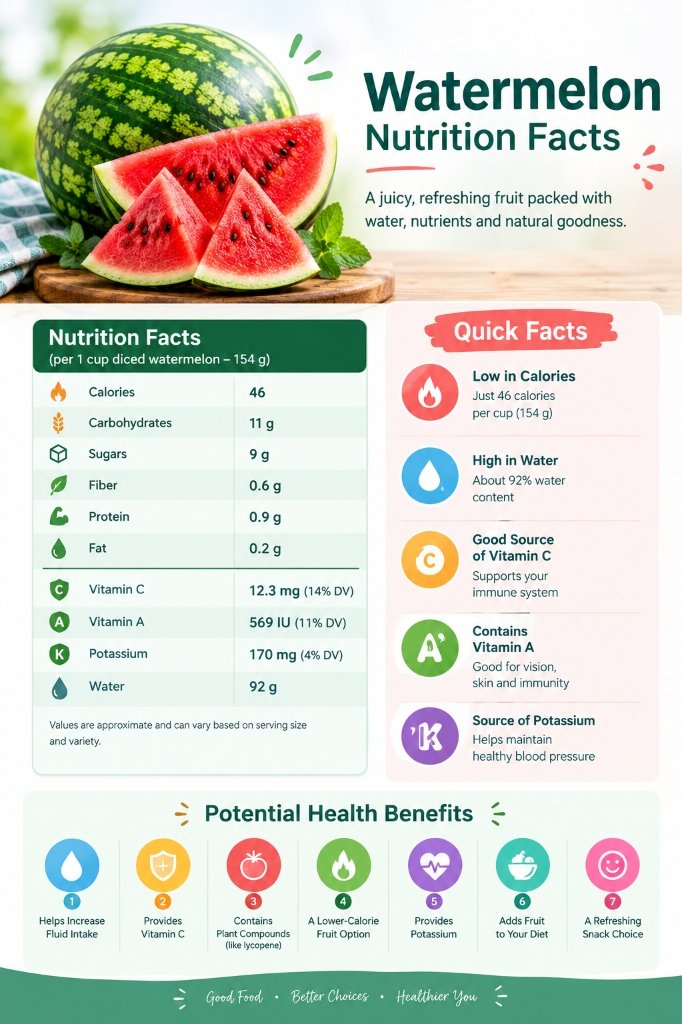
Exploring watermelon nutrition facts and health benefits reveals why this summer staple deserves a regular spot on your plate. Below is a visual infographic summarizing the core nutrition facts per 1-cup serving (154 g), quick dietary facts, and the 7 key health benefits:
Including watermelon as part of a varied, whole-food diet offers several practical advantages:
1. Helps Increase Daily Fluid Intake
Watermelon is 92% water by weight. Staying properly hydrated supports temperature regulation, joint lubrication, cognitive clarity, and kidney filtration. Eating water-dense fruits is an enjoyable way to supplement fluid intake between glasses of water.
2. Provides Protective Vitamin C
Vitamin C supports white blood cell function and neutralizes free radicals generated by daily metabolism and environmental stressors. A two-cup bowl delivers nearly 30% of your daily vitamin C requirement.
3. Rich in Dietary Lycopene
Lycopene is a potent lipid-soluble carotenoid linked in nutritional research to cardiovascular cellular protection and reduced markers of systemic inflammation. Unlike tomatoes, which usually require heat cooking with oil to release bioavailable lycopene, watermelon presents high levels of accessible lycopene in its raw state.
4. Lower-Calorie Option for Snack Cravings
When sweet cravings strike, reaching for 200 grams of watermelon delivers sweetness, crisp crunch, and pleasant volume for only 60 calories. Replacing 300-calorie pastries or candies with fresh melon reduces daily caloric load without triggering feelings of deprivation.
5. Supplies L-Citrulline for Vascular Function
The L-citrulline in watermelon promotes nitric oxide synthesis in vascular endothelium. Nitric oxide helps relax smooth arterial walls, facilitating blood flow. Sports nutrition studies have observed that consuming fresh watermelon juice before strenuous exercise may reduce next-day muscle soreness.
6. Adds Beneficial Plant Variety to Your Diet
Dietary diversity is a key pillar of long-term health. Watermelon introduces unique carotenoids, polyphenols, and plant hydration that complement darker berries, citrus fruits, and tree fruits.
7. Refreshing Snack Alternative to Ultra-Processed Sweets
Commercial ice pops and sodas contain artificial colorings, high-fructose syrups, and zero micronutrients. Chilled watermelon slices provide a clean, whole-food alternative with zero added sodium, zero saturated fat, and zero synthetic preservatives.
Is Watermelon Good for Weight Loss?
Connecting watermelon nutrition facts and health benefits to body composition reveals why this fruit works so well in calorie-controlled diets. Weight loss fundamentally requires maintaining an energy deficit over time, and foods with high satiety relative to their calorie content make that deficit easier to sustain.
Watermelon has a very low energy density (0.3 kcal per gram). In clinical satiety trials, foods with high water and air volume create physical stomach distension that signals fullness to the brain via vagal mechanoreceptors.
| Snack Choice | Serving Weight | Calories | Water Percentage |
|---|---|---|---|
| Fresh Watermelon | 300 g | 90 kcal | 92% |
| Pretzel Twists | 50 g | 190 kcal | 3% |
| Milk Chocolate Bar | 50 g | 270 kcal | 1% |
Keep in mind that watermelon alone does not trigger fat loss; your cumulative weekly energy balance dictates results. If you enjoy large bowls of melon, simply account for the carbohydrates within your total daily calorie allocation using our free calorie deficit calculator.
Is Watermelon Good for Hydration?
Roughly 20% of an adult's daily water intake comes from solid foods, with fruits and vegetables leading the way. A generous two-cup serving of watermelon supplies over 275 ml of fluid—equivalent to more than a full drinking cup of water.
In addition, watermelon provides natural electrolyte minerals like potassium and magnesium. While it should never replace drinking plain water throughout the day, it is a great snack option after outdoor gardening, summer walks, or sports practice. You can calculate your total fluid requirements using our free daily water intake calculator.
Is Watermelon Healthy for Everyone?
For the vast majority of people, watermelon is a safe and beneficial food. However, specific individuals should practice portion awareness:
- Individuals Managing Diabetes: Keep portions to 1 cup (150 g) at a time, and eat it alongside a meal containing protein or healthy fats rather than on an empty stomach.
- People with FODMAP Sensitivities: Watermelon contains excess fructose and polyols (fructans). People with irritable bowel syndrome (IBS) may experience bloating or gas when eating large servings.
- Chronic Kidney Disease: Patients on strict potassium-restricted renal diets should review their daily fruit portions with their clinical nephrologist or dietitian.
How Much Watermelon Should You Eat?
There is no single ideal serving for everyone. A practical baseline for most adults is 1 to 2 cups of diced watermelon (150 g to 300 g) per serving. This provides 46 to 92 calories, ample vitamin C and lycopene, and comfortable hydration without overloading your digestive system.
Best Ways to Eat Watermelon
Enjoying watermelon goes beyond plain wedges. Here are simple, nutrient-dense serving ideas:
🥗 Mediterranean Watermelon Salad
Toss cold watermelon cubes with crumbled sheep's feta cheese, fresh mint leaves, a squeeze of fresh lime juice, and a light drizzle of extra virgin olive oil. The healthy fats in the cheese and oil enhance your body's absorption of fat-soluble lycopene.
🧊 Frozen Watermelon Slush
Blend frozen watermelon chunks with fresh lime juice and a dash of sparkling water for an all-natural summer slush with zero added syrup.
🥣 Protein Snack Bowl
Pair 1 cup of diced watermelon with 150 grams of plain low-fat Greek yogurt and a sprinkle of chia seeds for a balanced snack supplying 18 grams of protein and 5 grams of fiber.
Watermelon vs Other Popular Fruits
Comparing watermelon with other everyday fruits on an equal 100-gram basis illustrates its unique nutritional position:
| Fruit (per 100 g raw) | Calories | Total Sugars | Dietary Fiber | Water Content |
|---|---|---|---|---|
| Watermelon | 30 kcal | 6.2 g | 0.4 g | 91.4% |
| Strawberries | 32 kcal | 4.9 g | 2.0 g | 90.9% |
| Orange | 47 kcal | 9.4 g | 2.4 g | 86.7% |
| Apple (with skin) | 52 kcal | 10.4 g | 2.4 g | 85.6% |
| Banana | 89 kcal | 12.2 g | 2.6 g | 74.9% |
Watermelon has fewer calories and less sugar per 100 grams than apples, bananas, or oranges. However, apples and oranges deliver more dietary fiber. Rotating between different fruits ensures you gain both the high hydration of melons and the prebiotic fiber of tree fruits.
Frequently Asked Questions About Watermelon
Is watermelon high in sugar?
Watermelon contains about 9.4 grams of natural fruit sugar per one-cup serving (152 grams). While it tastes noticeably sweet, its sugar density is actually lower than that of apples, bananas, or grapes because watermelon is 92% water by weight.
How many calories are in watermelon?
Watermelon contains approximately 30 calories per 100 grams, or 46 calories for a standard one-cup serving of diced fruit. A large wedge provides around 86 calories.
Is watermelon good for weight loss?
Watermelon fits well into a calorie-controlled eating plan because its high water and volume help you feel physically full for relatively few calories. However, sustainable weight management depends on your overall daily energy balance.
Can people with diabetes eat watermelon?
Yes, in moderation. Although watermelon has a high Glycemic Index of about 72, its Glycemic Load is very low (around 5 for a 120-gram serving) because each portion contains few total carbohydrates. Pairing it with protein or healthy fats helps stabilize post-meal glucose.
Does watermelon have protein?
Watermelon provides less than 1 gram of protein per cup (approximately 0.9 g). It should not be relied upon as a primary source of dietary protein.
What vitamins are in watermelon?
Watermelon is a notable source of vitamin C (providing roughly 14% of the Daily Value per cup) and vitamin A through carotenoid pigments like beta-carotene and lycopene, alongside small quantities of potassium and magnesium.
Can you eat watermelon every day?
Most healthy individuals can enjoy watermelon daily as part of a balanced diet that includes a variety of whole fruits, vegetables, lean proteins, and complex carbohydrates.
Is watermelon healthier than other fruits?
Watermelon excels in hydration and lycopene content, but fruits like apples and berries offer substantially higher dietary fiber. A nutritious diet incorporates varied fruits rather than favoring a single one exclusively.
Final Takeaway
Understanding watermelon nutrition facts and health benefits helps you enjoy this fruit with total confidence. Watermelon is mostly water and provides relatively few calories per typical serving while contributing key micronutrients such as vitamin C, beta-carotene, and lycopene. Far from being empty sugar water, it offers real nutritional value, refreshing hydration, and natural sweetness that supports healthy eating habits.
Want to see how your daily fruit and meal portions fit into your overall nutritional goals? Check out our free health calculators:
- Calorie & TDEE Calculator — Estimate your exact maintenance and fat loss targets.
- Daily Water Intake Calculator — Learn how much fluid your body needs each day.
🔬 External Authoritative Sources & Food Databases
- USDA FoodData Central — Nutritional Profile for Watermelon, Raw (NDB Number: 09326).
- American Diabetes Association (ADA) — Fruit Consumption and Glycemic Impact Guidelines.
- National Institutes of Health (NIH / PubMed) — Watermelon Lycopene and Cardiovascular Health Research.
- Academy of Nutrition and Dietetics — The Nutritional Roles of Phytochemicals and Hydration.
💡 Key Takeaways
Watermelon delivers natural hydration (92% water) and low calories (46 kcal/cup) with valuable antioxidants like lycopene and vitamin C. Its low Glycemic Load makes it suitable for most healthy eating plans when enjoyed in reasonable portions.