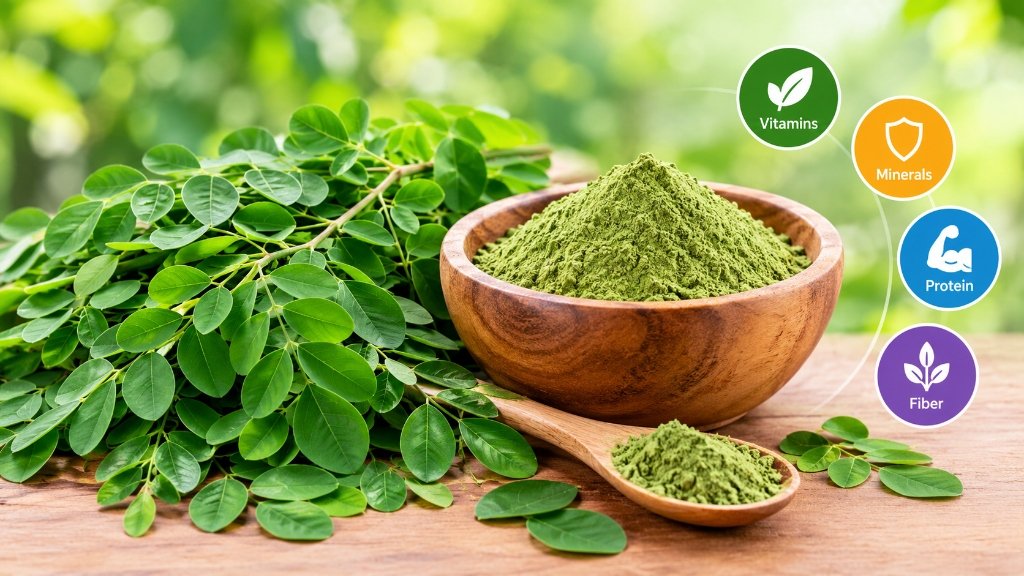
Yes. Moringa leaves supply plant protein, fiber, calcium, iron, beta-carotene, and protective plant compounds like quercetin and chlorogenic acid. At 64 calories per 100 grams of fresh leaves, moringa adds dense nutrition to daily meals. While laboratory experiments show biological activity, clinical trials in humans are still developing and show modest outcomes. Moringa is a nutritious green vegetable, not a cure for medical conditions.
Moringa (Moringa oleifera) is a drought-tolerant tree native to the foothills of the Himalayas in South Asia. Known widely as the drumstick tree, sahjan, or horseradish tree, its tender leaves and slender pods have been cooked in curries, dals, and broths across India, the Philippines, and West Africa for centuries.
Moringa Nutrition Facts at a Glance
To evaluate what moringa contributes to your meals, start with fresh raw leaves. The table below outlines the nutritional breakdown for 100 grams of fresh moringa leaves and a typical kitchen cooking portion (roughly 25 grams, or a loose handful of stripped leaves):
| Nutrient | Per 100 g Fresh Leaves | Per Typical Serving (25 g) | % Daily Value (per 100 g) |
|---|---|---|---|
| Calories | 64 kcal | 16 kcal | 3% |
| Water Content | 78.7 g | 19.7 g | — |
| Protein | 9.4 g | 2.4 g | 19% |
| Carbohydrates | 8.3 g | 2.1 g | 3% |
| Dietary Fiber | 2.0 g | 0.5 g | 7% |
| Total Fat | 1.4 g | 0.35 g | 2% |
| Calcium | 185 mg | 46 mg | 14% |
| Iron | 4.0 mg | 1.0 mg | 22% |
| Magnesium | 42 mg | 10.5 mg | 10% |
| Potassium | 337 mg | 84 mg | 7% |
| Vitamin C (Ascorbic Acid) | 51.7 mg | 12.9 mg | 57% |
| Vitamin A (Beta-Carotene RAE) | 378 mcg | 94.5 mcg | 42% |
| Vitamin B6 (Pyridoxine) | 1.2 mg | 0.3 mg | 71% |
| Riboflavin (Vitamin B2) | 0.66 mg | 0.17 mg | 51% |
These values refer strictly to fresh raw leaves. Growing conditions, soil quality, and harvest timing can cause slight variations. The standout characteristic of fresh moringa leaves is their protein and mineral density, which exceeds that of common salad greens like lettuce and cabbage.
How Many Calories Are in Moringa?
Fresh moringa leaves have a modest energy density. Raw leaves provide 64 calories per 100 grams. In daily cooking, people rarely eat 100 grams of raw leaves at once because they are light and bulky. Most recipes call for a handful or two stirred into a simmering pot.
Here is how energy counts scale across practical portions:
- 10 grams of fresh leaves (a light stir-fry garnish): ~6.4 calories
- 25 grams of fresh leaves (a standard handful in lentil dal): ~16 calories
- 50 grams of fresh leaves (a cooked vegetable side dish): ~32 calories
- 100 grams of fresh leaves (a large cooked bowl): ~64 calories
- 1 teaspoon of moringa leaf powder (2.5 grams): ~8 calories
- 1 tablespoon of moringa leaf powder (7 grams): ~22 calories
Because whole moringa leaves deliver volume, water, and texture without excess energy, you can mix them into soups and stews while staying within your daily targets. If you track daily energy intake to support weight management, calculate your personalized baseline with our free calorie and TDEE calculator.
Managing daily calories and macronutrients?
Calculate your exact calorie deficit or maintenance needs in seconds.Moringa Carbohydrates, Fiber and Protein
Unlike watery greens such as iceberg lettuce, moringa leaves feature a distinct macronutrient profile characterized by higher plant protein and low digestible starches.
Protein
Fresh moringa leaves contain roughly 9.4 grams of protein per 100 grams. That is three times more protein than raw spinach (2.9 g) and kale (3.0 g). Dried leaf powder contains roughly 25 to 27 percent protein by weight.
Moringa protein includes all nine amino acids that the human body cannot produce on its own—histidine, isoleucine, leucine, lysine, methionine, phenylalanine, threonine, tryptophan, and valine. While this complete amino acid spectrum is unusual for leafy greens, keep practical portion sizes in mind. Adding 25 grams of fresh leaves to a curry adds about 2.4 grams of protein. Moringa enhances the protein quality of your meal, but it does not replace core protein foods like chickpeas, lentils, eggs, dairy, or fish.
Fiber
Fresh leaves supply 2.0 grams of dietary fiber per 100 grams, consisting of both soluble and insoluble fractions. Dehydrated leaf powder contains about 19 to 21 grams of fiber per 100 grams. Dietary fiber supports normal gut motility, feeds beneficial colon microbes, and slows the absorption of sugars in the small intestine.
Carbohydrates
Fresh moringa leaves provide 8.3 grams of total carbohydrates per 100 grams, with net digestible carbohydrates resting around 6.3 grams. Natural sugars account for only a small fraction of this total. In dried powder, carbohydrates measure around 38 grams per 100 grams due to moisture removal. A standard 3-gram serving of powder yields barely 1 gram of net carbohydrates, making both leaves and powder compatible with low-carbohydrate eating plans.
What Vitamins and Minerals Are in Moringa?
Moringa's micronutrient density is the primary reason nutritionists and humanitarian agencies study it. The leaves provide a dense package of fat-soluble and water-soluble micronutrients.
Vitamin A (Beta-Carotene)
Moringa does not contain preformed retinol, which is found only in animal products. Instead, it contains high amounts of provitamin A carotenoids, predominantly beta-carotene. A 100-gram serving of fresh leaves yields 378 micrograms of Retinol Activity Equivalents (RAE), covering over 40% of the Daily Value. The body converts beta-carotene into active vitamin A to support low-light vision, cornea health, and epithelial tissue repair.
Vitamin C
Fresh leaves provide approximately 51.7 mg of vitamin C per 100 grams, meeting more than half of the recommended daily intake. Vitamin C protects cellular components from oxidation and facilitates non-heme iron absorption. Because ascorbic acid breaks down under high heat, cooking leaves briefly preserves more vitamin C than long boiling.
Calcium
At 185 mg per 100 grams of fresh leaves (and nearly 2,000 mg per 100 grams of dried powder), moringa is an abundant plant-based calcium source. In fact, research indicates that moringa leaves contain lower amounts of water-soluble oxalates than spinach. Because oxalates bind to calcium and block its uptake in the gut, moringa calcium tends to have better fractional bioavailability than spinach calcium.
Iron
Fresh moringa leaves supply 4.0 mg of iron per 100 grams, fulfilling 22% of the standard Daily Value. Plant iron exists in the non-heme form, which normally absorbs less readily than animal heme iron. Fortunately, the native vitamin C present in fresh moringa leaves helps convert ferric iron into the more absorbable ferrous state during digestion.
Potassium and Magnesium
Fresh leaves deliver 337 mg of potassium and 42 mg of magnesium per 100 grams. These two intracellular electrolytes work together to regulate resting blood pressure, support muscle contraction, and maintain fluid balance.
B-Complex Vitamins
Moringa contains notable concentrations of vitamin B6 (1.2 mg per 100 g) and riboflavin (0.66 mg per 100 g). These coenzymes play direct roles in carbohydrate metabolism, amino acid breakdown, and hemoglobin synthesis.
What Makes Moringa Nutritionally Interesting?
Beyond traditional vitamins and minerals, moringa contains secondary plant metabolites. Plant biologists study these compounds to understand how the tree defends itself against environmental stress and how these molecules interact with human cells.
Polyphenols and Flavonoids
Moringa leaves are rich in phenolic compounds, especially quercetin and kaempferol. Quercetin is a well-studied flavonoid recognized for its capacity to neutralize free radicals and promote endothelial nitric oxide production, which helps relax arterial walls. The leaves also provide chlorogenic acid, the same polyphenol studied in coffee for its role in modulating glucose absorption after meals.
Carotenoids
Alongside beta-carotene, moringa leaves contain lutein and zeaxanthin. These xanthophyll carotenoids concentrate in the macula of the human eye, filtering high-energy blue wavelengths and shielding retinal cells from photochemical damage.
Glucosinolates and Isothiocyanates
Moringa belongs to the order Brassicales, the same botanical group that includes broccoli, cabbage, and mustard greens. The leaves contain unique glucosinolates, which enzyme action converts into isothiocyanates (primarily moringin). In cellular research, moringin shows bioactivity similar to sulforaphane, stimulating the Nrf2 pathway that prompts cells to produce their own internal antioxidant enzymes.
7 Science-Backed Moringa Health Benefits
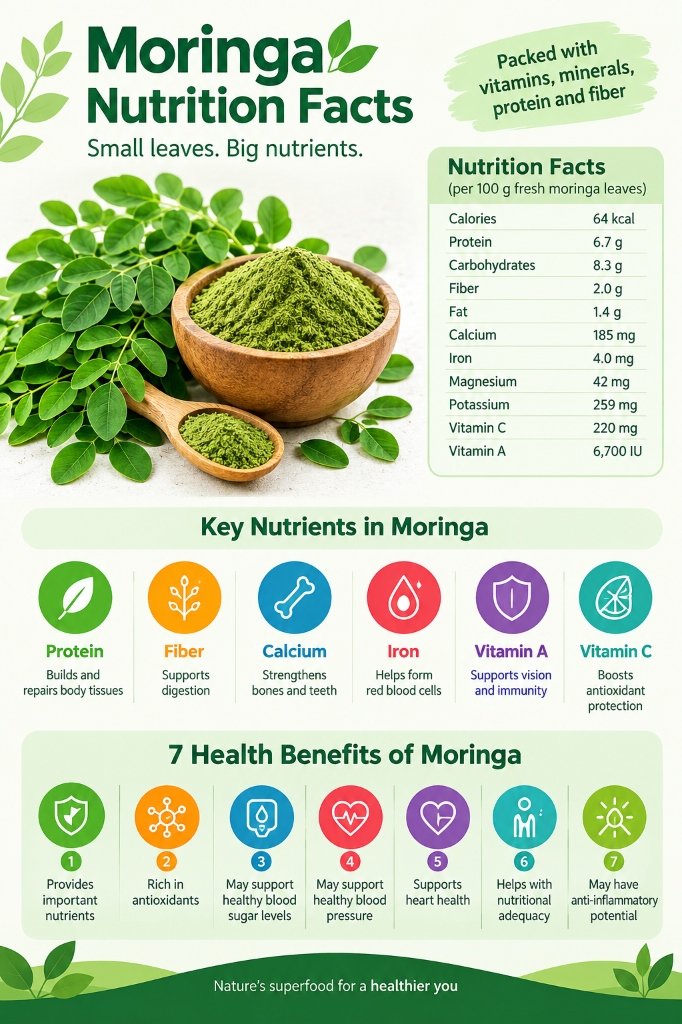
When evaluating health claims, it is helpful to look at an evidence ladder: observing how a plant compound acts in a test tube, testing it in animal models, and confirming whether those effects show up in controlled human trials. Below is a visual infographic summarizing the core nutrition facts per 100 g of fresh leaves, key nutrients, and seven potential health benefits:
Here is where the scientific evidence currently stands across seven key areas:
1. Supplies Concentrated Micronutrients
The most reliable benefit of moringa is its direct nutritional delivery. Many communities in tropical regions face micronutrient malnutrition, particularly iron and vitamin A deficiencies. Incorporating fresh leaves or leaf powder into daily staple grains improves dietary diversity and provides vital minerals without requiring synthetic fortification.
2. Delivers Antioxidant Plant Compounds
Cellular metabolism constantly creates reactive oxygen species (ROS). Unchecked ROS can cause oxidative damage to lipids, proteins, and DNA strands. The combination of ascorbic acid, carotenoids, and flavonoids in moringa acts as a direct scavenger of free radicals. Laboratory studies demonstrate high free-radical scavenging capacity in leaf extracts, helping limit lipid peroxidation.
3. May Support Healthy Blood Sugar Levels
Animal studies have repeatedly shown that moringa extracts help reduce blood glucose spikes. In humans, several small clinical trials noted modest decreases in postprandial blood sugar when participants took dried leaf powder alongside carbohydrate-rich meals. Researchers believe chlorogenic acid and isothiocyanates slow glucose absorption in the gut. However, recent systematic reviews conclude that human findings remain inconsistent across different preparations and doses. Moringa provides nutritional support, but it is not a treatment for hyperglycemia.
4. May Support Healthy Blood Pressure
A 2026 systematic review and meta-analysis of randomized clinical trials found that moringa supplementation produced measurable reductions in both systolic and diastolic blood pressure. Researchers attribute this response to quercetin's vasodilatory effects and the natural potassium content of the leaves. While the authors noted that larger multi-center trials are required, the existing data suggests a positive circulatory benefit.
5. May Support Heart Health
In addition to blood pressure support, clinical investigations have explored moringa's effects on circulating blood lipids. Small trials in adults with elevated cholesterol reported modest reductions in serum total cholesterol and LDL particles following daily leaf powder intake. By combining antioxidant protection against LDL oxidation with mineral support for vascular tone, moringa contributes positively to overall cardiovascular nutrition.
6. Helps Prevent Micronutrient Deficiencies
Public health programs in parts of Asia and Africa utilize dried moringa leaf powder to enrich weaning porridge for toddlers and support dietary intake in nursing mothers. Because the powder packs iron, calcium, and provitamin A into small servings, it serves as a practical whole-food tool against childhood anemia and night blindness.
7. Possesses Anti-Inflammatory Potential
Chronic low-grade inflammation is linked to metabolic and joint issues. Cell-culture and animal experiments indicate that moringa isothiocyanates inhibit the NF-kB signaling cascade, suppressing the release of inflammatory signaling proteins like tumor necrosis factor-alpha (TNF-α) and interleukin-6 (IL-6). While human clinical evidence is still emerging, these mechanistic findings explain why moringa remains a focus of ongoing medical research.
Is Moringa Good for Weight Loss?
Moringa is often advertised online as a rapid fat-burning superfood. Looking at clinical evidence reveals a more grounded picture.
Moringa contains no compound that dissolves fat cells or raises metabolic rate overnight. In fact, a 2026 meta-analysis of human trials found that moringa supplementation had no measurable change in body weight or body mass index (BMI), even while showing favorable trends in blood pressure readings.
Where moringa does help is as part of a calorie-conscious diet:
- Low Energy Density: Fresh leaves contain only 32 calories per cooked 50-gram cup, letting you add volume and bulk to your plate without excess calories.
- Satiety from Fiber: The dietary fiber slows stomach emptying, helping you stay full longer after lunch or dinner.
- Nutrient Retention: When eating at a calorie deficit, getting sufficient iron, calcium, and vitamins can be tough. Moringa provides dense micronutrients per calorie consumed.
If your goal is fat loss, focus on creating a sustainable energy deficit rather than relying on single supplements. Check your baseline body mass index using our free online BMI calculator to guide your nutritional planning.
Can Moringa Help Control Blood Sugar?
The relationship between moringa and glucose regulation attracts intense interest from people managing prediabetes or type 2 diabetes.
In animal models, water and ethanol extracts of moringa leaves consistently improve insulin sensitivity and reduce hepatic gluconeogenesis. In human clinical trials, outcomes have been more varied. Some small studies testing 4 to 8 grams of leaf powder with meals reported a 10% to 15% reduction in post-meal blood sugar spikes. Other trials noted negligible differences in fasting blood sugar or HbA1c over 12 weeks.
⚠️ Clinical Precaution for Diabetes: Never discontinue, reduce, or alter your prescribed diabetes medications (such as insulin, metformin, or sulfonylureas) in favor of moringa. Because moringa may exert additive glucose-lowering effects, combining large supplement doses with prescription drugs could increase the risk of hypoglycemia. Discuss any new herbal supplement with your physician.
Fresh Moringa Leaves vs Moringa Powder
One common source of confusion in nutrition articles is treating fresh moringa leaves and dried powder as identical foods. Drying removes water, concentrating minerals and protein while degrading heat-sensitive vitamins.
| Attribute | Fresh Moringa Leaves | Dried Moringa Leaf Powder |
|---|---|---|
| Water Content | High (~78%–80%) | Low (~7%–8%) |
| Calories per 100 g | 64 kcal | ~320 kcal |
| Protein per 100 g | 9.4 g | ~25 g – 27 g |
| Dietary Fiber per 100 g | 2.0 g | ~19 g – 21 g |
| Calcium per 100 g | 185 mg | ~1,850 mg – 2,000 mg |
| Iron per 100 g | 4.0 mg | ~25 mg – 28 mg |
| Vitamin C per 100 g | 51.7 mg (High) | ~15 mg – 18 mg (Substantially reduced by drying) |
| Flavor Profile | Mild, grassy, slightly peppery | Concentrated, earthy, green tea-like |
| Typical Serving Size | 25 g to 50 g (1/2 to 1 cup cooked) | 2 g to 5 g (1/2 to 1 teaspoon) |
| Primary Culinary Use | Dals, curries, stir-fries, soups | Smoothies, warm teas, oatmeal, capsules |
If you have access to fresh drumstick leaves at local farmers' markets or Asian grocers, use them like spinach or methi in cooked dishes. If you live where fresh leaves are unavailable, dried powder offers a stable, shelf-ready mineral booster. When choosing a powder, look for certified shade-dried preparations that preserve native plant enzymes and chlorophyll—such as Moringa Magic Organic Superfood, which provides 100% pure organic moringa leaf powder with zero fillers or additives.
How Much Moringa Should You Eat?
There is no official recommended daily allowance specifically for moringa. Sensible intake depends on the form you choose:
- Fresh Culinary Leaves: 25 to 50 grams of cooked leaves (roughly 1/2 to 1 cup) two to three times a week is a normal vegetable serving enjoyed in traditional Asian cuisines.
- Dried Leaf Powder: 1/2 to 1 teaspoon (approx. 2 to 5 grams) daily is the amount evaluated in most published human safety studies.
Avoid taking mega-doses. Consuming more than 15 to 20 grams of powder at once can irritate the digestive lining, causing nausea or loose stools. Starting with 1/2 teaspoon helps you test your digestive tolerance.
Best Ways to Add Moringa to Your Diet
Moringa leaves adapt easily to everyday home cooking. Here are five simple, flavorful ways to prepare them:
🍲 Moringa Dal (Drumstick Leaves Lentil Stew)
Simmer yellow lentils (toor or moong dal) with turmeric, tomatoes, and garlic. During the final 3 minutes of cooking, stir in a generous cup of washed fresh moringa leaves. Finish with a quick tempering of mustard seeds, cumin, and dried red chili in ghee. The lentils provide hearty protein, while the leaves add minerals and iron.
🥣 Clear Moringa Leaf Broth
Boil fresh leaves with crushed shallots, black peppercorns, crushed garlic, and a pinch of sea salt for 6 to 8 minutes. Strain or sip directly as a warming herbal soup common in South Indian and Filipino households.
🥤 Morning Green Smoothie
Blend 1/2 teaspoon of moringa leaf powder with half a frozen banana, a cup of baby spinach, sliced cucumber, and a squeeze of fresh lime juice. The banana and lime balance the earthy, grassy flavor of the powder.
🍳 Quick Moringa Stir-Fry (Poriyal / Sabzi)
Sauté finely chopped moringa leaves in a skillet with mustard seeds, sliced shallots, green chilies, and a handful of freshly grated coconut. Cook for 4 to 5 minutes until tender. The natural fats in coconut help your body absorb fat-soluble beta-carotene.
🥣 Moringa Powder with Greek Yogurt
Whisk 1/2 teaspoon of moringa powder into a cup of plain unsweetened Greek yogurt with a light drizzle of raw honey and pumpkin seeds. This makes a balanced breakfast rich in protein, calcium, and probiotics.
Moringa Side Effects and Safety
For most healthy adults, culinary moringa leaves are gentle and safe. However, safety depends heavily on which part of the tree you consume and how much you take.
Keep these safety considerations in mind:
- Digestive Upset: Moringa leaves have mild natural laxative properties. Taking large doses of powder on an empty stomach can trigger nausea, cramping, or diarrhea.
- Roots and Bark Are Unsafe: While leaves and young pods are edible food, tree roots, root bark, and tree trunks contain spirochin—a toxic alkaloid that can paralyze nerves and induce heart arrhythmias. Never consume preparations made from moringa roots or bark.
- Seed Overconsumption: Moringa seeds contain high levels of specialized oils and bioactive compounds. Eating too many roasted seeds can cause severe gastrointestinal distress.
Who Should Talk to a Doctor Before Taking Moringa?
Certain groups should exercise extra caution before adding moringa supplements to their daily routine:
- Pregnant Women: Avoid moringa root and bark extracts entirely because they contain compounds that can stimulate uterine contractions. Consult an obstetrician before using commercial leaf powder supplements during pregnancy.
- Breastfeeding Mothers: Fresh leaves are traditionally consumed in Asian postpartum cooking to support lactation. While food-level use appears safe, clinical evidence on high-potency supplement extracts is limited.
- People on Blood Sugar Medications: Because moringa can mildly reduce blood glucose, monitor your numbers closely to avoid unexpected hypoglycemia.
- People on Blood Pressure Medications: If you take ACE inhibitors, beta-blockers, or calcium channel blockers, adding moringa may cause an additive drop in blood pressure.
- People on Thyroid Medications: Animal studies suggest moringa compounds may influence how the body converts T4 into active T3 thyroid hormones. If you take levothyroxine, check with your endocrinologist.
Moringa vs Spinach: Which Is More Nutritious?
Spinach is widely regarded as the gold standard of leafy greens. Comparing 100 grams of fresh raw moringa leaves directly against 100 grams of raw spinach reveals distinct nutritional differences:
| Nutrient (per 100 g raw) | Fresh Moringa Leaves | Raw Spinach | Nutritional Advantage |
|---|---|---|---|
| Calories | 64 kcal | 23 kcal | Spinach has fewer calories |
| Protein | 9.4 g | 2.9 g | Moringa (+224% more protein) |
| Dietary Fiber | 2.0 g | 2.2 g | Roughly equal |
| Calcium | 185 mg | 99 mg | Moringa (+87% more calcium) |
| Iron | 4.0 mg | 2.7 mg | Moringa (+48% more iron) |
| Potassium | 337 mg | 558 mg | Spinach (+65% more potassium) |
| Vitamin C | 51.7 mg | 28.1 mg | Moringa (+84% more vitamin C) |
| Vitamin A (Beta-Carotene RAE) | 378 mcg | 469 mcg | Spinach (+24% more vitamin A) |
Moringa delivers noticeably more plant protein, calcium, iron, and vitamin C per 100 grams. Spinach provides higher potassium, slightly more vitamin A, and fewer total calories.
An important distinction lies in calcium bioavailability. Spinach contains substantial soluble oxalates that bind calcium ions in the gut, allowing humans to absorb only about 5% of its calcium. Moringa leaves feature lower soluble oxalate levels, meaning a higher percentage of their calcium is absorbed by the body. Both greens provide excellent nutrition, and rotating between them gives you a broader mix of plant phytonutrients.
Frequently Asked Questions About Moringa
What is moringa?
Moringa (Moringa oleifera) is a fast-growing tree native to South Asia, often called the drumstick tree. Its small leaflets, long seed pods, and seeds are widely eaten as nourishing culinary staples across India and tropical regions worldwide.
What are the main health benefits of moringa?
Moringa provides notable amounts of vitamin A, vitamin C, calcium, iron, and plant protein. It contains antioxidant flavonoids like quercetin, and early clinical research suggests it may help support healthy blood pressure and post-meal glucose stability.
Is moringa high in protein?
Fresh moringa leaves contain roughly 9.4 grams of protein per 100 grams, which is exceptionally high for a green vegetable. Dried leaf powder provides about 25 to 27 grams of protein per 100 grams. Because daily portion sizes are modest, moringa enhances meal protein rather than replacing primary protein staples like beans, eggs, or lentils.
Is moringa good for weight loss?
Moringa does not directly burn fat. A 2026 meta-analysis of clinical trials found no direct reduction in body weight or BMI from moringa alone. However, whole leaves are low in calories and supply fiber, making them an ideal vegetable choice for calorie-controlled eating plans.
Can moringa lower blood sugar?
Preliminary human studies indicate moringa leaf powder may help soften post-meal blood sugar rises. However, evidence remains mixed across clinical trials. It should never replace prescribed diabetes medication, and patients on glucose-lowering drugs should seek medical guidance before taking supplements.
Can moringa lower blood pressure?
A 2026 systematic review of clinical trials reported small reductions in systolic and diastolic blood pressure with moringa supplementation, attributed to quercetin and potassium promoting arterial relaxation. Further clinical research is still needed.
How much moringa powder should I take daily?
Most commercial product labels and human trials evaluate 1/2 to 1 teaspoon (about 2 to 5 grams) of dried leaf powder per day. Starting with 1/2 teaspoon helps prevent digestive sensitivity.
Can I drink moringa tea or eat moringa leaves every day?
Yes. Moderate daily food intake of cooked fresh leaves or a daily cup of brewed moringa leaf tea is safe for most healthy adults. Consuming excessive amounts can trigger loose stools.
What are the side effects of moringa?
Culinary leaves are well tolerated, but large single doses of powder may cause mild nausea, stomach rumbling, or diarrhea. Tree roots and bark must be avoided because they contain potentially toxic alkaloids.
Is moringa safe during pregnancy?
Pregnant women should avoid moringa roots, bark, and high-potency supplement extracts due to chemicals that can induce uterine contractions. Always consult your healthcare provider regarding dietary choices during pregnancy.
Final Verdict: Is Moringa Worth Adding to Your Diet?
Understanding moringa nutrition facts and health benefits helps place this traditional botanical in proper dietary perspective. Fresh moringa leaves are among the most nutrient-dense greens available, providing plant protein, calcium, iron, and provitamin A alongside protective flavonoids and isothiocyanates. Dried powder offers an accessible mineral booster when fresh leaves are unavailable.
Moringa is not an overnight cure for chronic ailments, nor does it replace balanced meals or medical treatments. Instead, view it as a nutrient-dense whole-food vegetable that enriches your weekly meals. Simmered into comforting dals, stirred into smoothies with pure organic preparations like Moringa Magic, or sautéed with vegetables, moringa offers genuine nutritional value rooted in culinary tradition and verified science.
Interested in balancing your daily meal portions with overall fitness goals? Check out our free health calculators:
- Calorie & TDEE Calculator — Estimate your daily energy requirements and macro targets.
- Daily Water Intake Calculator — Learn how much fluid your body needs each day.
- BMI Calculator — Check your baseline Body Mass Index and healthy weight ranges.
🔬 External Authoritative Sources & Food Databases
- USDA FoodData Central — Nutritional Profile for Drumstick Leaves, raw (Moringa oleifera, NDB Number: 11222).
- ICMR - National Institute of Nutrition — Indian Food Composition Tables (IFCT), Drumstick Leaves (Moringa oleifera) Nutritive Value.
- PubMed / Clinical Nutrition (2026) — Effects of Moringa oleifera Supplementation on Blood Pressure and Body Weight: A Systematic Review and Meta-Analysis of Randomized Controlled Trials.
- PubMed Central (PMC) — Biological Activities and Clinical Translation of Moringa oleifera: A Systematic Literature Review.
- NIH / PMC — Safety Assessment and Toxicological Evaluation of Moringa oleifera Preparations.
💡 What to Remember
Fresh moringa leaves deliver 64 calories and 9.4 grams of plant protein per 100 grams, alongside generous amounts of calcium, iron, and provitamin A. While preliminary research indicates supportive roles for blood pressure and post-meal glucose, moringa is a wholesome dietary addition rather than a medical treatment. Enjoy cooked leaves in meals or modest amounts of powder in smoothies.