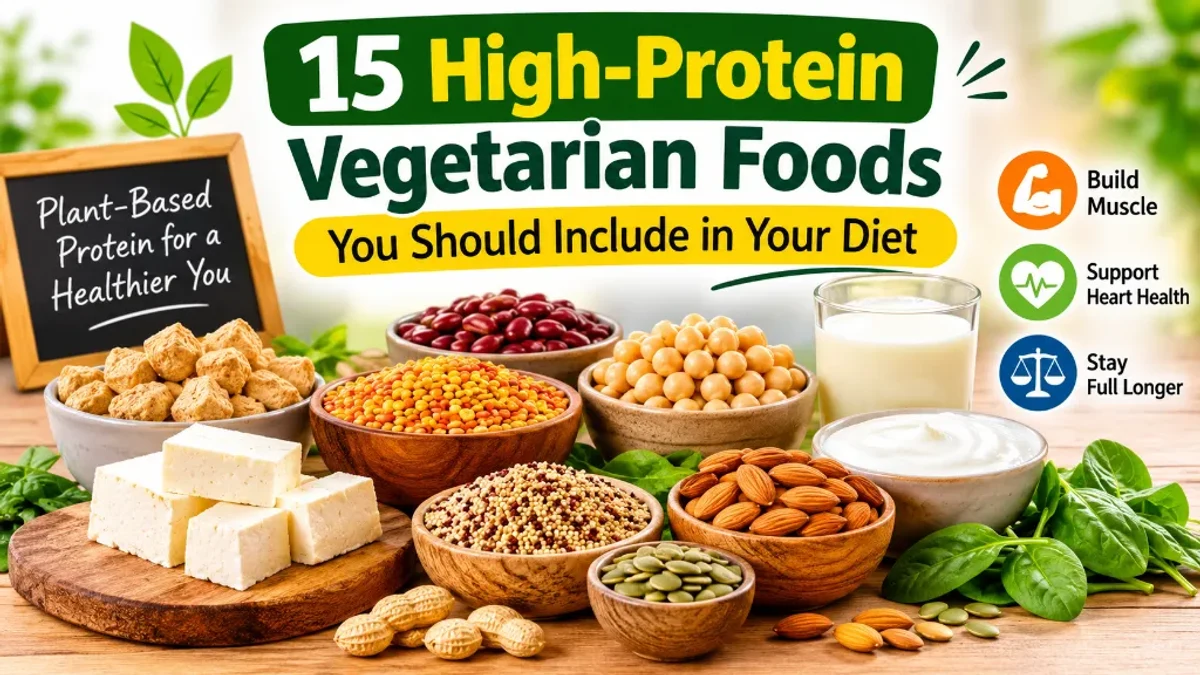
The richest everyday vegetarian protein sources include soya chunks (~52 g protein per 100 g dry), pumpkin seeds (~30 g/100 g), peanuts (~25 g/100 g), sattu (~20–22 g/100 g), almonds (~21 g/100 g), paneer (~18–21 g/100 g), firm tofu (~15–17 g/100 g), Greek yogurt or hung curd (~9–10 g/100 g), and cooked legumes like lentils, chickpeas, and rajma (~8.5–9 g/100 g cooked). Combining dairy, soy, legumes, whole grains, and seeds across daily meals easily helps most vegetarians meet their protein targets.
Protein is a foundational nutrient your body relies on every single day to repair muscle tissue, produce enzymes and hormones, maintain immune defenses, and keep you satisfied after meals. Yet one of the most persistent nutrition myths is that vegetarians struggle to eat enough protein without meat, poultry, or fish. In practice, a well-planned vegetarian diet offers plenty of concentrated, affordable protein options.
Choosing the right high protein vegetarian foods is mostly about knowing which ingredients pack the most protein per serving and how preparation changes their weight. From everyday Indian kitchen staples like soya chunks, paneer, dal, chana, rajma, roasted chana, sattu, hung curd, and milk to global favorites such as tofu, Greek yogurt, peanuts, pumpkin seeds, almonds, quinoa, and green peas, there are practical choices for every budget and cooking style.
In this guide, you will find verified protein numbers per 100 grams and per realistic serving, clear distinctions between dry and cooked weights, easy meal combinations, daily intake guidelines, and honest answers to common vegetarian nutrition questions.
At a Glance – 15 Best High-Protein Vegetarian Foods
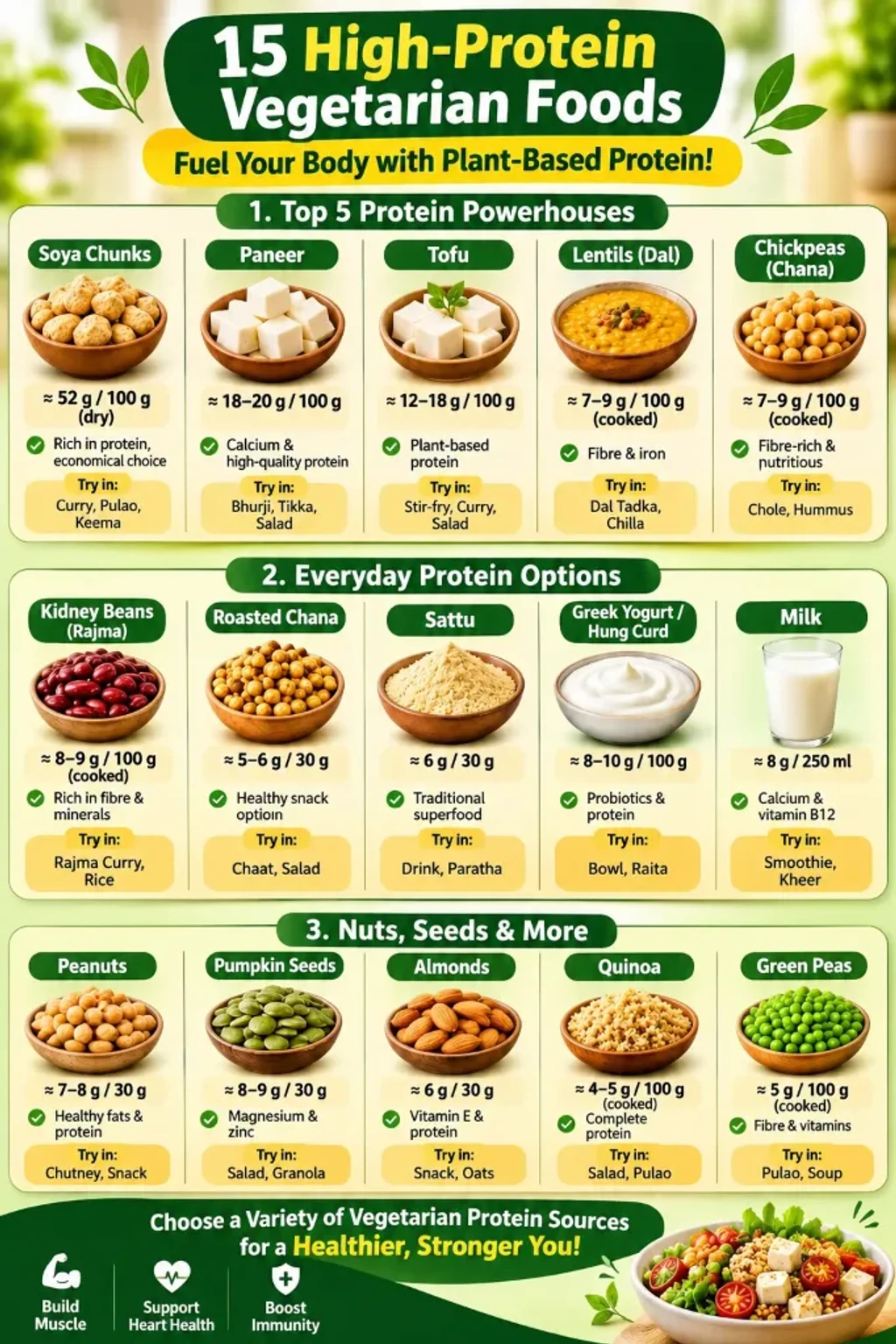
Before looking at each food in detail, the comparison table below summarizes protein values based on USDA FoodData Central and the ICMR-NIN Indian Food Composition Tables. Dry grains, seeds, and legumes absorb two to three times their weight in water during cooking, so dry and cooked figures are clearly separated to prevent overestimating portion sizes.
| # | Food Name | Protein per 100 g / 100 ml | Practical Serving Size | Approx. Protein per Serving |
|---|---|---|---|---|
| 1 | Soya Chunks | ~52 g (dry) / ~17–20 g (boiled, squeezed) | 50 g dry (~140 g cooked) | ~26 g |
| 2 | Paneer (Regular / Low-Fat) | ~18–21 g (regular) / ~21–24 g (low-fat) | 100 g cubes | ~18–22 g |
| 3 | Firm Tofu | ~15–17 g | 100 g | ~15–17 g |
| 4 | Lentils (Dal) | ~22–25 g (dry) / ~9.0 g (boiled, thick) | 1 cup boiled (~198 g) / 1 katori (~30 g dry) | ~17.9 g (1 cup) / ~7.2 g (30 g dry) |
| 5 | Chickpeas (Chana) | ~19–20.5 g (dry) / ~8.9 g (boiled) | 1 cup boiled (~164 g) | ~14.5 g |
| 6 | Kidney Beans (Rajma) | ~22–24 g (dry) / ~8.7 g (boiled) | 1 cup boiled (~177 g) | ~15.3 g |
| 7 | Roasted Chana | ~18.5–22 g (dry) | 30 g handful (~1/4 cup) | ~5.5–6.5 g |
| 8 | Sattu (Roasted Gram Flour) | ~20–22 g (dry) | 30 g (2 heaped tbsp) | ~6–6.6 g |
| 9 | Greek Yogurt / Hung Curd | ~9–10.2 g (vs ~3.2 g in regular curd) | 150 g bowl | ~13.5–15 g |
| 10 | Milk (Cow / Skimmed) | ~3.2–3.4 g per 100 ml | 1 glass (250 ml) | ~8–8.5 g |
| 11 | Peanuts (Dry-Roasted) | ~24.4–25.8 g | 30 g handful (~28 nuts) | ~7.3–7.7 g |
| 12 | Pumpkin Seeds (Shelled) | ~29.8–30.2 g | 30 g (~2 tbsp) | ~9.0 g |
| 13 | Almonds | ~21.1 g | 28–30 g (~23 almonds) | ~6.0–6.3 g |
| 14 | Quinoa | ~14.1 g (dry) / ~4.4 g (cooked) | 1 cup cooked (~185 g) | ~8.1 g |
| 15 | Green Peas (Matar) | ~5.4 g (raw / boiled) | 1 cup cooked (~160 g) | ~8.6 g |
1. Soya Chunks – One of the Richest Vegetarian Protein Sources
Soya chunks, made from defatted soy flour after soybean oil is extracted, are among the most concentrated protein foods available in any grocery store. They have a neutral flavor and spongy texture that readily absorbs Indian spices, gravies, and marinades.
- Protein per 100 g: Roughly 52 g in dry form. Once boiled and squeezed of excess water, 100 g of cooked soya chunks supplies about 17 to 20 g of protein depending on moisture retention.
- Protein per practical serving: A standard 50 g dry portion (which expands to ~140 g cooked) delivers around 26 g of protein and roughly 172 kcal.
- Nutritional benefits: Soy protein contains all nine essential amino acids, giving it a high Protein Digestibility-Corrected Amino Acid Score (PDCAAS) comparable to dairy and eggs. Soya chunks are also very low in saturated fat and supply dietary fiber (~13 g/100 g dry), iron, and calcium.
Because soya chunks are inexpensive, shelf-stable, and low in fat, they are ideal for students, budget-conscious households, and athletes seeking high protein without extra calories. Always boil them in salted water for 5 to 7 minutes, rinse in cold water, and squeeze out the excess liquid before cooking so they absorb flavors evenly.
Three easy meal ideas:
- Soya chunks curry: Simmer boiled chunks in an onion-tomato ginger-garlic gravy and serve with two whole-wheat rotis.
- Soya vegetable pulao: Toss mini soya chunks into spiced basmati rice or millets along with peas and carrots.
- Soya keema: Pulse hydrated chunks briefly in a mixer and saute with onions, cumin, peas, and garam masala for wraps or toast.
Practical takeaway: Measure soya chunks dry before soaking so your protein tracking stays accurate, and pair 40 to 50 g dry with vegetables or rice for a high-protein main meal.
2. Paneer – A Protein-Rich Dairy Food
Paneer, or fresh Indian cottage cheese, is a staple dairy protein across South Asian cooking. Made by curdling heated milk with lemon juice, vinegar, or citric acid, it holds its shape well when grilled, crumbled, or simmered in gravies.
- Protein per 100 g: Standard full-fat paneer typically provides 18 to 21 g of protein (265 to 300 kcal), whereas low-fat or skimmed-milk paneer can supply 21 to 24 g of protein with roughly half the fat and calories (150 to 180 kcal). Values vary depending on whether cow milk, buffalo milk, or commercial blends are used.
- Protein per practical serving: A 100 g serving of regular paneer delivers about 18 to 21 g of protein.
- Nutritional benefits: Paneer is rich in casein, a slow-digesting milk protein that supports overnight muscle protein synthesis and prolonged fullness. It also supplies substantial calcium (around 450 to 480 mg per 100 g), phosphorus, and vitamin B12.
While regular paneer is calorie-dense due to dairy fat, choosing low-fat paneer or pairing moderate cubes with high-fiber vegetables keeps total meal calories balanced. Checking the nutrition label on packaged paneer helps you verify exact protein and fat numbers per 100 g.
Three easy meal ideas:
- Paneer bhurji: Scramble crumbled paneer with onions, tomatoes, turmeric, green chilies, and coriander for breakfast.
- Paneer tikka: Marinate cubes in spiced hung curd and roast in an air fryer, oven, or pan.
- Paneer chickpea salad: Toss lightly pan-seared paneer cubes with boiled chickpeas, cucumber, bell peppers, and lemon dressing.
Practical takeaway: Use 75 to 100 g of paneer per meal, and opt for low-fat varieties if you are aiming for higher protein with fewer calories.
3. Tofu – A Versatile Plant-Based Protein
Tofu is made by coagulating soy milk and pressing the curds into firm blocks. Although it looks similar to paneer, tofu is completely plant-based, naturally cholesterol-free, and noticeably lighter in calories and saturated fat.
- Protein per 100 g: Firm and extra-firm tofu provide roughly 15 to 17 g of protein and about 140 to 145 kcal per 100 g, according to USDA FoodData Central. Soft or silken tofu contains more water and yields closer to 5 to 8 g per 100 g.
- Protein per practical serving: A 100 g portion of firm tofu delivers 15 to 17 g of protein; a 150 g serving provides 22 to 25 g.
- Nutritional benefits: Like soya chunks, tofu supplies all essential amino acids. Tofu coagulated with calcium sulfate is an excellent dairy-free source of calcium (often 350 mg or more per 100 g), alongside iron and soy isoflavones.
Compared with regular paneer, firm tofu offers nearly the same protein for roughly half the calories and far less saturated fat. Pressing tofu wrapped in a clean kitchen towel for 15 minutes removes excess moisture so it crisps cleanly in a skillet and soaks up sauces.
Three easy meal ideas:
- Garlic sesame tofu stir-fry: Pan-sear pressed tofu cubes and toss with broccoli, bell peppers, soy sauce, and ginger.
- Palak tofu: Substitute tofu for paneer in a classic spiced spinach puree for a lighter, dairy-free dinner.
- Crispy tofu grain bowl: Layer roasted tofu cubes over quinoa or brown rice with shredded cabbage and peanut-lime dressing.
Practical takeaway: Choose firm or extra-firm calcium-set tofu for savory cooking, and press it briefly before pan-roasting for the best texture.
4. Lentils (Dal) – An Everyday Protein Source
Lentils, including yellow moong dal, red masoor dal, and split pigeon peas (toor or arhar dal), form the daily protein backbone of Indian vegetarian cooking. They cook relatively quickly compared to whole beans and pair smoothly with spices, rice, and flatbreads.
- Protein per 100 g: Dry raw lentils contain 22 to 25 g of protein per 100 g. Once boiled, lentils absorb water and yield around 9.0 g of protein per 100 g (roughly 116 kcal) for thick, drained lentils.
- Protein per practical serving: One full cup (198 g) of thick boiled lentils supplies ~17.9 g of protein. However, a typical watery home-style katori of dal made from 30 g of dry lentils provides about 7 to 7.5 g of protein.
- Nutritional benefits: Lentils provide roughly 7.9 g of dietary fiber per 100 g cooked, helping stabilize post-meal blood sugar and support gut health. They also deliver folate, iron, potassium, and magnesium.
Many people overestimate how much protein they get from a thin bowl of dal. Making your dal thicker, using mixed dals (such as moong plus masoor), or grinding soaked moong dal into savory crepes instantly boosts protein density per bite.
Three easy meal ideas:
- Thick dal tadka: Pressure-cook toor and moong dal with minimal water and finish with a cumin, garlic, and tomato tempering.
- Moong dal chilla: Blend soaked yellow moong dal with ginger and green chilies into a batter and cook crisp savory pancakes stuffed with grated paneer.
- Spiced red lentil soup: Simmer masoor dal with carrots, onions, turmeric, and vegetable stock for a quick one-pot meal.
Practical takeaway: Relying on one thin bowl of dal is not enough for high protein needs; prepare thicker dal or moong dal chillas to meaningfully raise your intake.
5. Chickpeas (Chana) – Protein and Dietary Fibre
Both white Kabuli chana and smaller brown or black kala chana are versatile legumes used in curries, salads, and spreads around the world. Their firm bite holds up well in meal prep and cold salads.
- Protein per 100 g: Dry chickpeas hold 19 to 20.5 g of protein per 100 g. Boiled, drained chickpeas supply roughly 8.9 g of protein and 164 kcal per 100 g.
- Protein per practical serving: One cooked cup (164 g) provides about 14.5 g of protein and 12.5 g of dietary fiber.
- Nutritional benefits: Chickpeas offer slow-digesting complex carbohydrates, soluble and insoluble fiber for digestive regularity, iron, manganese, and folate.
Soaking dried chickpeas overnight and discarding the soaking water helps reduce oligosaccharides, the fermentable sugars that can cause bloating in sensitive stomachs. Keeping a batch of boiled chana in the refrigerator makes assembling high-protein lunches effortless.
Three easy meal ideas:
- Punjabi chana masala: Simmer boiled chickpeas with roasted cumin, amchur (dried mango powder), tomatoes, and ginger.
- Homemade hummus: Blend cooked chickpeas with tahini, lemon juice, garlic, and olive oil as a spread for whole-grain wraps or vegetable sticks.
- Kala chana chaat: Toss boiled black chickpeas with diced onion, tomato, cucumber, roasted cumin, and fresh lime juice.
Practical takeaway: A cup of boiled chickpeas delivers nearly 15 g of protein alongside 12 g of fiber, making it doubly useful for satiety and steady energy.
6. Kidney Beans (Rajma) – A Nutritious Protein-Rich Legume
Red kidney beans, widely loved as rajma across northern India, combine hearty plant protein with slow-release carbohydrates and minerals. When paired with rice or whole-wheat roti, they create a comforting, nutrient-rich meal.
- Protein per 100 g: Dry kidney beans contain 22 to 24 g of protein per 100 g. Boiled, drained kidney beans provide about 8.7 g of protein and 127 kcal per 100 g.
- Protein per practical serving: One cooked cup (177 g) delivers roughly 15.3 g of protein; a medium 120 g katori offers around 10.4 g.
- Nutritional benefits: Cooked rajma provides roughly 6.4 g of fiber per 100 g, along with potassium, iron, folate, and anthocyanin antioxidants concentrated in the deep red skin.
Never eat raw or undercooked kidney beans. Raw red kidney beans contain phytohemagglutinin, a natural lectin that is safely destroyed only after soaking and boiling thoroughly at full temperature (pressure cooking makes them completely safe and tender).
Three easy meal ideas:
- Classic rajma curry with rice: Slow-simmer pressure-cooked rajma in spiced tomato puree and serve with steamed basmati or brown rice.
- Rajma veggie wraps: Mash half the cooked beans lightly with spices and wrap in a whole-wheat chapati with crisp lettuce and yogurt dip.
- Three-bean chili: Combine kidney beans with chickpeas, diced bell peppers, tomatoes, and cumin for a high-protein stew.
Practical takeaway: Soak rajma overnight and pressure-cook thoroughly; keep the bean-to-rice ratio generous to boost total meal protein.
7. Roasted Chana – An Affordable High-Protein Snack
Dry-roasted split or whole Bengal gram (bhuna chana) is one of India's most overlooked convenience foods. Unlike deep-fried packaged snacks, dry-roasted chana contains no added oil, requires zero preparation, and travels easily in a bag or desk drawer.
- Protein per 100 g: Plain dry-roasted chana delivers roughly 18.5 to 22 g of protein and 360 to 380 kcal per 100 g.
- Protein per practical serving: A sensible 30 g handful (about 1/4 cup) gives you 5.5 to 6.5 g of protein for roughly 110 calories.
- Nutritional benefits: Alongside plant protein, roasted chana supplies 12 to 16 g of fiber per 100 g, iron, and B vitamins without refined flours or trans fats.
Swapping afternoon biscuits, chips, or samosas for roasted chana cuts excess refined carbohydrates and unhealthy fats while adding steady protein between meals. Pair a handful with a glass of buttermilk or a small piece of jaggery or fruit to balance flavor and keep afternoon hunger in check.
Three easy meal ideas:
- Spiced evening trail mix: Mix roasted chana with roasted peanuts, pumpkin seeds, and a pinch of black salt.
- Chana chaat cup: Toss crushed roasted chana with finely chopped onion, tomato, coriander, and lemon juice.
- Post-commute desk snack: Keep an airtight jar of unsalted roasted chana at work with a cup of plain black coffee or green tea.
Practical takeaway: Keep plain roasted chana on hand to upgrade low-protein snack times for pennies per serving.
8. Sattu – A Traditional Indian Protein Source
Sattu is finely milled flour made from dry-roasted Bengal gram (chana). Long valued across Bihar, Uttar Pradesh, and eastern India as a cooling summer staple, it functions as a natural, minimally processed whole-food protein powder.
- Protein per 100 g: Dry chana sattu provides approximately 20 to 22 g of protein and 370 to 400 kcal per 100 g.
- Protein per practical serving: Two heaped tablespoons (30 g) deliver around 6 to 6.6 g of protein; a larger 50 g serving provides 10 to 11 g.
- Nutritional benefits: Because sattu is milled from the whole roasted chickpea with minimal refinement, it retains soluble and insoluble dietary fiber (~10 to 15 g per 100 g), iron, magnesium, and potassium.
Because sattu is already roasted, you can stir it directly into water or buttermilk without cooking, making it one of the fastest high-protein breakfast options available. Mixing sattu into whole-wheat dough also lifts the protein content of everyday parathas and rotis.
Three easy meal ideas:
- Savory sattu drink (sharbat): Whisk 30 to 40 g of sattu into cold water or thin buttermilk with roasted cumin powder, lemon juice, mint, and black salt.
- Sattu-stuffed paratha: Mix sattu with finely chopped onion, garlic, green chili, ajwain (carom seeds), and a drop of mustard oil as a filling for whole-wheat flatbreads.
- Quick sattu chilla: Whisk sattu with curd, chopped spinach, and water into a pourable batter and pan-cook like a savory crepe.
Practical takeaway: Stir 2 to 3 tablespoons of sattu into morning buttermilk or paratha dough for an effortless protein upgrade with zero artificial additives.
9. Greek Yogurt and Hung Curd – Protein-Rich Dairy Options
Regular homemade curd (dahi) is wonderful for gut comfort, but it is surprisingly modest in protein because much of its volume is liquid whey. Straining curd through a clean muslin cloth removes the watery whey and concentrates the milk solids, creating thick, creamy hung curd (chakka) or commercial Greek yogurt.
- Protein per 100 g: Plain nonfat or low-fat Greek yogurt contains 9 to 10.2 g of protein (59 to 73 kcal). Homemade hung curd typically provides 8 to 10 g per 100 g depending on how long it drains. By comparison, unstrained regular curd has only about 3.1 to 3.5 g of protein per 100 g.
- Protein per practical serving: A 150 g bowl supplies roughly 13.5 to 15 g of protein.
- Nutritional benefits: Both options offer live probiotic cultures, bone-supporting calcium, phosphorus, vitamin B12, and low lactose content compared with liquid milk.
Skip heavily sweetened fruit-on-the-bottom yogurts, which often hide 15 to 20 grams of added sugar per cup. Buy plain unsweetened Greek yogurt or strain fresh curd in your refrigerator for 3 to 4 hours using a fine strainer lined with cheesecloth.
Three easy meal ideas:
- Berry seed yogurt bowl: Top 150 g plain Greek yogurt or hung curd with sliced banana or berries, pumpkin seeds, and a teaspoon of chia seeds.
- Thick protein smoothie: Blend hung curd with mango or spinach, rolled oats, and cold water or milk for a filling breakfast shake.
- Herb vegetable raita or dip: Whisk hung curd with grated cucumber, roasted cumin, and mint as a creamy side dish or sandwich spread.
Practical takeaway: Switching from regular curd to strained hung curd or plain Greek yogurt nearly triples your protein per spoonful.
10. Milk – A Simple Everyday Protein Source
Cow's milk and buffalo milk remain among the most accessible, bioavailable protein sources in vegetarian households. Milk delivers both fast-digesting whey protein and slow-digesting casein protein in a natural 20:80 ratio.
- Protein per 100 ml: Cow's milk (whole, toned, or skimmed) provides about 3.2 to 3.4 g of protein per 100 ml. Buffalo milk is slightly thicker and offers roughly 3.8 to 4.3 g per 100 ml.
- Protein per practical serving: One standard 250 ml glass of cow's milk supplies 8 to 8.5 g of protein. Whole milk provides about 150 kcal per glass, whereas skimmed or double-toned milk gives the same protein for 85 to 105 kcal.
- Nutritional benefits: Milk is a reliable vegetarian source of vitamin B12 (which is scarce in purely plant-based diets), calcium, vitamin D (when fortified), potassium, and riboflavin (vitamin B2).
Choosing between whole milk and skimmed or toned milk depends on your daily calorie budget and saturated fat goals. Those looking to manage weight or cholesterol can select skimmed or toned milk without losing a single gram of protein.
Three easy meal ideas:
- Oats cooked in milk: Simmer rolled oats in 250 ml milk instead of water to add 8 g of complete dairy protein before adding nuts or seeds.
- Turmeric milk (haldi doodh): Warm low-fat milk with turmeric and black pepper as a soothing evening drink.
- Milk coffee or cold coffee: Blend chilled toned milk with espresso or instant coffee and ice without heavy syrups for a quick midday boost.
Practical takeaway: Adding one or two 250 ml glasses of toned milk across oats, beverages, or smoothies quietly contributes 8 to 17 g of complete protein per day.
11. Peanuts – An Economical Protein-Rich Food
Botanically legumes rather than tree nuts, peanuts offer higher protein content than nearly all tree nuts at a fraction of the price. Roasted peanuts and natural peanut butter are kitchen staples for budget-friendly vegetarian meal planning.
- Protein per 100 g: Dry-roasted peanuts contain 24.4 to 25.8 g of protein per 100 g, alongside ~570 kcal and 49 g of mostly unsaturated fats.
- Protein per practical serving: A 30 g handful (about 28 peanuts) or 2 tablespoons (32 g) of unsweetened peanut butter yields 7.3 to 8 g of protein for roughly 170 to 190 kcal.
- Nutritional benefits: Peanuts supply monounsaturated and polyunsaturated fats, niacin (vitamin B3), magnesium, folate, and resveratrol antioxidants.
Because peanuts are energy-dense, portion awareness is essential if weight management is your goal. Use a measuring spoon for peanut butter and choose natural varieties made purely from roasted peanuts without hydrogenated oils or added sugar.
Three easy meal ideas:
- Peanut butter whole-wheat toast: Spread 1 to 2 tablespoons of natural peanut butter over sprouted or whole-grain toast topped with sliced banana.
- Poha or upma with roasted peanuts: Fold 2 tablespoons of dry-roasted peanuts into breakfast poha for crunch and extra protein.
- South Indian peanut chutney: Grind roasted peanuts with dried red chilies, garlic, tamarind, and curry leaves to serve with idli or dosa.
Practical takeaway: Treat peanuts as a protein-and-healthy-fat enhancer in measured 20 to 30 g portions rather than an unlimited snack.
12. Pumpkin Seeds – A Nutrient-Dense Protein Source
Shelled green pumpkin seeds (pepitas) are tiny nutritional powerhouses. Gram for gram, they contain more protein than almonds, walnuts, or chia seeds, making them one of the easiest ways to enrich salads, soups, and breakfast bowls.
- Protein per 100 g: Dried or dry-roasted shelled pumpkin seeds deliver roughly 29.8 to 30.2 g of protein and 559 to 574 kcal per 100 g.
- Protein per practical serving: Two tablespoons (30 g) provide approximately 9 g of protein and ~168 kcal.
- Nutritional benefits: Pumpkin seeds are notably rich in magnesium (around 550 mg per 100 g), zinc (~7.6 mg per 100 g) for immune function, iron, and heart-healthy unsaturated fatty acids.
Keep pumpkin seeds raw or lightly dry-toasted in a cool, dark jar so their delicate oils stay fresh. Sprinkling just one to two tablespoons onto existing meals adds meaningful minerals and protein with zero cooking time.
Three easy meal ideas:
- Crunchy salad topper: Scatter 1 to 2 tablespoons of toasted pumpkin seeds over leafy green salads, cucumber chaat, or roasted beetroot bowls.
- Oatmeal or yogurt topping: Stir pumpkin seeds into morning porridge or Greek yogurt for crisp texture.
- Seed-blended green smoothie: Blend 2 tablespoons of raw pumpkin seeds directly into fruit and spinach smoothies for creamy body and 9 g extra protein.
Practical takeaway: Just 2 tablespoons of shelled pumpkin seeds add nearly 9 g of protein plus hard-to-get magnesium and zinc.
13. Almonds – Protein Along with Healthy Fats
Almonds are among the most popular tree nuts globally and a traditional fixture in Indian households. While they are primarily a healthy fat and vitamin E source, almonds also contribute solid plant protein and fiber to daily snacks.
- Protein per 100 g: Raw or dry-roasted almonds contain about 21.1 g of protein, 579 kcal, 50 g of fat (predominantly monounsaturated), and 12.5 g of dietary fiber per 100 g.
- Protein per practical serving: One standard 28 to 30 g serving (roughly 23 whole almonds) provides 6.0 to 6.3 g of protein and ~164 to 173 kcal.
- Nutritional benefits: Almonds are one of the finest whole-food sources of vitamin E (alpha-tocopherol), an antioxidant that protects cell membranes, along with magnesium, riboflavin, and calcium.
Soaking almonds overnight and peeling the thin brown skin softens their texture and can make them gentler on digestion for some people, though keeping the skin retains extra polyphenols and fiber.
Three easy meal ideas:
- Morning soaked almonds: Eat 10 to 15 soaked almonds alongside breakfast fruit or eggs-free savory meals.
- Slivered almonds on porridge: Garnish warm dahlia (cracked wheat), quinoa porridge, or chia pudding with sliced roasted almonds.
- Homemade almond butter: Blend dry-roasted almonds in a food processor until smooth and spread on apple slices or toast.
Practical takeaway: Combine a 25 to 30 g portion of almonds with yogurt, milk, or roasted chana to turn a light snack into a balanced mini-meal.
14. Quinoa – A Protein-Containing Whole Grain
Although cooked and eaten like a grain, quinoa is technically a pseudocereal seed from the Andes. Unlike white rice, which offers minimal protein, quinoa delivers noticeably higher protein along with a balanced essential amino acid profile.
- Protein per 100 g: Dry quinoa holds 14.1 g of protein per 100 g. Once simmered in water, cooked quinoa provides 4.4 g of protein and 120 kcal per 100 g, compared to roughly 2.7 g of protein in 100 g of cooked white rice.
- Protein per practical serving: One cooked cup (185 g) supplies about 8.1 g of protein and 5.2 g of dietary fiber.
- Nutritional benefits: Quinoa contains all nine essential amino acids, including higher lysine levels than wheat or rice. It is also naturally gluten-free and supplies iron, magnesium, manganese, and folate.
Always rinse quinoa thoroughly in a fine-mesh sieve before boiling to wash away saponins, the natural bitter coating on the outer seed hull. Cooking quinoa in vegetable broth or tossing it with sautéed vegetables and chickpeas yields a satisfying, higher-protein grain base.
Three easy meal ideas:
- Indian-style quinoa pulao: Replace rice with rinsed quinoa and cook with peas, carrots, cumin, bay leaf, and turmeric.
- Mediterranean quinoa chickpea salad: Mix cooled cooked quinoa with boiled chickpeas, cucumber, cherry tomatoes, parsley, and lemon-olive oil dressing.
- Warm quinoa breakfast bowl: Simmer quinoa in milk with cinnamon and top with chopped almonds and sliced apple.
Practical takeaway: Swapping half or all of your white rice for cooked quinoa adds roughly 3 to 4 g more protein and much more fiber per cup.
15. Green Peas – A Convenient Plant-Based Protein Source
Sweet green peas (matar) are often treated as a minor vegetable garnish, yet they actually belong to the legume family and pack far more protein than leafy greens, carrots, or tomatoes.
- Protein per 100 g: Fresh or boiled green peas contain roughly 5.4 g of protein and 81 to 84 kcal per 100 g.
- Protein per practical serving: One cooked cup (160 g) supplies about 8.6 g of protein and nearly 9 g of dietary fiber.
- Nutritional benefits: Green peas provide vitamin C, vitamin K, folate, thiamin (vitamin B1), and carotenoid antioxidants (lutein and zeaxanthin) that support eye health.
Fresh seasonal peas and flash-frozen green peas share nearly identical nutritional profiles because frozen peas are blanched and frozen within hours of harvest. Keeping a bag of frozen peas in the freezer lets you drop extra protein into curries, soups, and rice dishes in minutes.
Three easy meal ideas:
- Matar paneer: Pair 1 cup of green peas with 75 to 100 g of paneer in spiced tomato gravy for a combined 22 to 25 g of protein.
- Minty green pea soup: Simmer peas with onion, garlic, and vegetable broth, then blend smooth with fresh mint and a swirl of Greek yogurt.
- Aloo matar or vegetable pulao: Double the pea quantity in pulao, upma, or stir-fries to raise overall dish protein effortlessly.
Practical takeaway: Treat green peas as a true legume protein booster rather than a tiny garnish by using a full half-cup to one cup per dish.
How Much Protein Do You Need Every Day?
Individual protein requirements depend on body weight, age, muscle mass, and physical activity. According to the ICMR-NIN Dietary Guidelines for Indians (2024), the Recommended Dietary Allowance (RDA) for healthy, sedentary Indian adults is 0.83 grams of protein per kilogram of ideal body weight per day (similar to the international 0.8 g/kg guideline). For a 60 kg adult, that baseline equals roughly 50 g of protein daily, while a 70 kg adult needs about 58 g.
Baseline RDA figures are designed to prevent deficiency in inactive adults, not necessarily to maximize muscle growth or preserve lean mass during intense training or aging. Sports nutrition organizations such as the International Society of Sports Nutrition (ISSN) note that active individuals and strength athletes generally benefit from higher intakes, while older adults often need slightly more protein to counter age-related muscle loss.
| Activity / Life Stage | General Protein Range (g/kg body weight/day) | Example for a 65 kg Adult | Notes |
|---|---|---|---|
| Sedentary Healthy Adult | 0.8 – 0.83 g/kg | ~52 – 54 g/day | Baseline ICMR-NIN / USDA RDA to meet basic daily needs |
| Lightly Active / General Fitness | 1.0 – 1.2 g/kg | ~65 – 78 g/day | Supports daily recovery and satiety |
| Regular Strength Training / Muscle Gain | 1.4 – 2.0 g/kg | ~91 – 130 g/day | Higher end helps when dieting in a calorie deficit |
| Older Adults (65+ Years) | 1.0 – 1.2 g/kg | ~65 – 78 g/day | Helps maintain muscle strength and mobility |
These numbers are general nutritional guidance, not personalized medical prescriptions. People with chronic kidney disease or specific metabolic conditions should consult a physician or registered dietitian before increasing protein intake. If you also want to align protein with your energy needs, check your daily target using our Calorie & TDEE Calculator or review our Daily Calorie Intake Guide.
Best High-Protein Vegetarian Food Combinations
Most plant foods contain all essential amino acids, though grains tend to be slightly lower in lysine while legumes tend to be slightly lower in methionine. Eating a mix of legumes, grains, dairy, and seeds across the day naturally balances your amino acid pool. You do not need to obsess over combining specific proteins in every single bite, as your body maintains an amino acid pool across meals, yet classic pairings make hitting higher protein totals simple and delicious.
| Vegetarian Combination | Why It Works Nutritionally | Approx. Combined Protein |
|---|---|---|
| Dal + Rice (Thick dal 1 cup + Rice 1 cup) | Lentils supply lysine while rice supplies methionine, creating a balanced amino acid profile. | ~20 – 22 g |
| Rajma + Whole-Wheat Roti (1 cup rajma + 2 rotis) | Slow-digesting kidney bean protein pairs with wheat gluten and fiber for sustained fullness. | ~21 – 23 g |
| Paneer + Whole-Wheat Roti (100 g paneer bhurji + 2 rotis) | Complete dairy casein protein paired with complex carbs and B vitamins. | ~24 – 26 g |
| Sattu + Curd / Buttermilk (40 g sattu + 150 g curd) | Plant legume protein plus dairy protein and probiotics in a fast, no-cook drink or bowl. | ~13 – 18 g (higher with hung curd) |
| Tofu + Mixed Vegetables + Peanuts (150 g tofu stir-fry + 15 g peanuts) | Complete soy protein paired with vitamin-rich veggies and healthy fats for fat-soluble nutrient absorption. | ~26 – 29 g |
| Chickpeas + Quinoa Bowl (1 cup chana + 1 cup cooked quinoa) | Double plant-protein punch delivering fiber, iron, magnesium, and all essential amino acids. | ~22 – 23 g |
How to Add More Protein to Your Vegetarian Diet
Improving vegetarian protein intake rarely requires exotic ingredients or expensive supplements. Five small, consistent adjustments make the biggest difference:
- Include a visible protein source in every major meal: Instead of eating plain toast, poha, or vegetable rice alone, anchor breakfast, lunch, and dinner with curd, paneer, tofu, soya chunks, sattu, or thick legumes.
- Replace low-protein snacks with roasted chana or nuts: Swap tea-time biscuits, namkeen, and fried chips for a 30 g handful of roasted chana, almonds, or dry-roasted peanuts.
- Add paneer, tofu, or soya chunks to everyday meals: Toss grated paneer into parathas, crumble tofu into vegetable stir-fries, or mix mini soya chunks into pulao and pasta sauces.
- Include lentils and legumes regularly: Rotate moong, masoor, toor, chana, and rajma across the week, cooking dals thicker rather than overly watered down.
- Combine different protein sources throughout the day: Use milk or Greek yogurt in the morning, legumes and whole grains at lunch, seeds or nuts in the afternoon, and soy or dairy at dinner so amino acids complement one another naturally.
Best High-Protein Vegetarian Foods for Different Goals
Not every high-protein food fits every goal equally well. Some pack high protein with minimal calories, while others carry beneficial calories from healthy fats or carbohydrates.
| Health or Fitness Goal | Top Recommended Foods | Why These Work Best |
|---|---|---|
| Muscle Building | Soya chunks, low-fat paneer, firm tofu, Greek yogurt, milk, rajma | High protein density per serving, complete amino acid profiles, and easy portion scaling. |
| Weight Management | Soya chunks, plain nonfat Greek yogurt, firm tofu, green peas, lentils, roasted chana | High protein-to-calorie ratio and strong fiber or water content that supports fullness within a calorie deficit. |
| Budget-Friendly Nutrition | Soya chunks, sattu, peanuts, roasted chana, lentils (dal), chickpeas | Delivers maximum grams of protein per rupee/dollar with long shelf life and zero refrigeration needed. |
| 100% Plant-Based (Dairy-Free) | Soya chunks, firm tofu, lentils, chickpeas, rajma, quinoa, pumpkin seeds, peanuts | Completely vegan options covering complete amino acids (soy and quinoa) alongside iron and fiber. |
| Everyday Balanced Nutrition | Dal, paneer, curd/hung curd, milk, green peas, almonds, pumpkin seeds | Fits traditional family meals effortlessly while supplying calcium, vitamin B12, vitamin E, and minerals. |
Common Mistakes to Avoid When Following a Vegetarian High-Protein Diet
Even well-intentioned vegetarian meal plans often fall short because of a few predictable pitfalls:
- Depending only on dal for protein: A single thin bowl of dal gives only 6 to 8 g of protein. Without dairy, soy, seeds, or thicker legume servings, total daily protein stays too low.
- Ignoring serving sizes: Eating two or three almonds or a spoonful of peas adds minimal protein. Realistic portions like 30 g of nuts/seeds or 100 g of paneer/tofu are needed to move the needle.
- Confusing dry and cooked protein quantities: Looking up "100 g chickpeas" and assuming a 100 g bowl of boiled chana has 20 g of protein doubles your actual intake; boiled chickpeas have ~8.9 g per 100 g because of absorbed water.
- Consuming excessive nuts and seeds without considering calories: Peanuts, almonds, and pumpkin seeds offer great protein, yet 100 g carries nearly 560 to 580 calories. Over-pouring nut butters can quietly stall fat-loss goals.
- Depending heavily on processed protein products: Ultra-processed vegan mock meats, protein bars, and sugary shakes often pack excess sodium, emulsifiers, or added sugars. Keep whole foods as your foundation.
- Ignoring variety in protein sources: Eating only paneer every meal increases saturated fat, while eating only raw legumes can bother digestion. Rotating across soy, dairy, legumes, grains, and seeds keeps micronutrients balanced.
Frequently Asked Questions About High-Protein Vegetarian Foods
1. What are the 15 best high-protein vegetarian foods?
The 15 best high-protein vegetarian foods include soya chunks, paneer, firm tofu, lentils (dal), chickpeas (chana), kidney beans (rajma), roasted chana, sattu, Greek yogurt or hung curd, milk, peanuts, pumpkin seeds, almonds, quinoa, and green peas. Rotating across these soy, dairy, legume, grain, and seed choices helps cover daily protein and micronutrient needs.
2. Which vegetarian food has the highest protein?
Dry soya chunks have the highest protein density among everyday vegetarian whole foods, offering roughly 52 grams of protein per 100 grams dry (about 26 grams per 50 g serving once cooked). Among non-soy options, shelled pumpkin seeds (~30 g/100 g), peanuts (~25 g/100 g), and low-fat paneer (~21–24 g/100 g) rank near the top.
3. How can vegetarians get 50 grams of protein daily?
Reaching 50 grams of protein daily is straightforward with three balanced meals: start with a 150 g Greek yogurt bowl topped with 2 tablespoons of pumpkin seeds (~23 g), eat 1 cup of rajma with two rotis at lunch (~21 g), and include 100 g of paneer or tofu stir-fry at dinner (~16–20 g). That simple plan already exceeds 55 grams.
4. Which vegetarian foods are rich in protein and low in calories?
Plain nonfat Greek yogurt (~10 g protein, ~59 kcal per 100 g), soya chunks (~26 g protein, ~172 kcal per 50 g dry), firm tofu (~15–17 g protein, ~144 kcal per 100 g), low-fat paneer, skimmed milk, and green peas offer the strongest protein-to-calorie ratios. These foods make meeting protein targets easier during weight management.
5. Can vegetarians build muscle without eating meat?
Yes, vegetarians can build muscle successfully without meat when total daily protein intake, total calories, and progressive resistance training are consistent. Combining complete sources like soy (tofu and soya chunks), dairy (paneer, milk, Greek yogurt), and varied legumes provides all essential amino acids, including leucine, needed to stimulate muscle protein synthesis.
6. Is paneer better than tofu for protein?
Regular paneer provides slightly more protein per 100 grams (18–21 g) than firm tofu (15–17 g), though it also contains nearly double the calories and much more saturated fat. Tofu is cholesterol-free, lighter in calories, and suitable for vegan diets, while low-fat paneer narrows the calorie gap for dairy eaters.
7. Are lentils a good source of protein?
Yes, lentils (dal) are a reliable, nutritious source of plant protein, supplying roughly 9 grams of protein and 8 grams of fiber per 100 grams when cooked thick. However, watery restaurant or household dals deliver less protein per bowl, so pairing thick dal with grains, paneer, or curd improves total meal protein.
8. Which vegetarian protein foods are best for weight loss?
Foods high in both protein and fiber or low in fat work best for weight loss, including boiled soya chunks, plain Greek yogurt or hung curd, firm tofu, lentils, chickpeas, and green peas. No single food causes fat loss alone, as overall calorie balance matters most, yet these options promote lasting fullness on fewer calories.
9. Can I get enough protein from an Indian vegetarian diet?
Yes, an Indian vegetarian diet easily meets daily protein requirements when built beyond plain rice, roti, and watery dal. Including daily portions of soya chunks, paneer, hung curd, sattu, roasted chana, thick dals, rajma, chana, milk, and peanuts supplies 50 to 80+ grams of varied protein naturally.
10. Do vegetarians need protein supplements?
Most vegetarians can meet normal daily protein needs solely through whole foods like dairy, soy, legumes, seeds, and nuts. Protein powders (such as whey, soy, or pea isolate) are optional convenience tools rather than necessities, useful mainly for heavy-training athletes or individuals with limited appetite or tight schedules.
Conclusion – Include These High-Protein Vegetarian Foods in Your Daily Diet
Building a satisfying, protein-sufficient vegetarian menu does not require complicated meal plans or expensive specialty products. Variety is what makes plant-forward eating work so well. By combining concentrated staples like soya chunks, paneer, tofu, and Greek yogurt or hung curd with everyday legumes such as lentils, chickpeas, and rajma, alongside traditional helpers like sattu, roasted chana, milk, peanuts, pumpkin seeds, almonds, quinoa, and green peas, you cover both protein and vital micronutrients.
You do not need to overhaul every recipe overnight. Start by upgrading one meal or snack each day: thicken your lunch dal, swap fried snacks for roasted chana, stir sattu into buttermilk, or add toasted pumpkin seeds to your breakfast bowl. Small, repeatable choices quickly add up to stronger daily nutrition with these high protein vegetarian foods.
References and Scientific Sources
- U.S. Department of Agriculture (USDA), Agricultural Research Service. FoodData Central: Nutrient profiles for Soybeans, Paneer/Cottage Cheese, Tofu (firm), Lentils (boiled), Chickpeas, Kidney Beans, Greek Yogurt, Milk, Peanuts, Pumpkin Seeds, Almonds, Quinoa, and Green Peas. Available from: https://fdc.nal.usda.gov/
- Indian Council of Medical Research – National Institute of Nutrition (ICMR-NIN). Dietary Guidelines for Indians (2024) and Indian Food Composition Tables. Hyderabad: ICMR-NIN. Available from: https://www.nin.res.in/
- Jäger R, Kerksick CM, Campbell BI, et al. International Society of Sports Nutrition Position Stand: protein and exercise. Journal of the International Society of Sports Nutrition. 2017;14:20. Available from: PubMed PMID 28642676.
- Harvard T.H. Chan School of Public Health. The Nutrition Source: Protein. Available from: https://nutritionsource.hsph.harvard.edu/what-should-you-eat/protein/
- Mariotti F, Gardner CD. Dietary Protein and Amino Acids in Vegetarian Diets: A Review. Nutrients. 2019;11(11):2661. Available from: PubMed PMID 31690027.
SmartCalc Health & Nutrition Team
Our nutrition researchers synthesize USDA food composition data, ICMR-NIN dietary guidelines, and peer-reviewed studies into clear, practical, and transparent guides for everyday wellness.