Calculate your estimated pregnancy due date using Naegele
Finding out you are pregnant brings a wave of questions, with the most common being: "When will the baby arrive?" While nature follows its own timeline, healthcare professionals use established calculations to set a baseline. If you want to plan ahead, you can calculate pregnancy due date estimations. When you calculate pregnancy due date options, you gain clear gestational timelines.
Only about 4% of babies are born precisely on their estimated due date (EDD). By using a reliable pregnancy due date calculator, establishing this date is vital for tracking fetal growth milestones, scheduling prenatal checkups, and preparing your home for the baby's arrival.
What is an Estimated Due Date (EDD)?
The estimated due date represents the projected date when a pregnancy reaches full term—exactly 40 weeks or 280 days from the start of the last menstrual period. Because the exact date of conception is rarely known for certain, standard medical practice measures pregnancy progress from the LMP rather than the conception date.
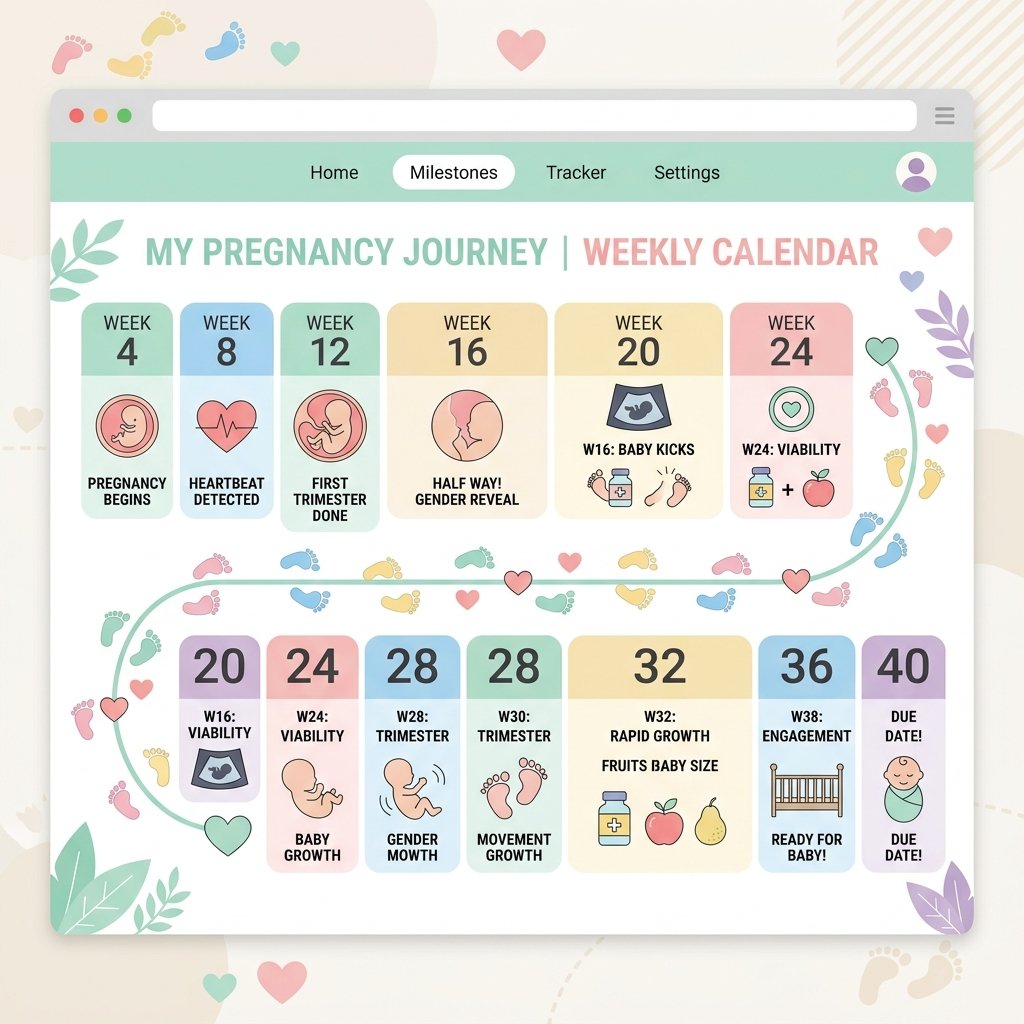
Your doctor will use your EDD to monitor developmental stages. A standard human pregnancy is divided into three trimesters, each marking key physical milestones for the parent and baby.
How to Calculate Pregnancy Due Date with Naegele's Rule
naegele's rule pregnancy calculations are the standard clinical formula used to estimate due dates. Named after the 19th-century German obstetrician Franz Karl Naegele, it assumes a regular 28-day menstrual cycle with ovulation occurring on day 14.
The math behind Naegele's rule is straightforward. To use this edd formula from lmp, start with the first day of your Last Menstrual Period, subtract three calendar months, and add seven days.
LMP vs. Conception vs. IVF Due Dates
Depending on your medical history, different methods are used to determine your due date. Let's compare the three main approaches:
| Method | Starting Reference Point | Calculation Formula | When to Use |
|---|---|---|---|
| LMP Method | First day of last period | Add 280 days (40 weeks) | Standard cycles (most common) |
| Conception Method | Known date of ovulation | Add 266 days (38 weeks) | Tracked cycles or family planning |
| IVF Method | Embryo transfer date | Add 266 days minus embryo age | Assisted reproduction cycles |
Adjusting for Irregular Cycle Lengths
Naegele's rule assumes a standard 28-day cycle. If your cycle is consistently shorter or longer, using the standard formula will cause an error in your due date. For example, if your cycle averages 32 days, ovulation likely occurred on day 18 instead of day 14. To adjust, you must add the extra 4 days to your calculated EDD. Women with irregular cycles often find it helpful to calculate pregnancy due date timelines using average cycle lengths.
Similarly, if your cycle is shorter—for instance, 25 days—you must subtract 3 days from the target due date to adjust for earlier ovulation.
Understanding Trimester Milestones
Once you calculate pregnancy due date targets, your pregnancy timeline is mapped. A gestational age calculation helps segment this timeline into weeks. across three distinct trimesters:
- First Trimester (Weeks 1 to 12): The period of rapid cellular development. Major organs begin to form, and the baby grows from a tiny cluster of cells to the size of a plum.
- Second Trimester (Weeks 13 to 27): Often called the 'honeymoon phase' of pregnancy as early fatigue fades. Fetal movements become noticeable, and the baby grows to the size of a large eggplant.
- Third Trimester (Weeks 28 to 40): The final growth phase. The baby gains fat and prepares for birth, while the parent prepares for labor.
💡 Note: Early ultrasounds (performed in the first trimester) are considered the most accurate way to date a pregnancy, and your doctor may adjust your EDD based on early crown-rump length measurements.
🤰 Calculate your estimated due date, gestational age, and trimester timelines instantly
Open Pregnancy Planner →Your health tracking is private — keep your browsing data secure too
NordVPN encrypts your connection and protects your privacy online. 67% off today.
🔬 External Scientific References & Authoritative Sources
- World Health Organization (WHO) — Body Mass Index (BMI) & Global Nutritional Health Benchmarks.
- National Institutes of Health (NIH) — Clinical Energy Expenditure & Gestational Calculation Research.
- Centers for Disease Control and Prevention (CDC) — Growth Charts, Weight Management & Dietary Guidelines.
Frequently Asked Questions
💡 Key Takeaways
Calculating your estimated pregnancy due date using Naegele's rule or conception date provides a reliable timeline for prenatal care, ultrasound tracking, and preparing for your baby's arrival.